
On This Page
History
Old Kate
Kate Batts walked everywhere, though she owned a horse. Every morning, the story goes, her old gray horse was saddled and led out. Every morning, she walked anyway, a riding skirt over her left arm and two enslaved boys at her side, while her maid, Phillis, went in front leading the horse. The procession was known as “Kate Batts’ troop.”
That picture comes from M. V. Ingram, editor of a newspaper in Clarksville, Tennessee, who set the legend down in 1894 in An Authenticated History of the Famous Bell Witch. Kate Batts, he wrote, “survived long after John Bell, and is well remembered by many” people still living. She and her husband, Frederick, had three children, Jack, Calvin, and Mary. Frederick “was an invalid, a helpless cripple, the greater part of his life,” Ingram wrote, so Kate ran the farm, the family, and all its business. They were well-to-do. They owned a very good farm and enslaved people, and they always had “some money to lend.”
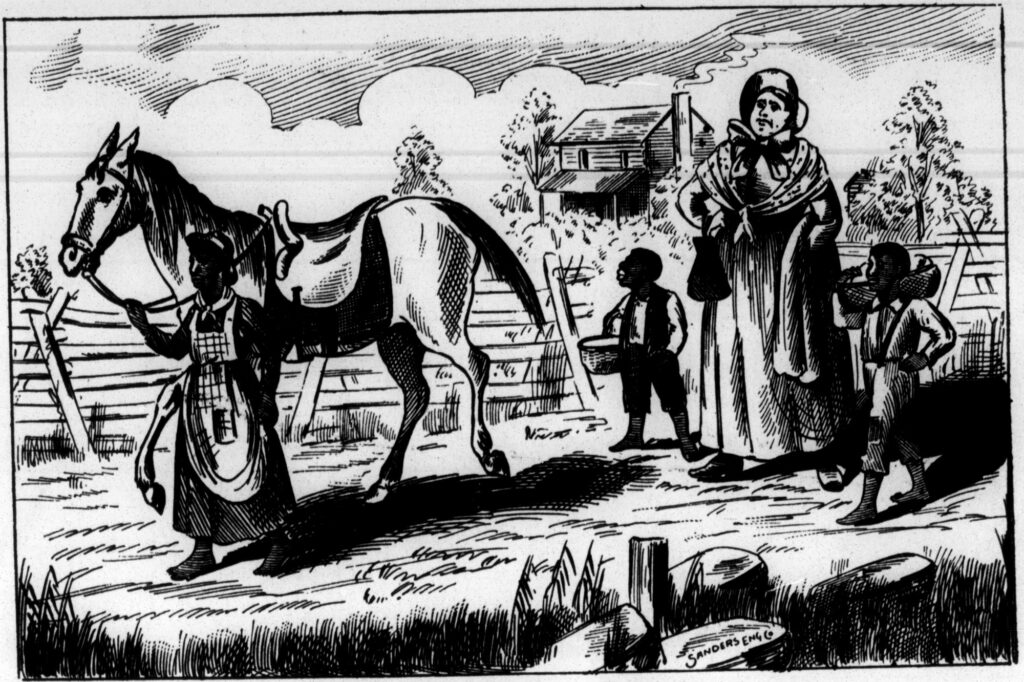
She was also, in Ingram’s telling, the most talked-about woman in the neighborhood. She was large, headstrong and exacting with the men she did business with. “She did not hesitate to tackle any man who came under the ban of her displeasure, with a scourge of epithets,” he wrote, and the ladies “were generally afraid of her.” She had a habit of begging a brass pin from every woman she met. The superstitious believed the pin gave her power over the woman who gave it, and some hid their pins when “Old Kate” came in sight. She went to Red River Church, always late. At one revival, a woman who was there told Ingram, Kate spread her riding skirt over a man kneeling at the front of the church, praying, and sat down on him.
The Witch Next Door
John Bell farmed nearby, near the Red River, on land around what’s now Adams, Tennessee. Around 1817, by Ingram’s account, his family began to hear and feel something nobody could see: odd sounds, whispering, the covers pulled off their beds. It spoke, cursed and quoted the Bible. When John Bell died on December 20, 1820, Ingram writes, it boasted that it had given “Old Jack a big dose” from a strange vial the night before. The story of what it did to the Bells is told on the Bell Witch Cave page.
The neighbors kept asking the voice what it was. It gave different answers, until a Methodist preacher, Rev. James Gunn, pressed it. It couldn’t lie to a preacher, it said. If he must know the truth, “it was nothing more nor less than old Kate Batts’ witch, and was determined to haunt and torment old Jack Bell as long as he lived.”
“Less superstitious and more considerate persons” didn’t believe it, Ingram wrote. “But the explanation pleased those who wanted it so.” People started remembering things. A girl who had churned for two hours without getting butter decided Kate had bewitched the milk. She heated an iron poker white-hot and plunged it into the churn. Then she went to call on Kate, and found her sitting in the corner, nursing a burnt hand. She had picked up a poker by the hot end that morning, Ingram explains.
People remembered, too, that Kate had once spoken harshly of John Bell over “a transaction she had with him” years before, when he first came to the settlement, and had said she would get even with him. Ingram thought both of them had probably forgotten it “until brought out by the witch,” and that “John Bell hardly believed Mrs. Batts capable or culpable.” It didn’t matter. “From this on the witch was called ‘Kate.’”
What Her Neighbors Said
Kate heard about it. “Her eyes flashed fire,” Ingram wrote. She “kept every path in the neighborhood hot for a month,” looking for whoever had dragged her name into it, and never found them.
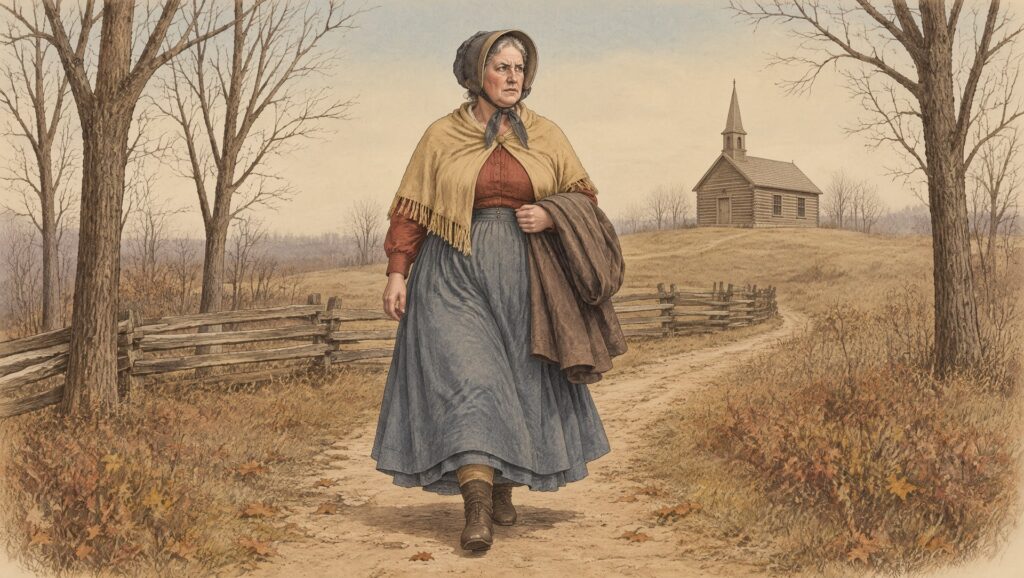
Ingram interviewed people who had known her. Lucinda Rawls of Clarksville, whose mother had been the girl closest to John Bell’s daughter Betsy, told him Kate “lived many years after the death of John Bell and wife; after I was quite grown.” Some people “firmly believed that she was the witch, and was afraid of her,” Rawls said. “There was no better scapegoat than Mrs. Kate Batts, because it fitted her character so well.”
Mahala Darden, whom Ingram visited at Cedar Hill, Tennessee, in July 1892, remembered her differently. “Aunt Kate, as the young people all called her, was a good kind hearted old lady,” she said. “I always liked Aunt Kate, she was so cheerful and full of life I was glad to meet her.” She didn’t blame Kate for getting angry “at such foolishness.” “Of course she was no witch,” Darden said. “If she had been she would have bewitched every one who talked bad about her.”
By the time Ingram wrote, Kate’s children had all died and her family was gone. The voice had also called itself Black Dog and Jerusalem, Darden said, but those names didn’t stick. Hers did.
Hauntings & Lore
The legend most people hear now isn’t quite the one Ingram wrote down. In it, Kate Batts is the ghost, and the grudge is a land deal.
The Land Deal
In Ingram’s book, the trouble between Kate Batts and John Bell is “a transaction,” or “some trading between them soon after he came to the country,” in Rawls’s words. Neither says what was traded. In 2007, the Tennessee Historical Commission wrote up the Bell Witch Cave for the National Register of Historic Places. By then, “some accounts” said that John Bell had bought land from Kate Batts “and that she felt cheated in the deal.” The cave’s owners tell it that way today: the witch “claimed to be the spirit of Kate Batts, an otherwise unfriendly neighbor of John Bell who believed she was cheated by him in a land purchase.”
We haven’t found a record of any land sale between them. A spirit of Kate Batts, in 1817, would have been the ghost of a woman who was still alive, still walking to church behind her saddled horse.
Kate’s Witch
The name outlived her family. When Ingram’s book came out in 1894, The Daily Picayune of New Orleans headlined its story “‘Old Kate Batts’ Awful Spell.” The National Register nomination notes that later accounts “simply call the witch Kate, Kate Batts’ Witch, or Old Kate,” and the cave’s owners still tell it as hers.
Not everyone trusts Ingram. Brian Dunning hosts the skeptics’ podcast Skeptoid. He points out that the book rests entirely on a diary kept by John Bell’s son Richard Williams Bell, and that historians have found only one printed mention of the Bell Witch older than Ingram’s. The women Ingram interviewed were remembering, or retelling from their mothers, events of 75 years before. About Kate Batts, the two who knew her agreed on one thing. Rawls said that anyone who thought it through “did not believe Mrs. Batts capable of performing such tricks.” Darden said she was no witch.
To hear the Bell Witch’s story where it’s told today, tour the Bell Witch Cave in Adams, Tennessee, and the replica of John Bell’s cabin that the same ticket covers.
Been here?
Tell us what happened.
Related Places
Underground
Bell Witch Cave
The farmhouse where the Bell Witch is said to have tormented John Bell's family is long gone. The cave on his old land is where people go to listen for her now, and it's on the National Register of Historic Places for exactly that.

Contributors
Sources (5)

An Authenticated History of the Famous Bell Witch
M. V. Ingram, Clarksville, Tennessee, 1894 (Internet Archive)
Chapter VI, "Mrs. Kate Batts and the Witch," and the interviews with Lucinda E. Rawls and Mahala Darden.

Bell Witch Cave, National Register of Historic Places Registration Form
National Park Service · Claudette Stager, Tennessee Historical Commission, December 2007

Tennessee Encyclopedia · William T. Turner

The owners' account of the legend, and their tours page.

Skeptoid · Brian Dunning, 2008