
On This Page
History
The Younger Daughter
Lizzie Andrew Borden was born on July 19, 1860, the younger of Andrew Borden’s two daughters. Her mother died when she was a child. In 1865, her father married Abby Gray. Andrew became one of the best-known men in Fall River, Massachusetts, and one of the wealthiest. His name was on an office block in the city that housed its Academy of Music.
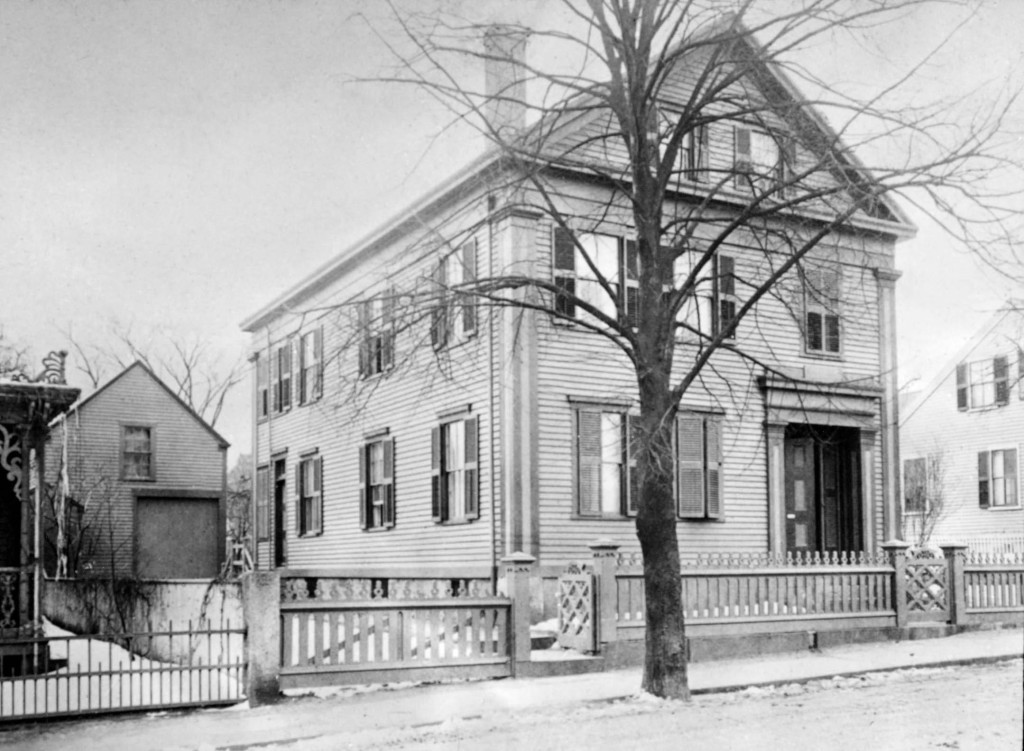
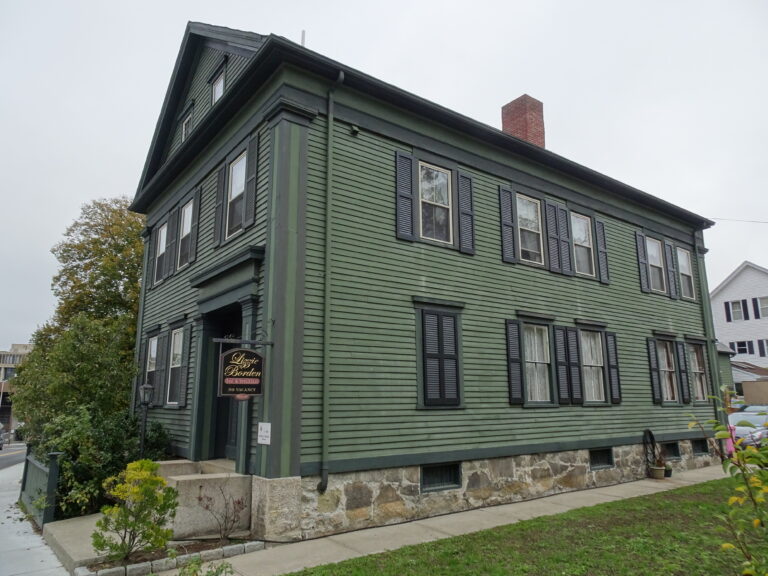
The family lived at 92 Second Street, in the house now known as the Lizzie Borden House. In the summer of 1892, Lizzie was 32, unmarried, and still living at home. So was her older sister, Emma.
How Lizzie and Abby got along became a question at the trial. Hannah Gifford, a cloak maker, testified that when she called Abby “Mother,” Lizzie told her, “don’t say that to me, for she is a mean, good for nothing thing.” Bridget testified that Lizzie “always spoke to Mrs. Borden when Mrs. Borden talked with her.”
August 4, 1892
Emma was away from home on the morning of August 4, 1892. Abby was killed in the upstairs guest room, and Andrew was killed later in the morning, on the sofa in the sitting room. The family’s maid, Bridget Sullivan, was resting in her attic room. She heard the City Hall bell and saw that it was 11 o’clock. About 10 or 15 minutes later, by Bridget’s estimate, Lizzie hollered up to her, “Maggie, come down!” When Bridget asked what was the matter, Lizzie answered, “Come down quick; father’s dead: somebody come in and killed him.”
Abby was found upstairs soon afterward. She had died first, by an hour or more. The medical examiner counted 18 blows to her head and 10 to Andrew’s face and head.
Lizzie told the family doctor, Seabury Bowen, that she had been “in the barn looking for some irons.” She meant lead sinkers, for a fishing trip. When Assistant Marshal John Fleet called Abby her mother, she corrected him: “She is not my mother, sir; she is my stepmother; my mother died when I was a child.”
The Poison, the Dress and the Hatchet
Within two days, the papers were pointing at Lizzie. A drugstore clerk, Eli Bence, told police she had come in the day before the murders and tried to buy prussic acid, a deadly poison. According to the prosecution, she said it was for cleaning a sealskin cape. “The inquiries by Lizzie Borden about poison seem peculiar,” a New York Times headline said on August 6.
On the Sunday after the murders, a family friend, Alice Russell, found Lizzie at the stove with a dress in her hand. “I am going to burn this old thing up; it is covered with paint,” Lizzie told her. In a box in the cellar, police found the head of a hatchet, its handle gone.
After an inquest, police arrested Lizzie on August 11 and took her to the jail in Taunton. A grand jury indicted her for both murders that December.
The Trial
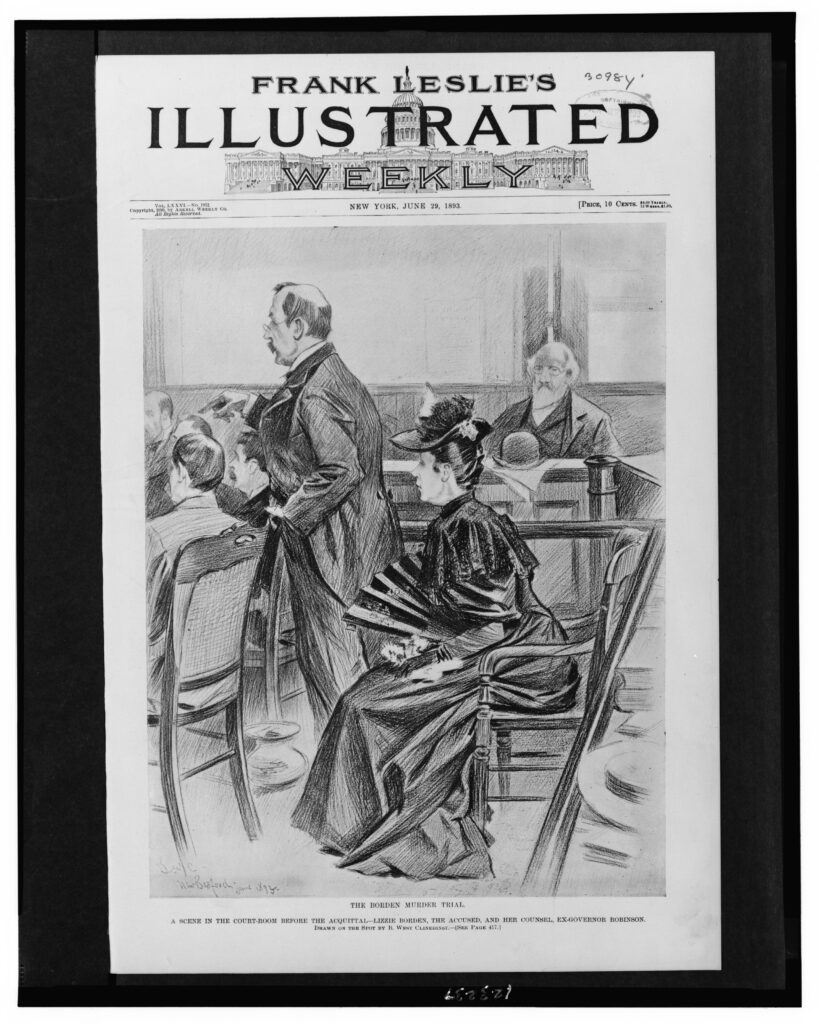
The trial opened in New Bedford on June 5, 1893, before three judges. Andrew Jennings and former Massachusetts governor George Robinson led her defense. District Attorney Hosea Knowlton and William Moody prosecuted.
Two rulings went her way. The judges kept her inquest testimony from the jury, and they kept out Eli Bence’s story of the prussic acid. In law professor Douglas Linder’s account of the trial, the first ruling, on testimony “full of contradictions and implausible claims,” may have been the decisive moment.
On June 20, the jury went out at 3:24 in the afternoon. It came back at 4:32. The clerk was partway through the formal question, “What say you, Mr. Foreman,” when the foreman broke in: “Not guilty.” The court record notes “an outburst of applause from the spectators,” and that “the prisoner dropped into her seat.” According to Linder, she hid her face in her sister’s arms and said, “Now take me home. I want to go to the old place and go at once tonight.”
Lizbeth of Maplecroft
Lizzie stayed in Fall River. She and Emma bought a large house on French Street, in the neighborhood called “the Hill,” and named it Maplecroft. She began calling herself Lizbeth. She took an interest in the theater and often kept company with actors and artists.
Fall River didn’t let her forget. Writer Erika Mailman, in Smithsonian magazine, says neighborhood children tormented her with “ding dong dash.” Carriages from the train station would stop in front of Maplecroft, Mailman writes, while a tour guide announced the crimes of which she had been accused. In 1905, Emma moved out.
Her Will
Lizzie died at Maplecroft of pneumonia on June 1, 1927, at 66. “Lizzie Borden Dies,” ran the New York Times headline two days later. Further down, it said: “Mystery Never Solved.”
The Springfield Daily News estimated her estate at close to $700,000, most of it left to a cousin and a friend. She gave $20,000 to the Animal Rescue League of Fall River. She explained in her will, the paper said, that she made the gift “because their needs are great and because there are so few who care for them.” She left her sister nothing, because Emma “had her share of my father’s estate, and is supposed to have enough to make her comfortable.” She signed it first as Lizbeth A. Borden, then wrote Lizzie A. Borden underneath.
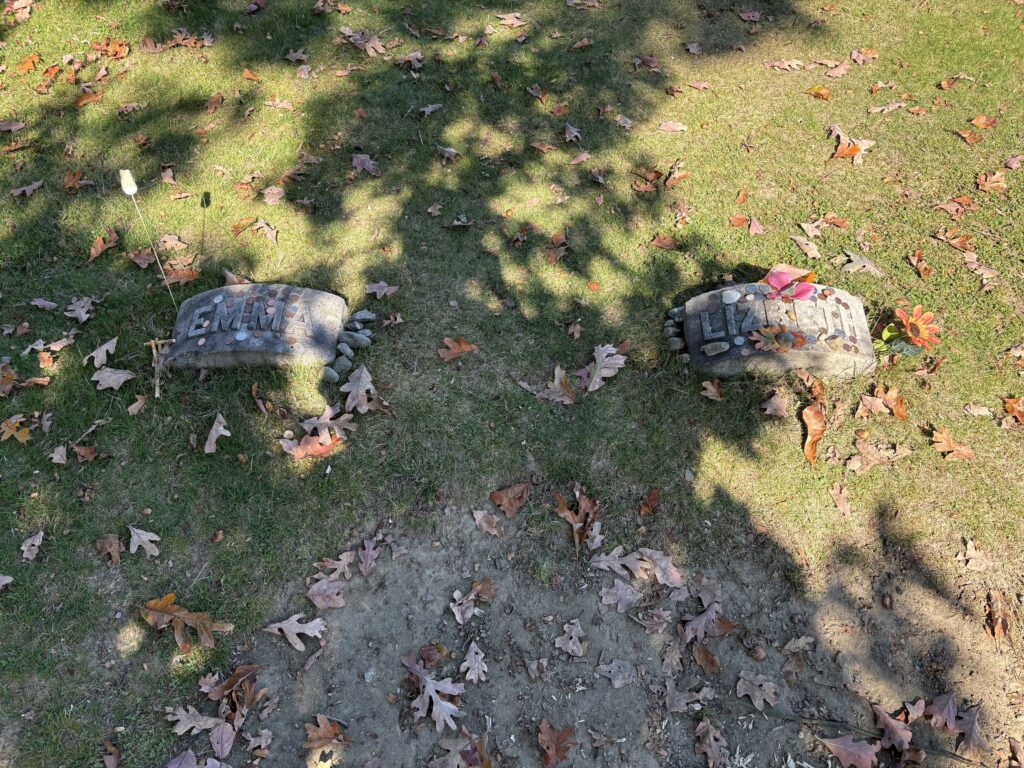
She was buried in Oak Grove Cemetery, in Fall River, by the graves of her parents.
Hauntings & Lore
The jury took 68 minutes. The stories have run for more than 130 years.
The Rhyme
The rhyme goes: “Lizzie Borden took an axe and gave her mother forty whacks. When she saw what she had done, she gave her father forty-one.”
It gets the family and the numbers wrong. Abby was Lizzie’s stepmother, not her mother, and the medical examiner counted 18 blows to her head and 10 to Andrew’s. The police believed the weapon was a hatchet, not an axe.
Nobody knows who wrote it. Megan Alves is a guide and Borden historian at the Lizzie Borden House. She told the Boston Globe in 2026 that “it’s generally accepted [by historians] that it was written by a newspaperman just for the sake of selling papers.”
A version was in print within a year of the trial. Borden researcher Kat Koorey found it in an Ohio paper, the Hillsboro News-Herald, on February 15, 1894. The paper told of a Boston lady who never let her children see a newspaper, then walked into her nursery and found them singing about Lizzie Borden. In their version, she gave her mother “twenty whacks” and her father “twenty-one.”
On Stage and Screen
The case has been retold again and again. Lillian Gish played Lizzie on Broadway in 1933. The 1975 TV film The Legend of Lizzie Borden starred Elizabeth Montgomery, best known as Samantha on Bewitched. In September 2026, Netflix released Monster: The Lizzie Borden Story, the fourth season of its Monster series, with Ella Beatty as Lizzie and Charlie Hunnam as her father.
Her Ghost on Second Street
In 2021, Delaware’s News Journal wrote that some people are convinced the ghosts of Lizzie, her father, and her stepmother still lurk in the house on Second Street. The house’s owner, Lance Zaal, says a woman in a nightgown is often seen in the room named for Andrew and Abby. It’s believed to be Abby, he says.
To spend the night where it happened, book a room at the Lizzie Borden House and ask for the John V. Morse Room, where Abby was killed.
Her Grave at Oak Grove
Her grave still draws visitors. The Friends of Oak Grove Cemetery wrote on its blog in 2008 that people leave flowers, notes, stones, and coins there. “Every August 4th, traffic to the Borden plot in Oak Grove increases,” the group wrote. The Lizzie Borden House runs daily tours to the Borden graves.
Been here?
Tell us what happened.
Related Places
Inn
Lizzie Borden House
On August 4, 1892, Andrew and Abby Borden were hacked to death inside this house in Fall River, Massachusetts. It's a bed and breakfast now, and its guides have long said the room where Abby died is the one guests ask for most.
Contributors
Sources (10)

Lizzie Andrew Borden Virtual Museum & Library
The transcript of the 1893 trial (her birth date, her father's second marriage, Bridget Sullivan's testimony, Dr. William Dolan's count of the blows, the prussic acid, the hatchet head, the indictment and the verdict), and Stefani Koorey's report of the rhyme in the Hillsboro News-Herald, 1894.

The Trial of Lizzie Borden: An Account
Famous Trials · Douglas O. Linder
With the testimony of Hannah Gifford, Bridget Sullivan, John Fleet and Alice Russell as Linder gives it.

The New York Times and The News Journal, through ProQuest
The News Journal (Wilmington, Del.), Robin Raven, October 31, 2021: the rhyme, the 1975 film, and the ghosts said to haunt the house.

The Springfield Daily News, June 8, 1927 (USGenNet transcription)


With the Borden Murder House in New Hands, Will Real History Get the Hatchet?
Smithsonian Magazine · Erika Mailman, 2021

"Where did the Lizzie Borden '40 whacks' rhyme come from?" (2026), and the Netflix *Monster* casting (2025).


Friends of Oak Grove Cemetery, 2008

Its rooms and its daily tours to the Borden graves.