
On This Page
History
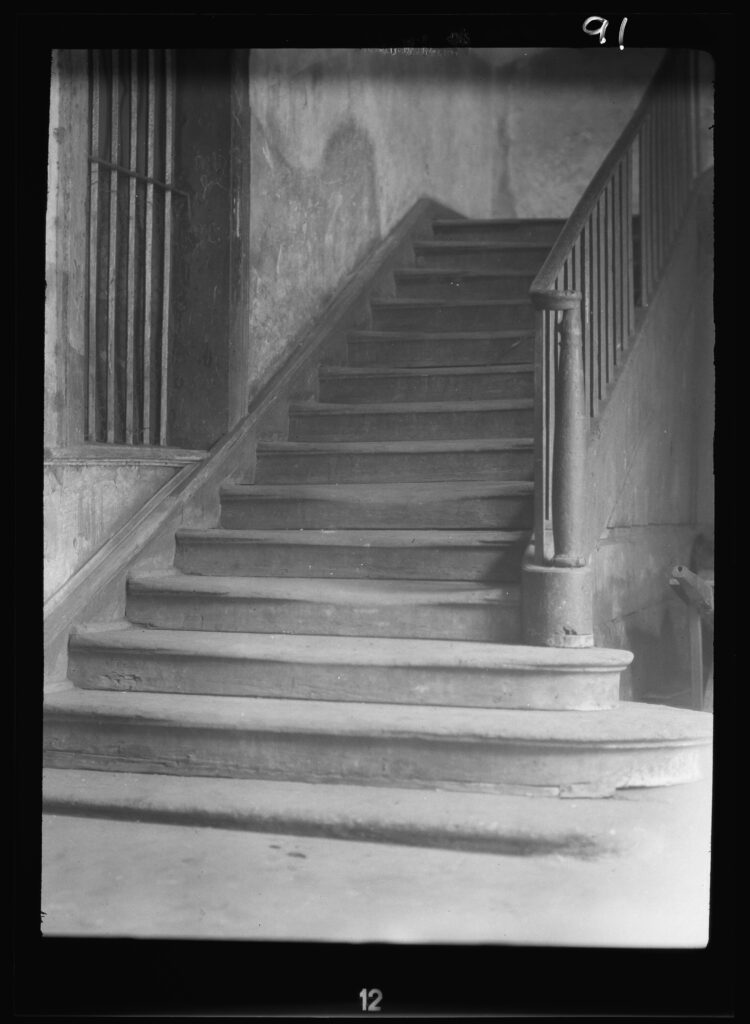
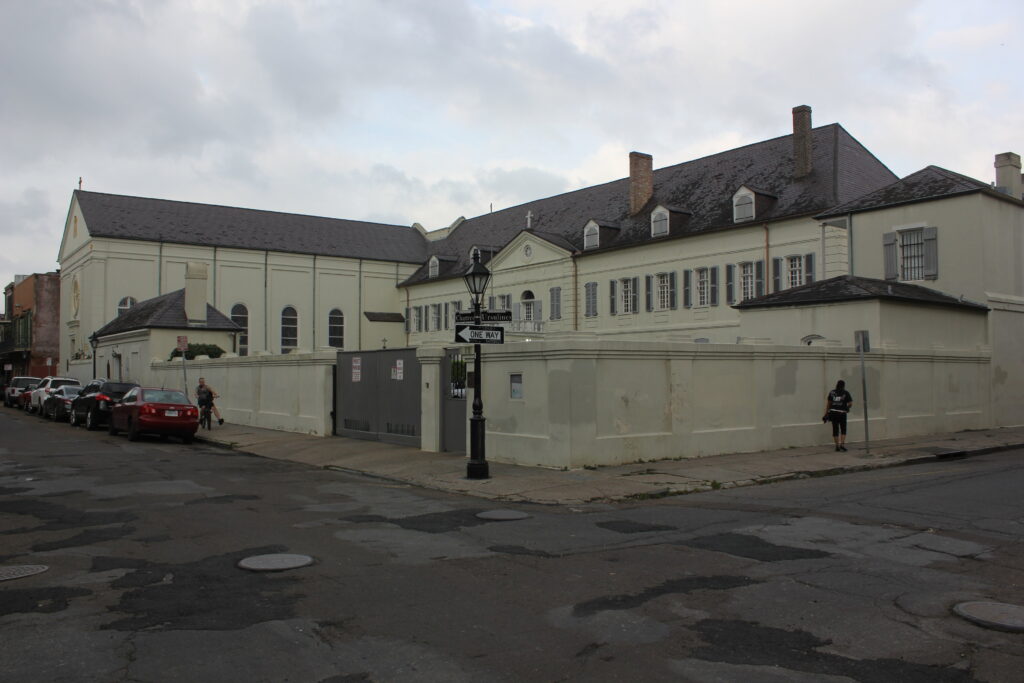
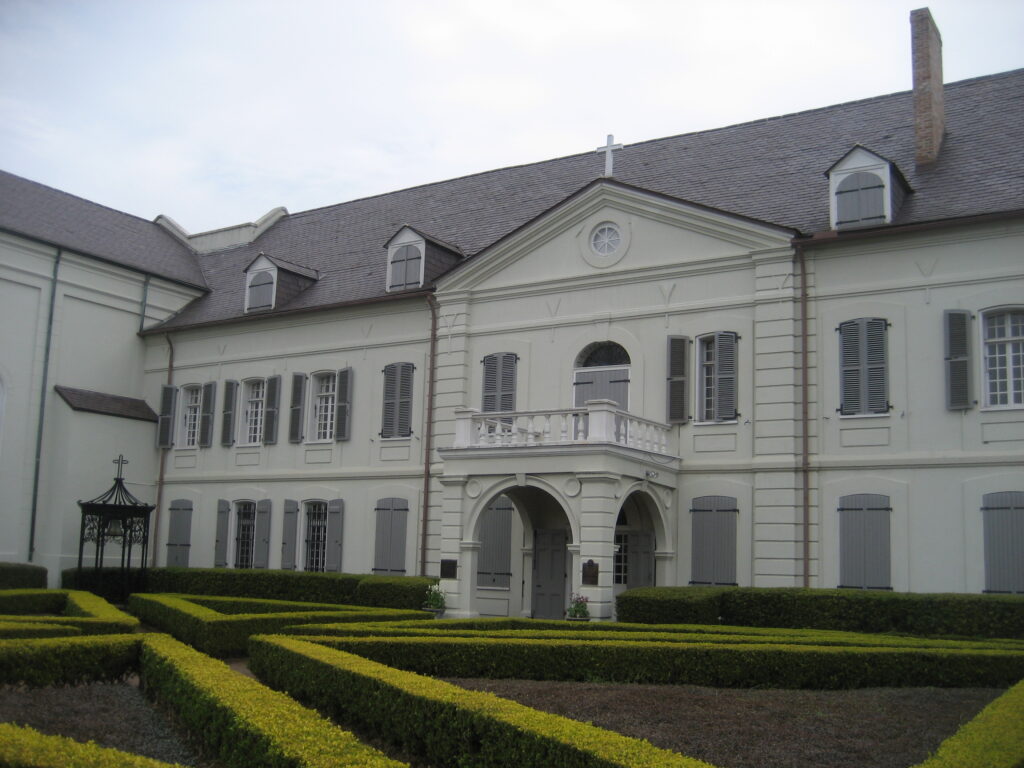
The Old Ursuline Convent stands on Chartres Street in the French Quarter of New Orleans. Its nomination to the National Register of Historic Places calls it “the only public building still standing in New Orleans that is known definitely to date from the French regime.” In 1727, a group of Ursuline nuns from Rouen, France, arrived in New Orleans to run a hospital for the poor and teach girls from wealthy families. Their first convent, finished in 1734, was half-timbered, and its timbers and brick were left bare to the humid weather. By 1744, it was near collapse. In 1745, Louisiana’s chief engineer, Ignace Broutin, and the architect Andre De Batz designed this building to replace it. It went up between 1748 and 1752. Its winding stairway is believed to have come from the first convent.
The nuns used the building as their convent, an orphanage, and a school for girls. Their herb garden was across the street, where the Beauregard-Keyes House and its garden stand today. In 1824, they moved to a new convent outside the city and turned the old one over to the Bishop of New Orleans as his residence. From 1831 to 1834, Louisiana’s legislature met here, and for decades, the building was home to the city’s archbishops. In 1845, St. Mary’s Church was joined to one end of it. Today, the convent is a museum and part of the Catholic Cultural Center of New Orleans, along with the church and St. Louis Cathedral.
Hauntings & Lore
Ghost tours stop outside the convent’s gate for the story of the casket girls, and of what legend says came over in their luggage.
The Vampires on the Third Floor
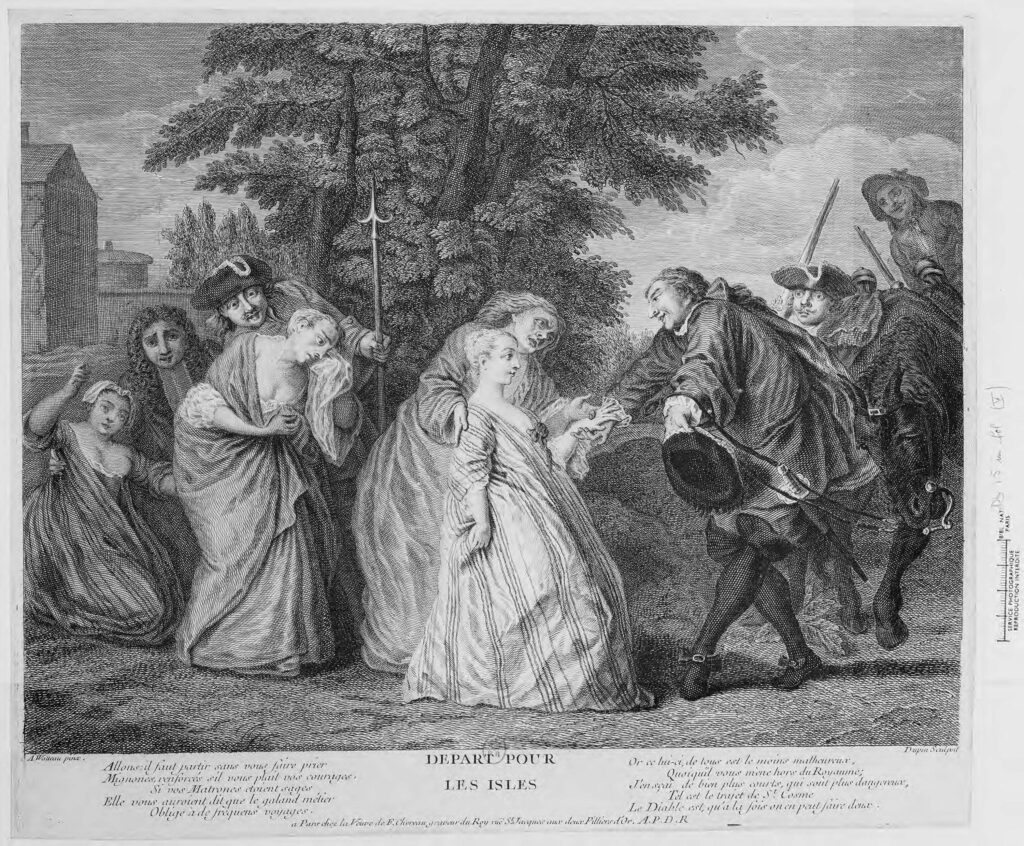
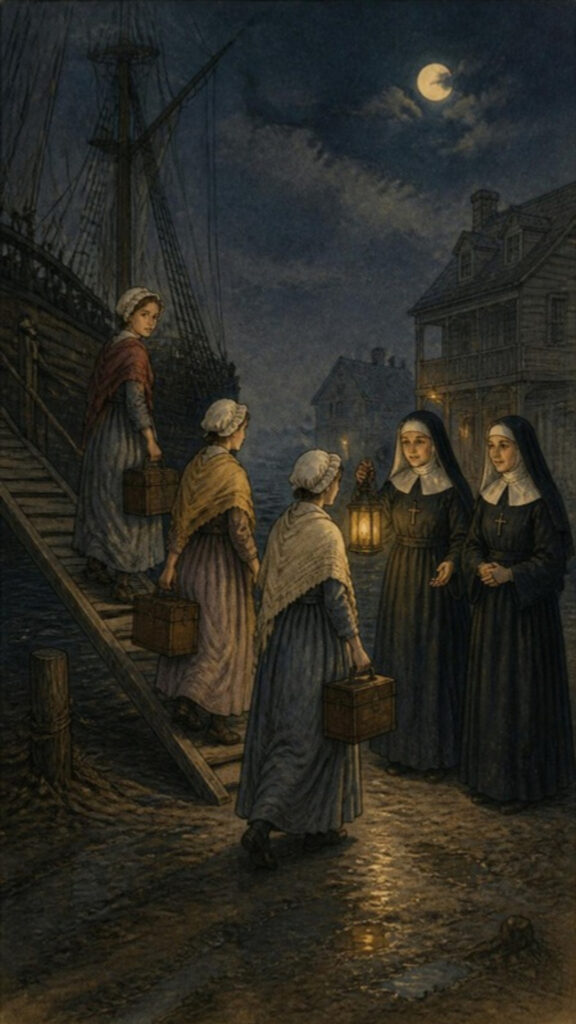
France shipped young women to its Louisiana colony to marry the settlers there. The Advocate, a Louisiana newspaper, says a group of 78 reached New Orleans in 1728. The Ursulines took the girls in, it says, and sheltered and taught them until they married. They were known as the filles à la cassette, for the small chests that held their belongings, and in English they became the casket girls.
Mike Scott, who profiles New Orleans buildings in a column for the news site NOLA.com, says the chests carried the girls’ wardrobes: two dresses, two petticoats, six headdresses, and underwear. In the legend that the casket girls have picked up in recent years, those chests really were caskets, and each one held a vampire. The vampires were kept on the convent’s sealed third floor, behind shutters fastened with nails a pope had blessed. In another version, the girls were the vampires themselves. In both, the casket girls end up living in the convent, and New Orleans ends up with its first vampires.
The novelist K. M. McFarland tells a fuller version. After the girls arrived, people began to die, babies most of all, and nobody could explain it. When the girls finally opened their chests, they were empty. The nuns called in the archdiocese, and the caskets were carried up to the attic and sealed in, its shutters fastened with 800 nails, each one blessed by the pope. Late at night, people say, the shutters sometimes fly open, and a mist wraps around the convent.
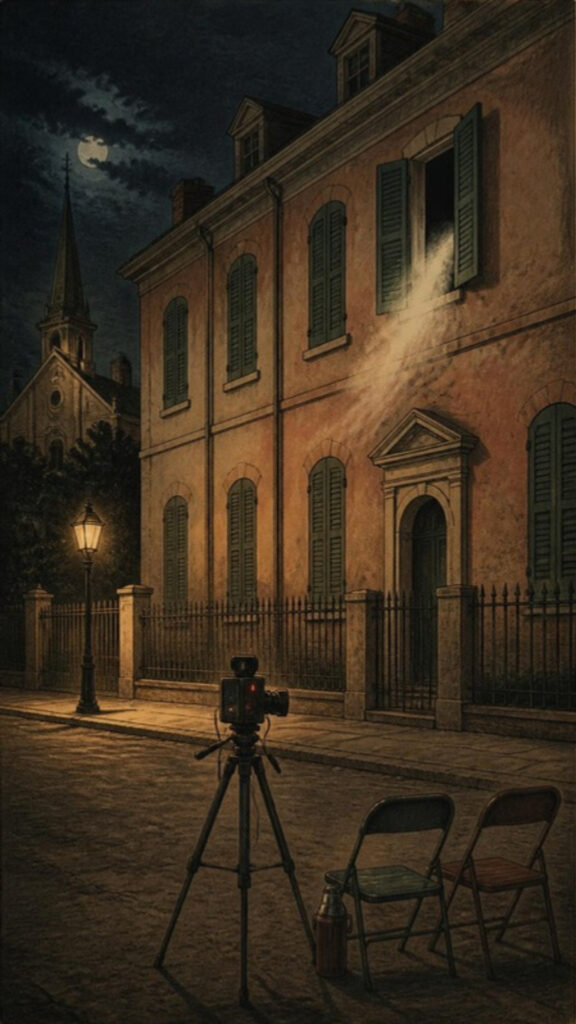
In 1978, by McFarland’s telling, two paranormal investigators set up a video camera in front of the convent and waited out the night. Sometime in the night, the camera stopped filming. The next morning, both were found dead on the steps of St. Mary’s Church next door, their throats torn open and their bodies drained of blood. McFarland went looking for news reports of the deaths and found none.
The Advocate calls the vampire stories “fanciful, but false.” It says the stories grew over the years out of the girls’ nickname and out of reports of their pale skin. The New Orleans Public Library’s city archives put the pale skin down to poor diet, too little sun, and possibly seasickness on the crossing, “not vampirism.” The archives also date the voyage differently, to 1724, three years before the nuns arrived. Both dates come more than two decades before this building was finished in 1752.
So how did vampires get into the story? Scott blames Anne Rice’s novels. Her Vampire Chronicles were a phenomenal success in the 1970s and 1980s, and they “fanned the flames of pop-culture interest in vampires, and specifically in vampires from New Orleans.” The convent’s vampires have since moved into fiction of their own. New Orleans writer Alys Arden’s Casquette Girls novels for young readers play off the myth of vampires in the convent attic. The Originals, a spinoff of the TV series The Vampire Diaries, even sent its characters to a Casket Girl Festival that is entirely fictional. “Undoubtedly to the Ursulines’ undying chagrin,” Scott adds.
Visit
Visiting Old Ursuline Convent
- Official visitor info: Old Ursuline Convent Museum
- How to visit: Open to the public: explore the museum on your own, or join a docent tour when one is available. Ghost tours stop outside the gate to tell the casket girls’ story (see Tours That Stop Here).
Location
1112 Chartres St, New Orleans, LA 70116
Been here?
Tell us what happened.
Dig Deeper
Tours That Stop Here
New Orleans Combo Tour: Voodoo, Vampire, and Ghost Tour
by New Orleans Ghost Adventures
1.5 hrFrom $32★ 4.5 · 408 reviews
WalkingGhosts, vampires, witches, and Voodoo priestesses in one French Quarter walk with a local guide. see tour
Book on ViatorNew Orleans Ghost Tour: Go Inside a Haunted Location
by New Orleans Ghost Adventures
2 hrFrom $37★ 4.6 · 1,346 reviews
WalkingA French Quarter ghost walk that goes inside a private haunted location. see tour
Book on ViatorNew Orleans Premier Ghost, Voodoo and Vampire Walking Tour
by Witches Brew Tours
105 minFrom $37.99★ 4.6 · 14,008 reviews
WalkingWitches Brew’s main French Quarter walk past haunted mansions, Creole cottages, and Voodoo sites, with family-friendly options. see tour
Book on ViatorNew Orleans Adults-Only Ghost, Voodoo and Vampire Tour
by Witches Brew Tours
1.5 hrFrom $37.99★ 4.8 · 3,633 reviews
Adults Only (21+) WalkingA 21-and-over outdoor walk through New Orleans’ most sinister figures, with elixirs and offerings along the way. see tour
Book on ViatorFrench Quarter Ghosts and Ghouls of New Orleans
by New Orleans Ghosts (US Ghost Adventures)
1 hrFrom $26★ 4.8 · 190 reviews
WalkingA walk through the French Quarter past Jackson Square, the Old Ursuline Convent, the Beauregard-Keyes House, and the LaLaurie Mansion, with a local storyteller. see tour
Book on New Orleans Ghosts
Contributors
Sources (6)

Home page (the convent's history and the museum today) and Visit (self-guided and docent tours)

Ursuline Convent, National Register of Historic Places nomination
National Park Service, 1975

A lot to unpack: How 1720s French 'casket girls' brought vampires to the Ursuline Convent
NOLA.com · The Times-Picayune · Mike Scott, 2022


City Archives & Special Collections, New Orleans Public Library, 2025

What Is the Mysterious Connection Between New Orleans, Vampires, and the Ursuline Nuns?
K. M. McFarland, 2017