
On This Page
History
Francis Sorrel’s House
Francis Sorrel was a Savannah shipping merchant, born in the 1790s on Saint-Domingue, the French colony that became Haiti. As a child, the state’s 1954 historical marker says, he was saved by an enslaved servant from the massacre of the island’s white colonists.
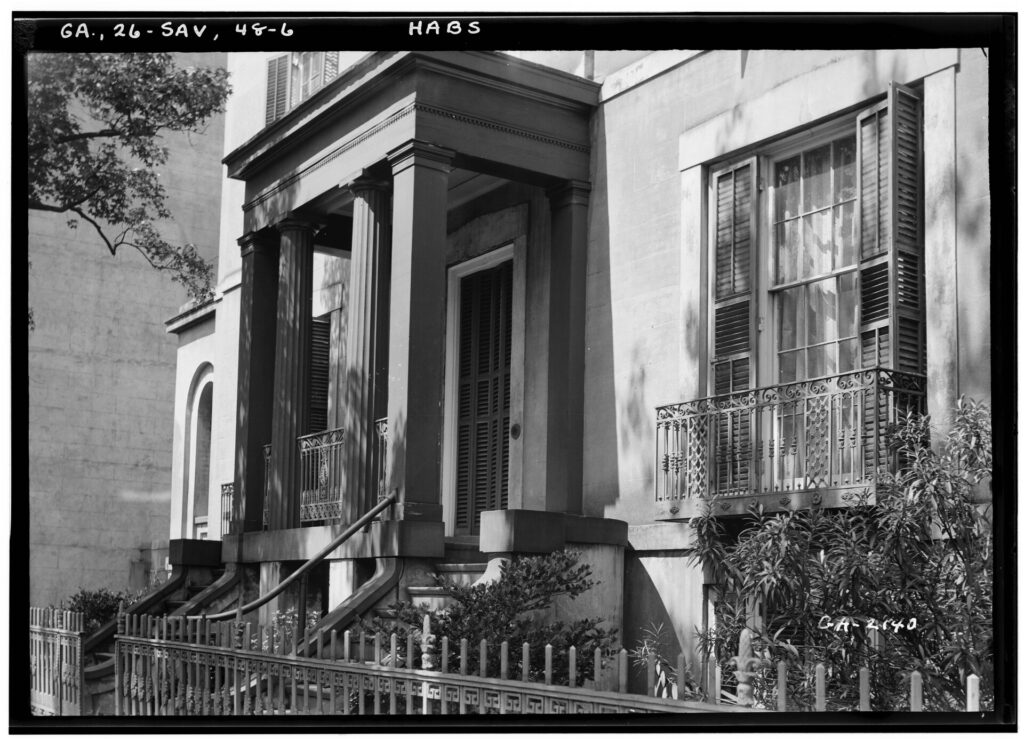
His house on West Harris Street was completed in 1840 from the plans of Charles B. Cluskey, a well-known Georgia architect. The marker calls it a fine example of the Greek Revival style. The house’s own website dates it to the 1830s.
The Household in 1850
The census of 1850 lists Sorrel’s household: his wife, Matilda, 44, born in Virginia, and their children. The same census counted the people Sorrel enslaved on a separate schedule, 13 of them, women among them from age nine to 70. The schedule gives no names. Enslaved people were recorded by age, sex, and color only.
Matilda Sorrel died in 1860. No record found so far says how.
Hauntings & Lore
The Sorrel-Weed House sells its ghosts. It runs nightly ghost tours and late-night paranormal investigations. Visit Savannah, the city’s tourism bureau, says guests report “cold spots, shadowy figures, and chilling voices,” above all in the basement and the old slave quarters.
Matilda and Molly
The house’s best-known story comes from the Sorrel family’s own oral tradition, as archaeologists from Georgia Southern University set it down. Francis Sorrel’s wife, the story goes, was “overcome by the grief of her husband’s affair with one of his slaves.” She leapt to her death from the house’s third-floor balcony. Soon after, the enslaved woman was “found hung in the upper level of the carriage house, and as it is rumored, not by her own hand.” The story says she was buried under the carriage house’s basement floor, where a depression had opened.
When the TV series Ghost Adventures locked down in the house in 2014, it called her Molly.
What the Dig Found
The Georgia Southern team went looking under that floor, as much to learn about urban slavery in Savannah as to test the legend. “As we had predicted,” they wrote, “our excavations did not uncover any human remains, but we did discover the cause of the depression: a long, deep, subfloor pit.” They found nothing to back the family’s tragic story, though, they wrote, “the story unequivocally illustrates pervasive and profound experiences in Savannah’s past.”
Molly can’t be ruled in or out. The 1850 schedule never wrote down the names of the 13 people Sorrel held, so no record can name her.
Visit
Visiting Sorrel-Weed House
Official visitor info: Sorrel-Weed House How to visit: Tours: daytime history tours and nightly ghost tours, ticketed by the house. Tours: late-night paranormal investigations for adults, by reservation. * Finding the story sites: The carriage house behind the main house, where the legend puts the second death, and the basement.
Location
6 W Harris St, Savannah, GA 31401
Been here?
Tell us what happened.
Dig Deeper
On TV
2 episodes- Ghost AdventuresHaunted Savannah2014
- Ghost Hunters2005 Halloween Special2005
Tours That Stop Here
Genteel and Bard’s Savannah Dark History and Ghost Encounter Walking Tour
by Genteel and Bard
110 minFrom $35★ 4.8 · 1,777 reviews
Walking Ages 13+A night walk through Savannah’s lamp-lit historic district, its haunted houses and old cemeteries, for ages 13 and up. see tour
Book on ViatorSavannah Dead of Night: Adults-Only Ghost Walking Tour
by Ghost City Tours
1.5 hrFrom $34.99★ 4.4 · 2,600 reviews
Adults Only (16+) WalkingGhost City Tours’ 16-and-over walk through Savannah’s darker stories: murder, betrayal, and the city’s old burial grounds. see tour
Book on ViatorShadows of Midnight Ultimate Late Night Savannah Ghost Tour
by Savannah Terrors
1.5 hrFrom $31★ 4.6 · 56 reviews
WalkingA late-night walk through Savannah’s haunted history and true crime, by way of the Sorrel-Weed House and Colonial Park Cemetery. see tour
Book on Savannah Terrors
Contributors

Sources (7)


Digging Savannah: the Sorrel-Weed House
Georgia Southern University

familysearch.org
The 1850 United States census (Francis Sorrel's household) and slave schedule.

Sorrel-Weed House

en.wikipedia.org
The episode lists for Ghost Hunters and Ghost Adventures, and "Expedition X."

TVmaze