
On This Page
History
Born Free on St. Ann Street
Marie Laveau, a free woman of color, was born in New Orleans on September 10, 1801, the daughter of Marguerite Henry and Charles Laveaux, a successful businessman of mixed race. Her mother and her grandmother had both been born enslaved.
Her grandmother, Catherine, belonged to a white shoemaker, and so did Catherine’s mother, a girl most likely brought from Senegal. In 1790, the shoemaker freed Marie’s mother, Marguerite. The historian Carolyn Morrow Long, whose 2006 biography of Laveau is built on the records, thinks he may have been Marguerite’s father. Catherine had to wait five more years and buy her own freedom.
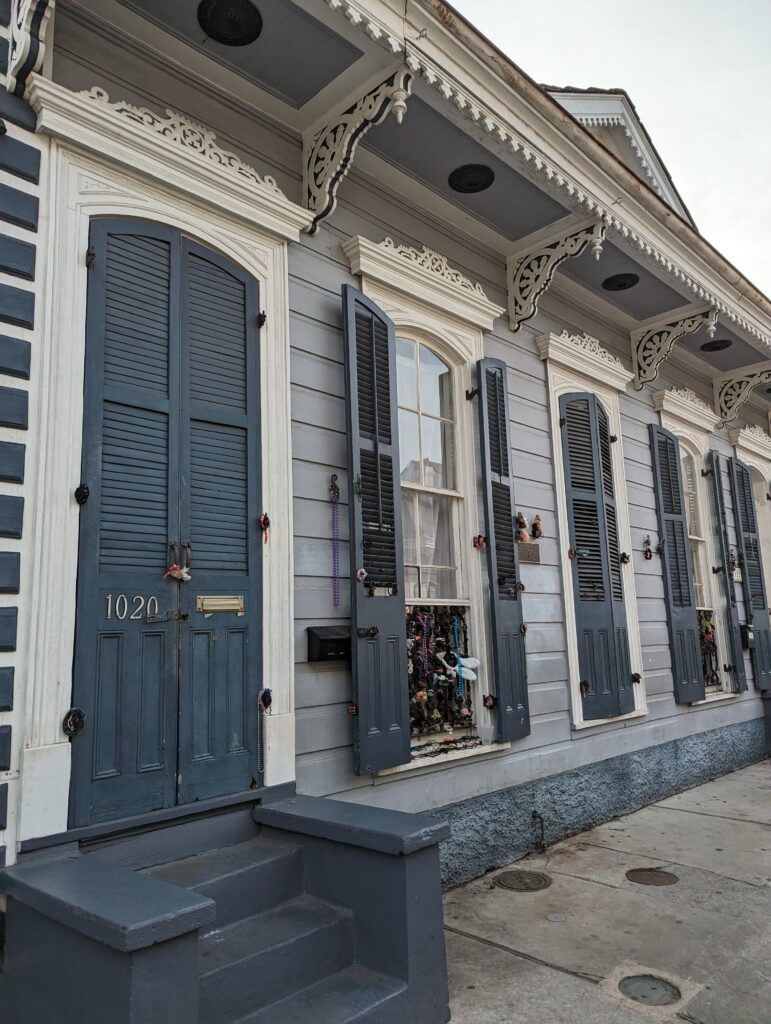
Marie grew up in a cottage on St. Ann Street, between Rampart and Burgundy Streets, in what is now the French Quarter, and it would be her home all her life. She raised her own children there, and died there in 1881. The Daily Picayune, the city’s paper, wrote in her obituary that she had been born there, too.
The Widow Paris
In 1819, Marie married Jacques Paris at St. Louis Cathedral, the church where she had been baptized. He was a free carpenter of color from Saint-Domingue, the French colony that became Haiti. They had two daughters, Felicité and Marie Angèlie, and both died as children. Then Jacques Paris vanished. Long writes that he “died or disappeared” around 1824, and from then on, Marie was known as the Widow Paris. Even the Picayune, writing her obituary in 1881, could only say that “no one knows to this day what became of him.”

By 1826, she was living with Christophe Glapion, a white man of noble French descent. The law didn’t let a white man marry a woman of color, but they stayed together until he died in 1855. They had seven children, and only two, the daughters Héloïse and Philomène, lived to grow up. The Picayune’s obituary gave her 15 children. That is the number the legend kept: when Martha Ward wrote her biography of Laveau in 2004, tour guides, TV shows, and websites were still repeating it.
The Voodoo Queen
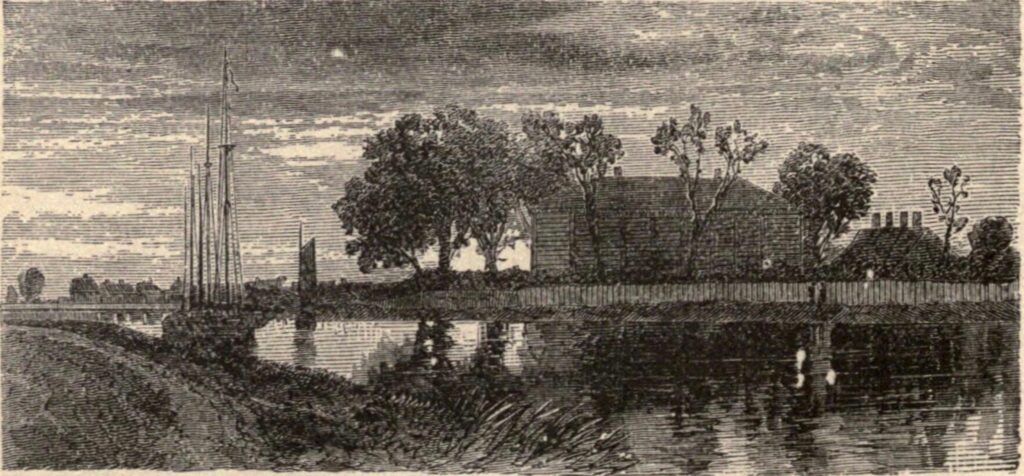
Voudou, the older spelling of Voodoo, is “a synthesis of African religious and magical beliefs with Roman Catholicism,” in Long’s words. By the 1830s, Laveau led a multiracial religious community, and Long puts her rise down to “clairvoyance, healing abilities, beauty, charisma, showmanship, intimidation, and business sense.” People came to the cottage to consult her, and she held ceremonies there every week. Legend also puts her at the head of the celebrations on the shore of Lake Pontchartrain on St. John’s Eve, June 23, the night before the Catholic feast of St. John the Baptist. There were bonfires, drumming, singing, dancing, ritual bathing, and a feast.
A correspondent for the New Orleans Times, a city daily, described one of those nights in 1872. About 300 people gathered by the lake. Water, salt, and black pepper went into a kettle on the fire. Then in went a black snake “cut in three pieces,” a cat whose throat the queen cut, and a black rooster, still alive. At midnight, she called “all hands in the water,” and everyone went into the lake. The night ended the way a Catholic service might, with a sermon, and everyone knelt “to pray and receive her benediction.” The paper named the queen as Marie Laveau. But Marie was 70 that summer, and Long finds it “unlikely” that she was this “seemingly robust woman.” Long wonders whether the reporter saw someone else.
The House on St. Ann Street
Legend says the cottage was payment for a miracle. New Orleans Historical, a local history website, tells it this way. A wealthy man’s son stood accused of murder, and the lawyers said the case was hopeless. The father promised Laveau a house on St. Ann Street if she could win the boy his freedom. She spent weeks praying in St. Louis Cathedral, to the Catholic saints and to the spirits of Voudou, with hot guinea peppers held in her mouth. On the morning of the trial, she left the peppers under the judge’s seat. The son was found innocent, and the house was hers.
The records tell a different story, with a different hero. Catherine built the cottage around 1798, three years after she bought her freedom, and after she died, the family sold it to Christophe Glapion.
The household held a harder fact, too. The granddaughter of a woman who had bought her way out of slavery enslaved people herself. Long found that Marie and Glapion bought and sold eight people between 1828 and 1854, children among them, and some served the household for years before they were sold. Three were women Marie bought in her own name.
When Glapion died, his “unwise business speculations,” as Long calls them, left the family in debt, and the cottage was seized. Laveau, her daughters, and her grandchildren stayed on only because a friend bought it. The cottage was torn down in 1903. Today, 1020 St. Ann Street stands about where it was.
Altars for the Condemned
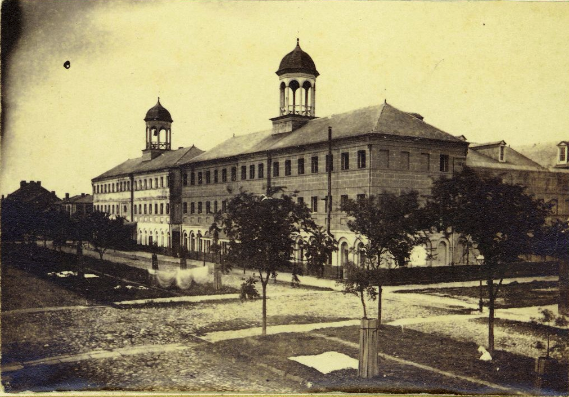
All her life, she stayed a Catholic, and had her children baptized at the cathedral. She gave her time to charity, too, and much of it to the men waiting to hang in the Parish Prison, the city’s jail. “For more than twenty years,” the Daily Picayune wrote in 1871, “whenever a human being has suffered the final penalty in the Parish Prison,” an old woman had come to his cell to build him an altar and pray with him. The paper named her, though it spelled her “Marie Lavan,” and called her “the Priestess of the Voudous.” The altar it described that year stood about three feet square, draped in white and set with vases of pink and white camellias, with a small figure of the Virgin at its peak.
June 15, 1881
In the last months of her life, the New Orleans writer George Washington Cable came to see her. He wrote about the visit in “Creole Slave Songs,” an article for the Century Magazine in 1886. “I once saw, in her extreme old age, the famed Marie Laveau,” he wrote. “They said she was over a hundred years old, and there was nothing to cast doubt upon the statement.” Had he come a few months later, he added, it would have been too late.
Marie Laveau died in the St. Ann Street cottage on June 15, 1881, a few months short of her 80th birthday. Her legend was already older than she was. Her death certificate gives her age as 98, and in the census she aged 30 years in a single decade, from 65 in 1870 to 95 in 1880.
She was buried at five o’clock the next evening. Father Hyacinth Mignot of St. Louis Cathedral led the funeral, and the Picayune wrote that “the most prominent and the most humble” followed her to the grave. Most of the city’s obituaries remembered a woman who nursed the sick, cared for the poor, ministered to prisoners, and gave herself to the church. The Picayune’s obituary never used the word Voudou, though the paper had called her “the Priestess of the Voudous” 10 years before. The nearest it came was to say that “the ignorant attributed her success to unnatural means.”
She was laid in the middle vault of her family’s tomb in St. Louis Cemetery No. 1, the city’s oldest cemetery, a few blocks from her cottage, with Christophe Glapion, her children and her grandchildren.
Who Was Marie II?
In her later years, the story goes, one of her daughters took her place as queen, and New Orleans called her Marie II. The writer Robert Tallant told it that way in his 1946 book Voodoo in New Orleans: “Marie II remained the leading Voodoo figure.”
No daughter fits. The elder, Héloïse, died in 1862, before her mother. The younger, Philomène, lived on in the cottage until 1897. People who had known her were interviewed decades later, and from what they said, Long calls her “a rigidly proper Catholic matron who had no association with Voudou.”
Cable’s visit only deepens the mystery. The old queen sat in a rocking chair with “three generations of her children” around her, and among them was a daughter he described as “a woman of some seventy years, and a most striking and majestic figure.” No daughter of Marie’s was anywhere near 70: Philomène, the only one still living, was in her 40s. Who that woman was, the records don’t say.
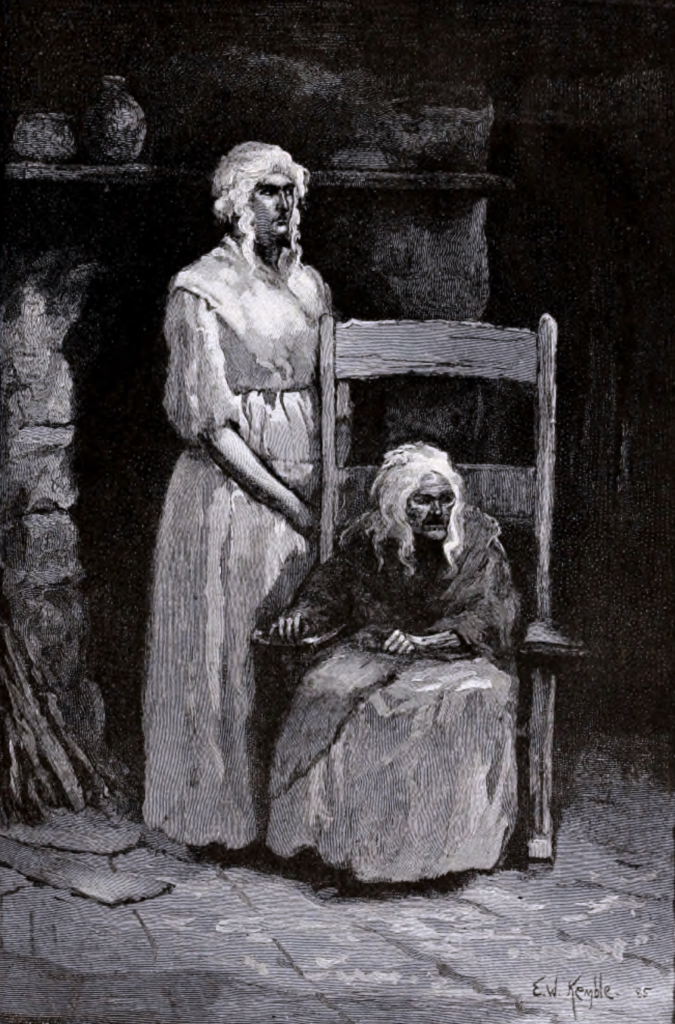
In the same article, Cable named the new queen, and she was no daughter at all: a woman called Malvina Latour. Long could find her in no city directory, church or city record, or census. “The identity of ‘Marie II,’” Long writes, “if she existed at all, remains a mystery.” She wonders, too, whether Marie II was the queen the Times saw by the lake in 1872.
Hauntings & Lore
The Storm at the Gallows
The legends started while she was alive. Her visits to the condemned grew a legend of their own, and Tallant’s version goes like this. In 1852, the house painters Jean Adam and Antoine Delisle were to hang for murdering a young servant girl. Marie knelt with them in prayer, and on their last morning she brought them gumbo. Then she went out to join the crowd. The day was bright and cloudless until Delisle, on the platform, looked up and screamed. A cloud “like a black cape” hung over the gallows, and the sky went nearly black. As the trap was sprung, rain came down in torrents, and the ropes gave way. Both men fell to the pavement below. Ten minutes later they were hanged again, and the storm passed. The crowd whispered as a tall woman walked away with her head wrapped in a tignon: “There goes Marie Laveau!”
Some of it is in the papers. The hanging took place on July 2, 1852, on what Long calls “that rainy day.” The next morning’s Picayune reported that “the ill-adjusted ropes gave way,” and that both men “were precipitated to the ground, wounded and bruised” before they were hanged again. But in none of the papers, Long writes, “was there one word about Marie Laveau.”
Another story says she once cheated the hangman of his man. Antoine Cambre, who had shot a lamplighter, was sentenced to hang, and on the day before, Tallant writes, she promised him “a gumbo such as you have never eaten in your whole life.” The next day the guards found him dying on the floor of his cell, poisoned, the story goes, and spared the rope. Cambre did die in his cell, in August 1860, and the rumor that he had swallowed poison rather than face the gallows spread fast. The coroner called it “pernicious fever,” a vague term, Long notes, that could mean any of the diseases New Orleanians caught every summer.
The Woman in the Red Tignon
Her ghost, the stories say, wears a tignon, a cloth wrapped around the head like a turban. Witnesses describe her “gliding silently through the streets” in 19th-century clothes, writes the ghost-lore writer Michael Kleen, with “her distinctive red tignon wrapped around her head.” He says she is seen in St. Louis Cemetery No. 1 and around the French Quarter. The ghost tour company Ghost City Tours puts her outside her old home on St. Ann Street, her tignon folded into seven points like a crown.
Tallant’s 1946 book has an older sighting, told by a man named Elmore Lee Banks, who said it had happened “no more than ten years ago.” Banks was in a drugstore near St. Louis Cemetery No. 1 when an old woman came in, in a long white dress and a blue tignon. The druggist took one look at her and ran into the back of the store. She laughed and laughed, then asked Banks, “Don’t you know me?” He said, “No, ma’am,” and asked where the druggist had gone. That made her angry. She slapped him across the face, flew out the door and over the telephone wires, and disappeared over the cemetery wall. Banks passed out. When he came to, the druggist was pouring whiskey down his throat. “That was Marie Laveau,” he told Banks.
At Her Tomb
At her tomb, visitors have seen a woman in a tignon and taken her for Laveau. Lewis O. Powell IV, who writes about the haunted South on his site Southern Spirit Guide, says so, and passes on a story from Katherine Smith, a New Orleans tour guide. One of Smith’s guests laid her hand on the tomb to pray and heard a woman’s voice speaking to her. The guest believed it was Laveau, left an offering, and took some photographs. All the other pictures on the roll came out fine. The ones of the tomb came back black.
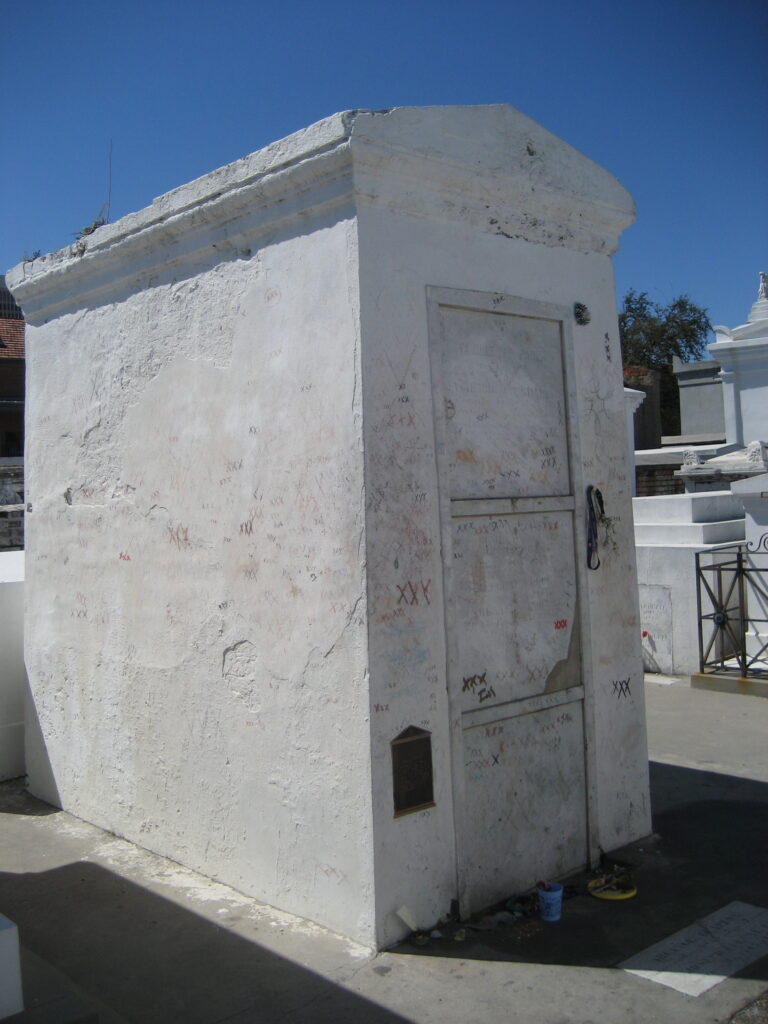
Others have had it worse. People who scoff at Laveau or her religion have been scratched, pinched, or shoved to the ground, writes Kathy Alexander of the history and folklore site Legends of America, and some have heard voices from inside the tomb. Some say she comes back as a large black cat with fire-red eyes, and that anyone who meets it should cross themselves three times and back away. Legend also gives her a large snake she called Zombi, sealed in her coffin with her, that still guards the tomb.
Three Knocks and an X
The knocking is the oldest part. The Louisiana Writers’ Project, a Depression-era program that paid writers to record the city’s history, interviewed Ayola Cruz, the cemetery’s caretaker since the early 1920s. People came “almost daily to make offerings to Marie’s spirit,” he told them. “They make crosses with red brick, charcoal, and sharp rocks,” and they “knock three times on the marble slab.” Tallant found the same in 1946: believers “come here to knock three times on the slab and ask a favor.”
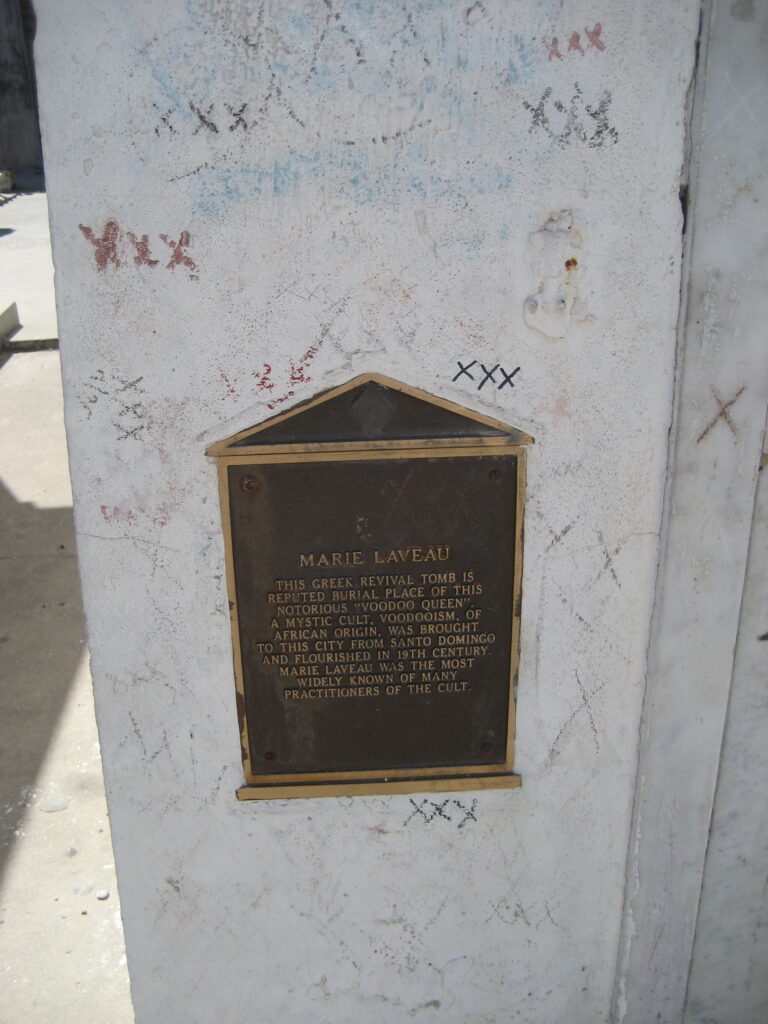
The recipe for a wish came later. In 2014, the Times-Picayune, as the Picayune was called after a 1914 merger, wrote that it went back “decades”: draw an X on the tomb, turn around three times, knock, and yell out your wish. If it came true, you came back, circled your X, and left her an offering.
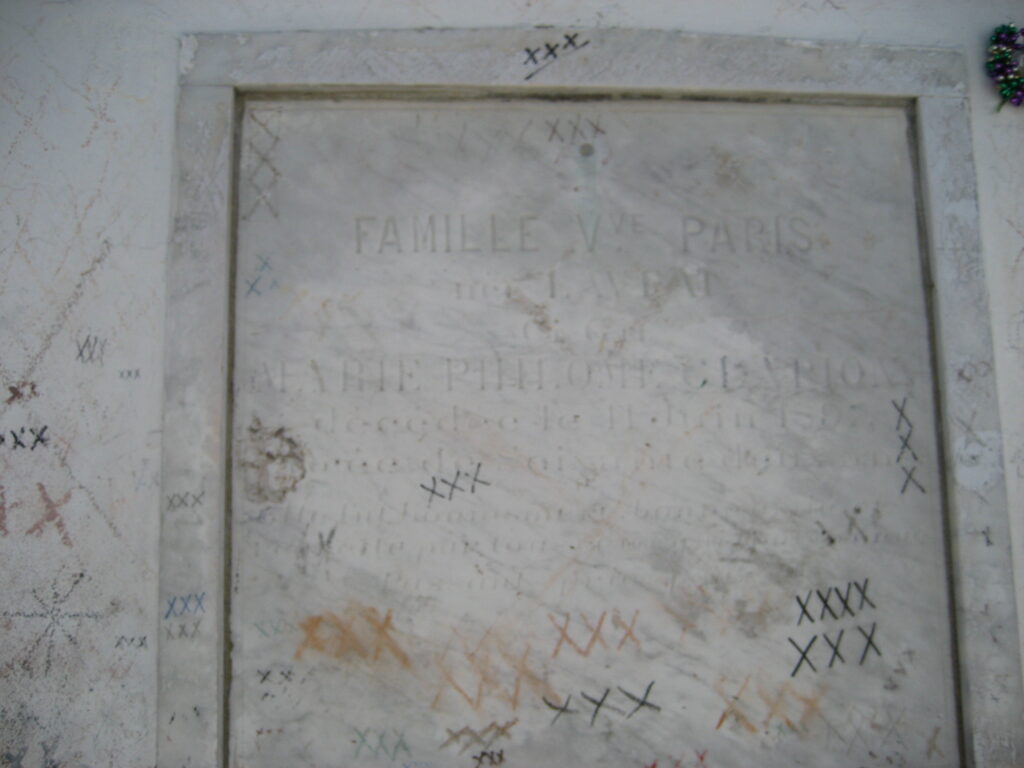
The Xs nearly ruined the tomb. In December 2013, someone covered it in pink latex paint. “We think the guy was trying to cover up all the Xs,” Amanda Walker of Save Our Cemeteries, a nonprofit that cares for the city’s old cemeteries, told WWNO, New Orleans’ public radio station. “And he thought he was doing something good.” The tomb was repaired in 2014, and within months the Xs were back, in eye shadow, crayon, lip balm, and ink.
That year, the Archdiocese of New Orleans, which owns the cemetery, locked the gate to unaccompanied visitors. “We’ve had unlicensed tour guides and others handing out markers and instructions on how to mark up various tombs,” its spokeswoman said. Today, you can see the tomb only on the cemetery’s official tour, run by Cemetery Tours New Orleans. “Even today,” Long wrote in 2017, in Louisiana’s online encyclopedia, “tourists and locals visit her tomb to leave offerings and ask for her assistance.”
In answer to the locked gate, the artist Ricky Pustanio and the Voodoo priestess Sallie Ann Glassman opened the International Shrine of Marie Laveau in 2015, in the New Orleans Healing Center on St. Claude Avenue. Its centerpiece is a statue of her that Pustanio had made for a St. John’s Eve ceremony, and people leave her offerings there and pray.
St. John’s Eve
The lakeshore nights were never only for the faithful. In 1924, long after her death, a Times-Picayune reporter wrote that she had welcomed white onlookers to the lakeshore, and that “it is often remarked that it was the decoy, the real worship of the Voodoo taking place at other times in remote regions of the swamp.”
Some say her ghost spends the night in church instead. On St. John’s Eve, Jeff Dwyer writes in his Ghost Hunter’s Guide to New Orleans (2007), “she walks among the faithful to worship at church,” known by “the colorful tignon” she wears.
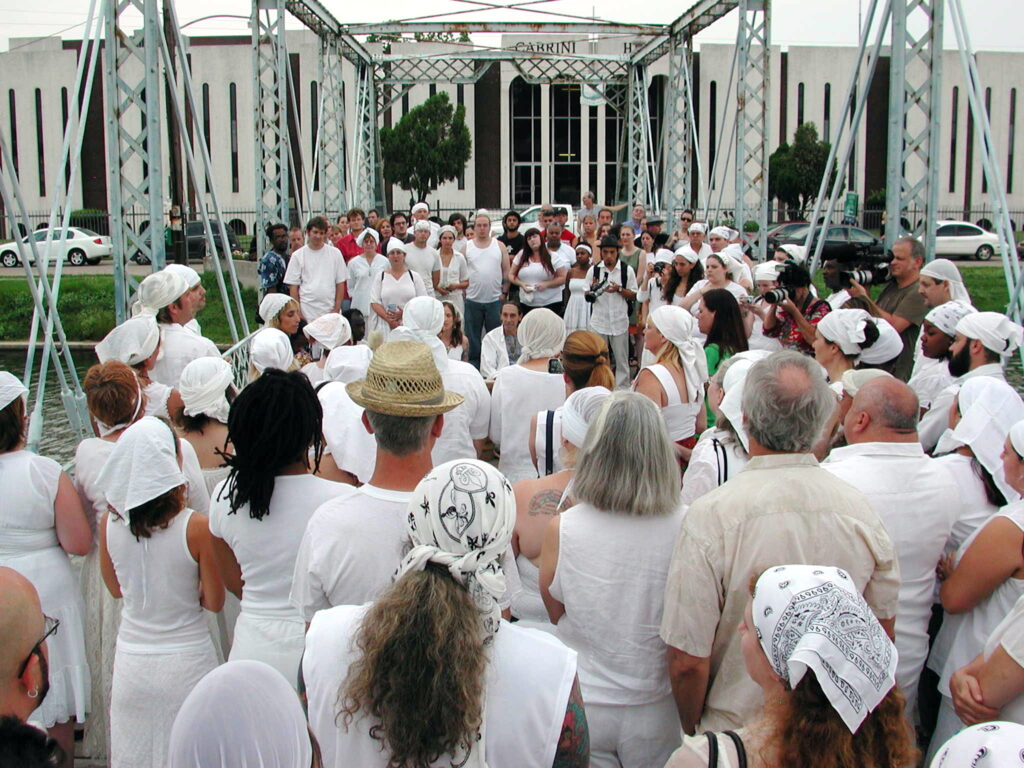
The faithful still come to the water. Each June 23, Glassman and her congregation, La Source Ancienne, hold a head-washing ceremony on a footbridge over Bayou St. John, the old waterway between the city and the lake. It is a form of Voodoo baptism, dedicated to Marie Laveau, and people come dressed in white, with white scarves for their heads, to bring her flowers, candles, and Creole food.
Been here?
Tell us what happened.
Related Places
Church
St. Louis Cathedral
The priest Père Antoine wrote that fire engulfed the church before this cathedral "in less than half an hour" on March 21, 1788. Guides tell of his ghost humming hymns in the alley that carries his name.
Cemetery
St. Louis Cemetery No. 1
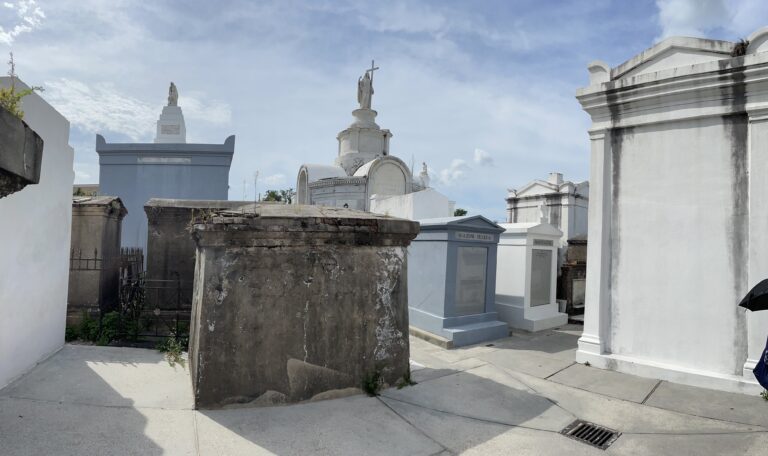
For generations, visitors to New Orleans' oldest cemetery have marked the tomb of Marie Laveau, the Voodoo Queen, to ask for her help. Legends of America, a folklore site, says a sailor's ghost walks the same cemetery, still asking what became of his family's tomb.
Dig Deeper
Books
-

Marie Laveau’s Lost Spell Book
These are authentic spells from one of the many grimoires the Voodoo Queen of New Orleans kept. read more
Tours
-
Royal Carriages
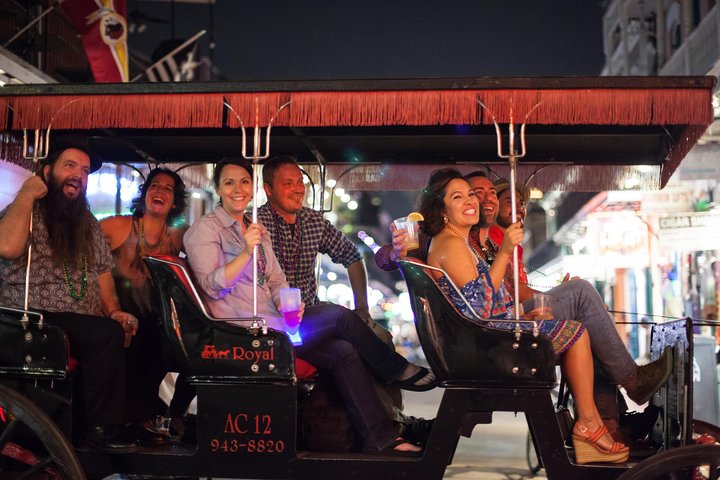
Royal Carriages runs mule-drawn carriage tours of the French Quarter, and its site says the company has done so since 1941. Its… see tour company
-
Haunted History Tours
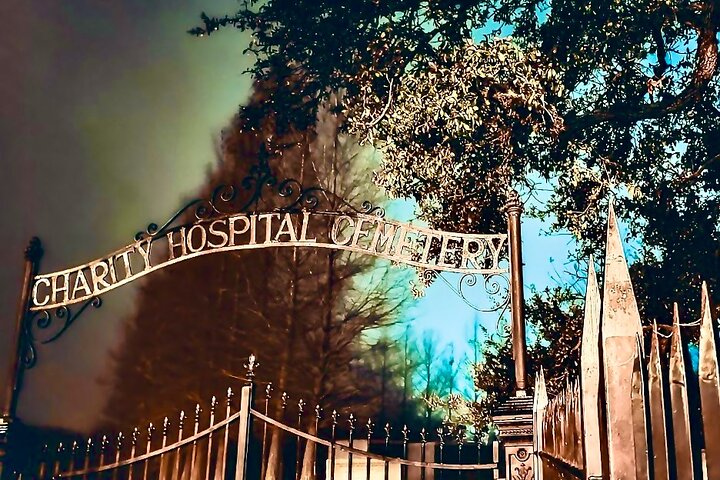
Haunted History Tours is a French Quarter company that runs ghost walks, a night bus tour that goes into a cemetery, and… see tour company
-
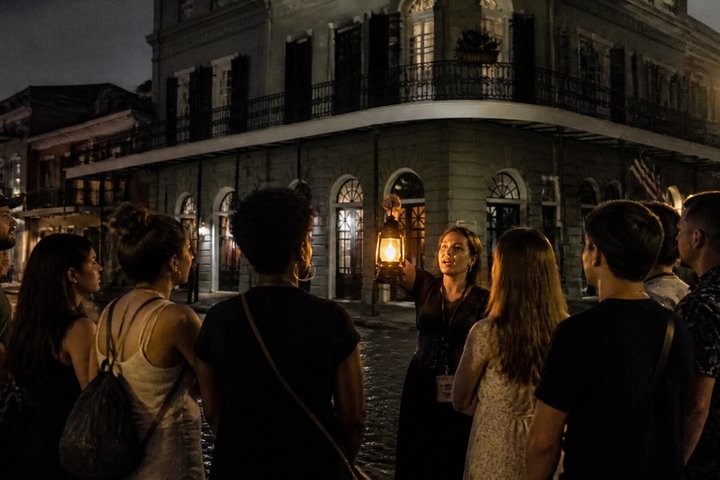
New Orleans Ghosts (US Ghost Adventures)
New Orleans Ghosts is the New Orleans brand of US Ghost Adventures, a company that runs ghost tours under local names in… see tour company
-
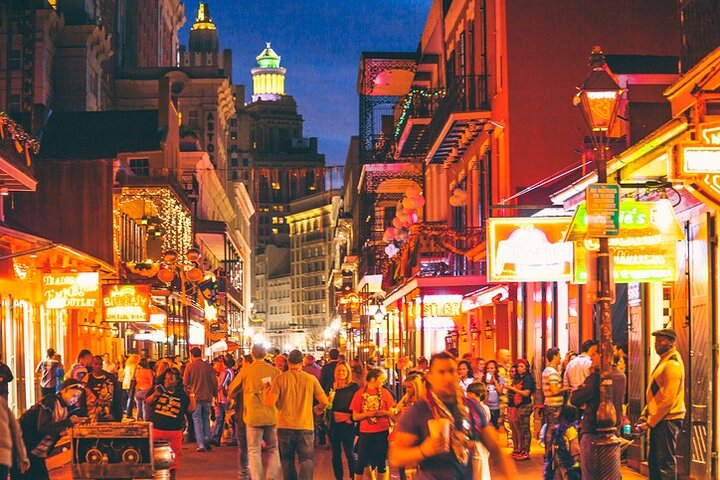
Ghost City Tours in New Orleans
Ghost City Tours in New Orleans is the local branch of Ghost City Tours, which says it has run ghost tours in… see tour company
Contributors
Sources (17) including 2 records of the time · 2 records of the time
Records of the Time 2
Newspapers, records, surveys, and photographs made when it happened.
-

The Daily Picayune, through America's Historical Newspapers
infoweb.newsbank.com
"Death of Marie Laveau" (June 17, 1881).
-

The 1870 and 1880 censuses, her 1881 death certificate, and the Louisiana State Museum's record of the tomb's inscription.
Histories and References 4
What historians, museums, historical societies, and official bodies have written since.
-

Carolyn Morrow Long's entries on Marie Laveau and on Voudou.
-

"The Home: Marie Laveau's House" and "The Ancestors: Marie Laveau's Tomb," from the tour "Meet Me at the Crossroads: The Life and Legend of Marie Laveau" (August Darbonne, 2020).
-

George W. Cable, "Creole Slave Songs," The Century Magazine, vol. 31 (1886), with E. W. Kemble's drawings; Robert Tallant, Voodoo in New Orleans (1946), which reprints "The Vous Dous Incantation" from the New Orleans Times of June 28, 1872; Martha Ward, Voodoo Queen (2004); Carolyn Morrow Long, A New Orleans Voudou Priestess (2006).
-

New Orleans Catholic Cemeteries
News, Lore, and Guides 11
Later reporting, ghost lore, and the places and guides that tell the stories.
-

Tomb of Marie Laveau, Voodoo queen of New Orleans, refurbished in time for Halloween
The Times-Picayune · Richard A. Webster, 2014
-

Solo tourists banned in New Orleans' oldest cemetery
Associated Press · Janet McConnaughey, 2015
-

Archdiocese Of New Orleans Restricts Access To Historic Cemetery
WWNO · Eve Troeh, 2015
-

Voodoo, Villains, and Visions: The Unique Hauntings of New Orleans
Michael Kleen, 2025
-
Ghost Hunter's Guide to New Orleans
Jeff Dwyer, Pelican, 2007
-

Voodoo Priestess Marie Laveau Created New Orleans' Midsummer Festival
Smithsonian Magazine · Kat Eschner, 2017
-

New Orleans Magazine · Errol Laborde, 2009
-

"St. John's Eve" (the head-washing ceremony, updated 2022); "International Shrine of Marie Laveau at the New Orleans Healing Center" (the shrine's 2015 press release)
-

Haunted Cities of the Dead in New Orleans, Louisiana
Legends of America · Kathy Alexander, updated February 2026
-
Street Guide to the Phantoms of the French Quarter: Basin Street
Southern Spirit Guide · Lewis O. Powell IV, 2019, updated 2023
-

The Ghosts of Marie Laveau's House
Ghost City Tours · Tim Nealon