
On This Page
History
Born Free in the French Quarter
Marie Laveau was born in New Orleans on September 10, 1801, the first in her mother’s line to be born free. Historian Carolyn Morrow Long’s 2006 biography, A New Orleans Voudou Priestess, starts the story with Laveau’s great-grandmother Marguerite, an enslaved woman with no surname. Long writes that “historical evidence suggests” Marguerite was brought from Senegal to Louisiana in 1743 aboard the St. Ursin, the last French slave-trading vessel.
Marguerite’s daughter, Catherine, bought her own freedom in 1795 and took the name Catherine Henry. Catherine’s daughter, Marguerite Henry, had been freed in 1790 and later went by Marguerite Darcantel. She was Marie Laveau’s mother. Marie’s father was Charles Laveaux, a successful businessman of mixed race with whom Marguerite had a brief relationship. Around 1798, Catherine built a cottage on St. Ann Street, between Rampart and Burgundy Streets.
The Widow Paris
On August 4, 1819, Marie Laveau married Jacques Paris, a free carpenter of color from Saint-Domingue, the French colony that became Haiti. She had been baptized at St. Louis Cathedral, she married there, and she would have her own children baptized there too.

The couple had two daughters, Felicité and Marie Angèlie, and both died in childhood. Around 1824, Long writes, Jacques Paris “died or disappeared.” From then on, Marie was known as the Widow Paris.
Christophe Glapion and Their Children
By 1826, she was living with Louis Christophe Dominic Duminy de Glapion, a white man of noble French descent. They couldn’t marry, because interracial marriage was against the law. Their domestic partnership lasted until Glapion died in 1855.
They had seven children. Only two lived to adulthood: Marie Héloïse Euchariste, born in 1827, and Marie Philomène, born in 1836. The other five died as babies or small children, between 1829 and 1845. Counting the two Paris daughters, the church records Long worked from show nine children, and two of them grew up.
Her obituary gave a bigger number. “Fifteen children were the result of their marriage,” the Daily Picayune, a New Orleans paper, said in 1881. The writer Robert Tallant repeated it in his 1946 book, Voodoo in New Orleans. By 2004, the biographer Martha Ward wrote, “television programs, tourist propaganda, and Internet sites” were proclaiming it too.
The family lived in the St. Ann Street cottage her grandmother had built. Glapion had bought it from Catherine Henry’s heirs, so the house was legally his. After he died, his unwise business speculations left the family in a financial crisis, and the cottage was seized for debt. Laveau, her daughters, and her grandchildren stayed on only because a friend bought the house. The cottage was torn down in 1903. Today, 1020 St. Ann Street marks about where it stood.
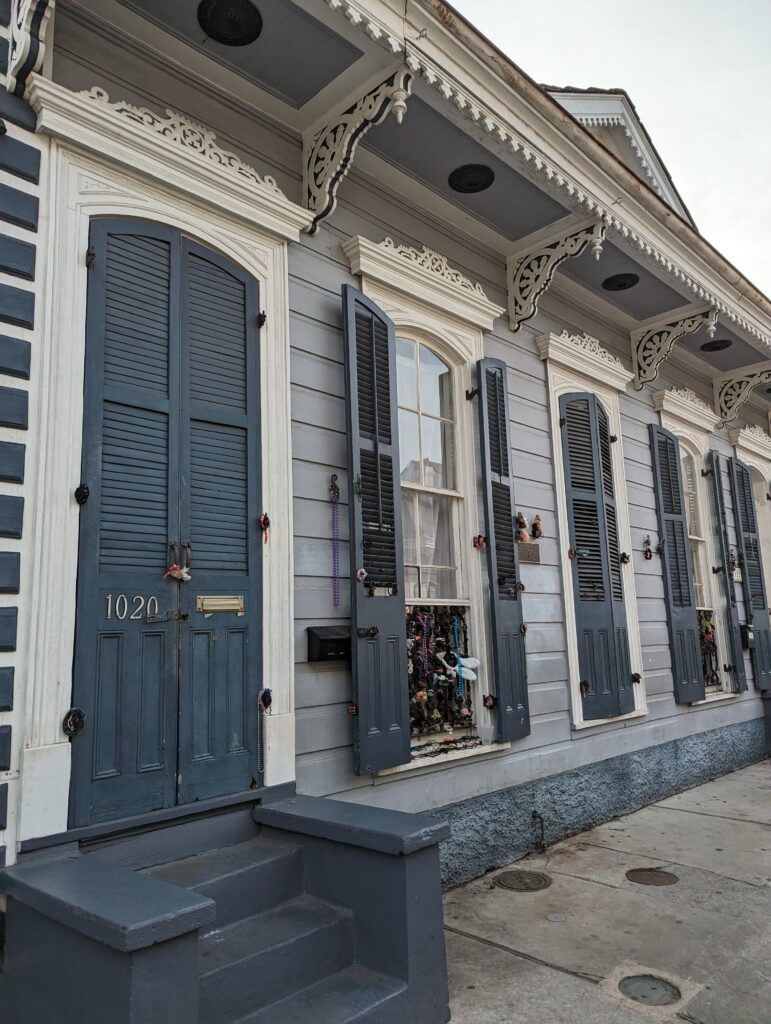
Legend gives the house a better story. New Orleans Historical, a local history website, tells the version where a wealthy man promised Laveau a house on St. Ann Street if she could free his son, who stood accused of murder. She prayed at the cathedral for weeks with hot guinea peppers in her mouth. On the morning of the trial, she left the peppers under the judge’s seat, and the son was found innocent.
Priestess of the Voudous
By the 1830s, Laveau was a priestess of Voudou and led a multiracial religious community. Louisiana’s online encyclopedia, 64 Parishes, describes Voudou as “a synthesis of African religious and magical beliefs with Roman Catholicism.” She gave consultations and held weekly ceremonies at the cottage. She is credited with leading the St. John’s Eve celebrations on the shore of Lake Pontchartrain.
The newspapers seldom wrote about her while she was alive. When they did, they called her “the head of the Voudou women,” “her majesty,” and “the Priestess of the Voudous.”
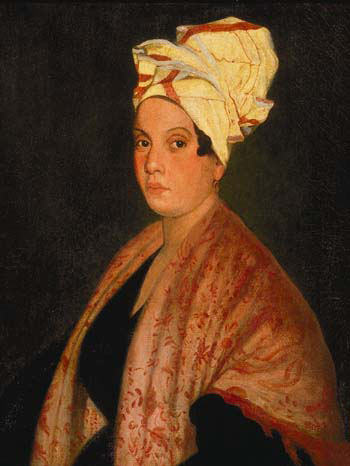
She was also a lifelong Catholic. She was godmother to her nephew and her granddaughter, and she paid for a seven-year-old orphan boy’s schooling at the Catholic Institution for Indigent Orphans. An 1871 newspaper article described her setting up altars in the cells of condemned prisoners and praying with them before they went to the gallows.
Legends gave her great wealth, but Long found that she lived quite modestly. She did buy two enslaved women, and she later sold them.
June 15, 1881
Near the end of her life, the writer George Washington Cable came to see her. “I once saw, in her extreme old age, the famed Marie Laveau,” he wrote in the Century Magazine in 1886. “They said she was over a hundred years old, and there was nothing to cast doubt upon the statement.”
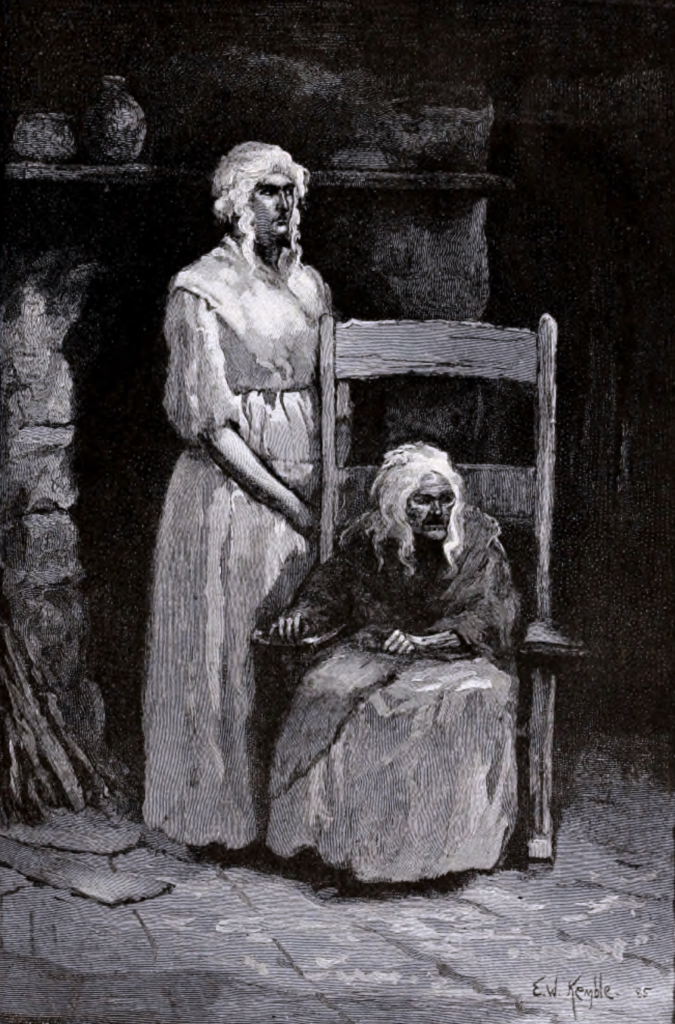
Marie Laveau died at home on Wednesday, June 15, 1881, a few months short of her 80th birthday. The next day, Augustin Lamothe, a white lawyer who lived in her St. Ann Street cottage, reported her death to the Board of Health. Her death certificate gives her age as 98. The census had already aged her 30 years in a decade, from 65 in 1870 to 95 in 1880.
The Picayune announced her death on June 17, under the line “A Woman with a Wonderful History, Almost a Century Old, Carried to the Tomb Yesterday Evening.” The New York Times reported that the “Queen of the Voudous” had died “at the advanced age of 98 years.”
She was buried at five o’clock on the evening of June 16, and Father Hyacinth Mignot of St. Louis Cathedral conducted the funeral. According to the Picayune, “her remains were followed to the grave by a large concourse of people, the most prominent and the most humble joining in paying their last respects to the dead.”
Most of the obituaries described a woman who nursed the sick, provided for those in need, ministered to prisoners, and dedicated herself to the Catholic Church. The Picayune’s obituary never used the word Voudou. The nearest it came was to say that “the ignorant attributed her success to unnatural means.” Her critics called her a “procuress” and an “arrant fraud.”
The Widow Paris Tomb
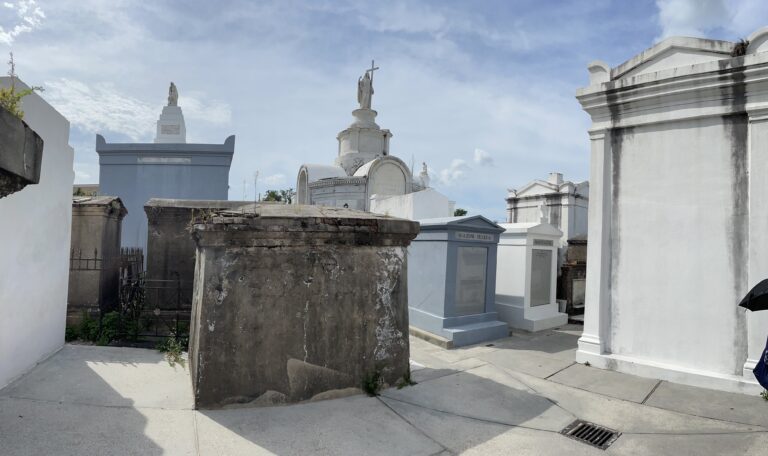
The Picayune reported that she went into her family’s tomb in St. Louis Cemetery No. 1, the city’s oldest cemetery, and Long writes that cemetery records prove she was laid in the Widow Paris tomb. New Orleans Historical calls it the Laveau-Glapion family tomb and places her in its middle vault, with Christophe Glapion, her children, and her grandchildren. Marie Philomène joined them in 1897.
The marble tablet that visitors cover in Xs is headed for the family of the Widow Paris, born Laveau. The epitaph below it is her daughter’s. By the Louisiana State Museum’s record of the inscription, it marks Marie Philomène Glapion, who died on June 11, 1897, at 62.
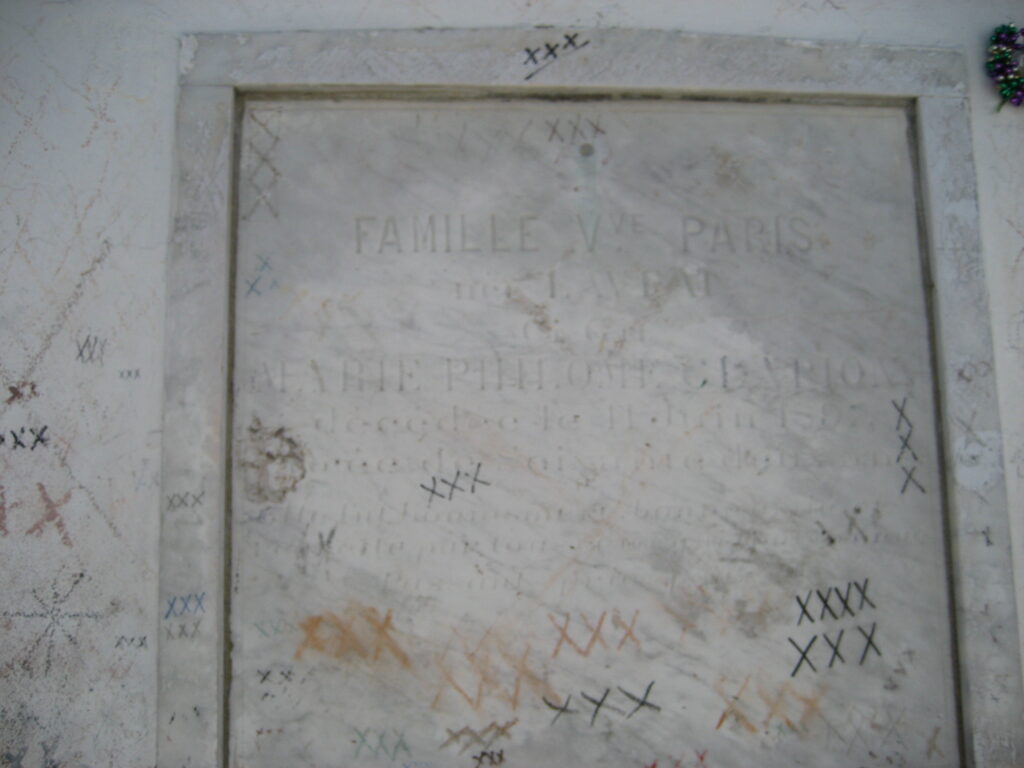
Not everyone agreed. Some of the people interviewed for the Works Progress Administration’s Federal Writers’ Project insisted she lay in a wall vault in St. Louis Cemetery No. 2, and so did some later researchers. The archival records put her in No. 1.
The Two Maries
Legend says one of her two surviving daughters took over as queen, and the name “Marie II” stuck. Tallant told it that way in 1946: after her mother’s death, he wrote, “Marie II remained the leading Voodoo figure.” The record makes that hard. Her elder daughter, Marie Héloïse Euchariste, died in 1862, 19 years before her mother. The younger, Marie Philomène, cared for her mother in old age and lived on in the St. Ann Street cottage until her own death in 1897. Long writes that interviews with people who knew Philomène describe “a rigidly proper Catholic matron who had no association with Voudou.”
Cable met a daughter at the cottage too, “a woman of some seventy years, and a most striking and majestic figure.” By the records, the only daughter still living, Marie Philomène, was in her 40s. Cable named a different woman as the new queen: Malvina Latour. Tallant wrote that “all the New Orleans Newspapers” announced it when she died: “Malvina Latour is queen!” The Picayune’s obituary says nothing of the kind. Long found Latour first named as the successor in an article of 1884, three years after the funeral, and nowhere in the city directories, church or city records, or the census. “The identity of ‘Marie II,’ if she existed at all, remains a mystery,” she writes.
Hauntings & Lore
Almost as soon as Marie Laveau died, people started coming to her tomb to leave offerings and ask for her help.
Three Knocks and an X
Raymond Rivaros and Ayola Cruz, sextons of St. Louis Cemetery No. 1 in the late 1800s and early 1900s, said visitors came “almost daily to make offerings to Marie’s spirit.” “They make crosses with red brick, charcoal, and sharp rocks,” the sextons said, and visitors would “knock three times on the marble slab.” Tallant found the same in 1946. Voodoo followers, he wrote, “come here to knock three times on the slab and ask a favor.”
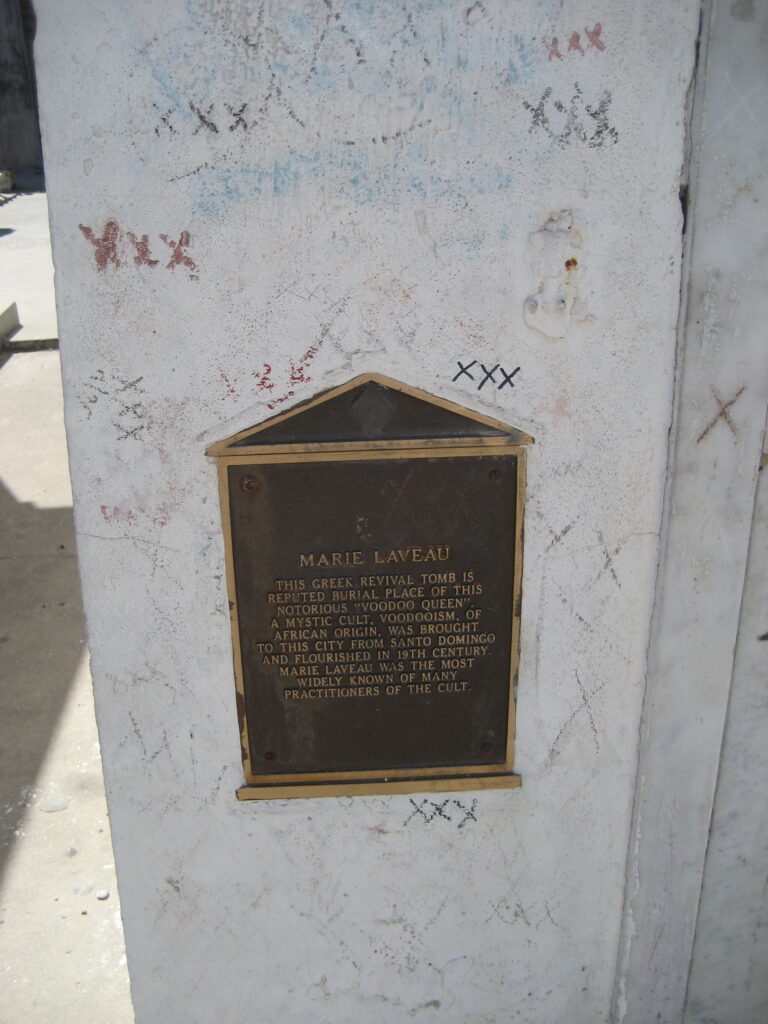
The Times-Picayune, the city’s daily paper, described the modern version in 2014. It began, the paper said, as a rumor “decades ago.” To have Laveau grant a wish, you draw an X on the tomb, turn around three times, knock on the tomb, and yell out your wish. If the wish comes true, you come back, circle your X, and leave her an offering.
Amanda Walker directed Save Our Cemeteries, a nonprofit that preserves the city’s historic cemeteries. She told the paper that people keep doing it, however often they hear it’s a myth that only damages the tomb. In 2015, a restoration consultant wiping Xs off the tomb’s marble tablets found them drawn in eye shadow, crayon, lip balm, and ink.
The Pink Tomb and the Locked Gate
In December 2013, a vandal covered Laveau’s tomb in pink latex paint. Latex paint doesn’t let moisture escape, which can badly damage old structures. The paint came off, and in 2014, the Archdiocese of New Orleans and Save Our Cemeteries spent $10,000 restoring the tomb, including repairs to thousands of carved Xs. Walker had her own theory about the painter. “We think the guy was trying to cover up all the Xs,” she told WWNO, New Orleans’ public radio station. “And he thought he was doing something good.”
In January 2015, the archdiocese, which owns the cemetery, announced that from March only relatives of the dead, visiting scholars, and visitors with a registered tour guide could go in. “We’ve had unlicensed tour guides and others handing out markers and instructions on how to mark up various tombs,” its spokeswoman said.
Today, New Orleans Catholic Cemeteries, the archdiocese’s cemeteries office, says tours of St. Louis Cemetery No. 1 are offered only by Cemetery Tours New Orleans. Families of the people buried there show a family pass at the gate.
For devotees who can’t get in, there is the International Shrine of Marie Laveau, in the lobby of the Healing Center at 2372 St. Claude Avenue. The artist Ricardo Pustanio and the Vodou priestess Sallie Ann Glassman created it.
Her Ghost in the Quarter
According to writer Michael Kleen, Marie Laveau is said to haunt St. Louis Cemetery No. 1, and her ghost is reportedly seen around the French Quarter too. “Witnesses describe a woman dressed in 19th-century clothing, her distinctive red tignon wrapped around her head, gliding silently through the streets,” he writes. A tignon is the head wrap Cable described as “a Madras handkerchief twisted into a turban.” Kleen adds a warning from the legend: disrespecting her grave can lead to misfortune.
French Quarter ghost tours tell her story too. To see her tomb, book a guided visit to St. Louis Cemetery No. 1.
Been here?
Tell us what happened.
Related Places
Church
St. Louis Cathedral
The priest Père Antoine wrote that fire engulfed the church before this cathedral "in less than half an hour" on March 21, 1788. Guides tell of his ghost humming hymns in the alley that carries his name.
Cemetery
St. Louis Cemetery No. 1
Archival records place Voodoo queen Marie Laveau in her family's tomb in St. Louis Cemetery No. 1, the city's oldest. Devotees began bringing her offerings and petitions there almost as soon as she died in 1881.
Dig Deeper
Books
-

Marie Laveau’s Lost Spell Book
These are authentic spells from one of the many grimoires the Voodoo Queen of New Orleans kept. read more
Tours
-
Royal Carriages
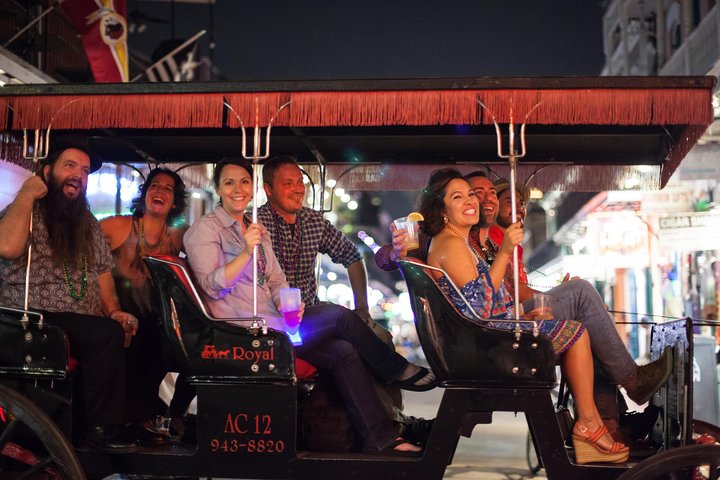
Royal Carriages runs mule-drawn carriage tours of the French Quarter, and its site says the company has done so since 1941. Its… see tour company
-
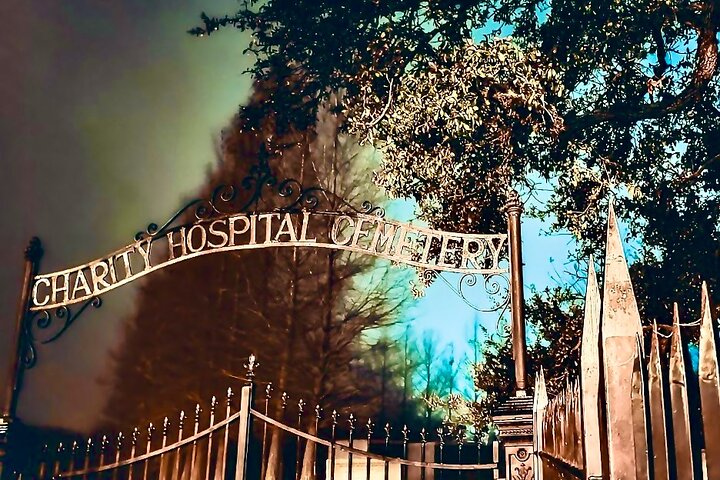
Haunted History Tours
Haunted History Tours is a French Quarter company that runs ghost walks, a night bus tour that goes into a cemetery, and… see tour company
-
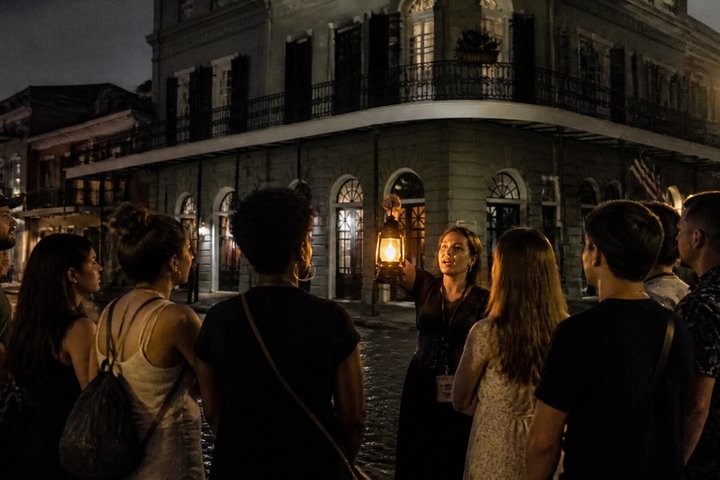
New Orleans Ghosts (US Ghost Adventures)
New Orleans Ghosts is the New Orleans brand of US Ghost Adventures, a company that runs ghost tours under local names in… see tour company
-
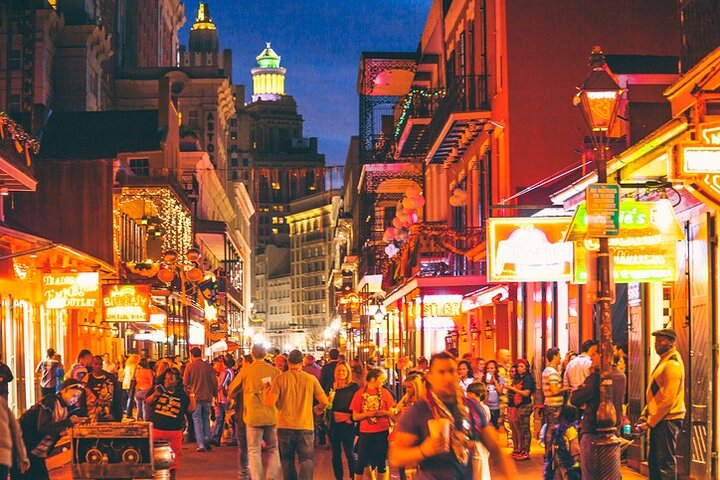
Ghost City Tours in New Orleans
Ghost City Tours in New Orleans is the local branch of Ghost City Tours, which says it has run ghost tours in… see tour company
Contributors
Sources (11)

Carolyn Morrow Long's entries on Marie Laveau and on Voudou.

"The Home: Marie Laveau's House" and "The Ancestors: Marie Laveau's Tomb," from the tour "Meet Me at the Crossroads: The Life and Legend of Marie Laveau" (August Darbonne, 2020).

The New York Times, through ProQuest Historical Newspapers
"The Dead Voudou Queen" (June 23, 1881).

The Daily Picayune, through America's Historical Newspapers
infoweb.newsbank.com
"Death of Marie Laveau" (June 17, 1881).

George W. Cable, "Creole Slave Songs," The Century Magazine, vol. 31 (1886), with E. W. Kemble's drawings; Robert Tallant, Voodoo in New Orleans (1946); Martha Ward, Voodoo Queen (2004); Carolyn Morrow Long, A New Orleans Voudou Priestess (2006).

The 1870 and 1880 censuses, her 1881 death certificate, and the Louisiana State Museum's record of the tomb's inscription.

Tomb of Marie Laveau, Voodoo queen of New Orleans, refurbished in time for Halloween
The Times-Picayune · Richard A. Webster, 2014

Solo tourists banned in New Orleans' oldest cemetery
Associated Press · Janet McConnaughey, 2015

Archdiocese Of New Orleans Restricts Access To Historic Cemetery
WWNO · Eve Troeh, 2015

New Orleans Catholic Cemeteries

Voodoo, Villains, and Visions: The Unique Hauntings of New Orleans
Michael Kleen, 2025