
On This Page
History
The Rock
Alcatraz “is most famous for the 29 years it operated as a U.S. penitentiary,” the National Park Service says, and more than 1,500 people were held there. The federal prison closed on March 21, 1963. In all those years, KPIX, a San Francisco TV station, has reported, there were eight murders on Alcatraz, no executions, and no one was buried on the island. Al Capone did time there, and he took up music, playing the banjo, Smithsonian magazine says.
In 1972, Alcatraz became part of a new national park, the Golden Gate National Recreation Area, and it opened to the public on October 26, 1973.
The Battle of Alcatraz
On May 2, 1946, six prisoners tried to break out. Bernard Coy, a bank robber serving 25 years, worked in the cell house as an orderly. He had found a flaw in the bars that guarded the gun gallery, a raised walkway patrolled by an armed officer. While the gallery officer, Burt Burch, was away, the convicts attacked Officer William A. Miller. Coy spread the bars, squeezed into the gallery, and armed the others. The plan was to take officers hostage, use them as cover to reach the island’s dock, and seize the prison launch.
It failed within minutes. The way out ran through the recreation yard, and Miller had the key to its door. He kept it from them. Trying other keys, the convicts jammed the lock, and the break turned into a siege.
They had nine officers locked in two cells. “We won’t have any testimony against us,” Sam Shockley said, according to the federal appeals court that later heard the case. Miran Thompson answered, “Yes, we want no living witnesses.” Joseph Cretzer told Officer Weinhold, “You are going to be the first one to die.” Then he shot Weinhold, Officer Corwin and Miller, and fired into the next cell, wounding Officers Baker and Simpson. Miller died the next day, after swearing that Cretzer had shot him. Officer Harold Stites was killed in the gun gallery.
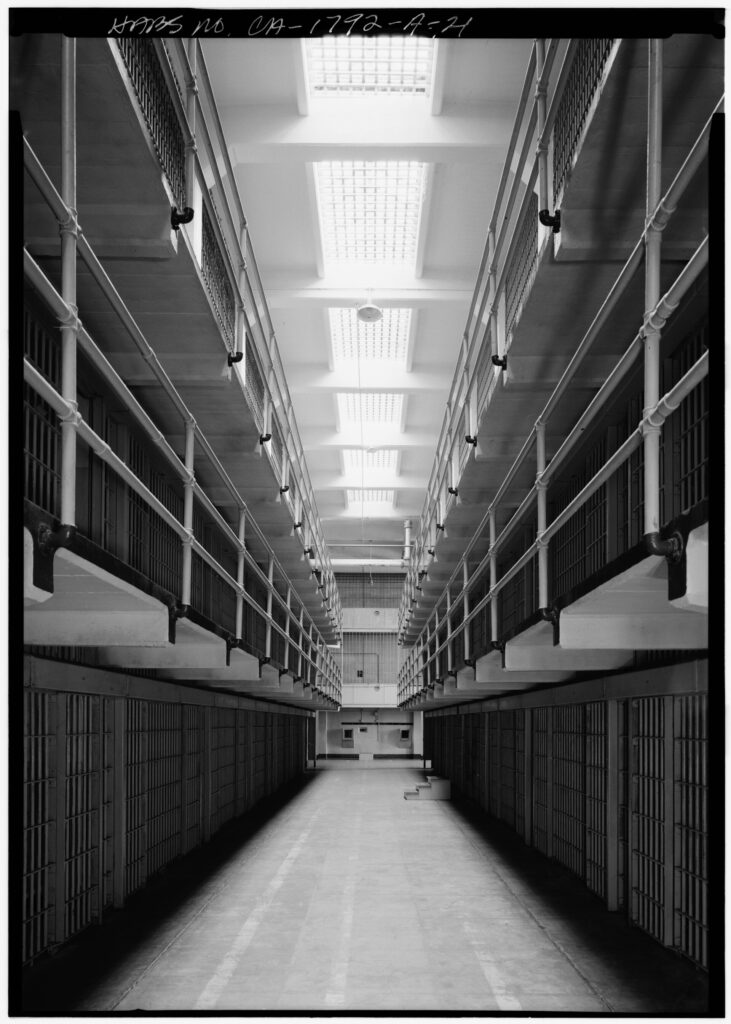
The Marines came out from Treasure Island. “Marines Chop Hole In Cell Roof to Blast Alcatraz Convicts,” ran the headline in Washington’s Evening Star on May 3. They were cutting through the roof of the cell block to drop hand grenades on the men inside. At dawn the next day, San Franciscans were peering across the bay at the island. That morning, squads of officers rushed into the cell house again and again, firing into a narrow utility corridor behind the cells. When they finally went in, they found Coy, Cretzer, and Marvin Hubbard dead.
Shockley and Thompson were executed together in the gas chamber at San Quentin on December 3, 1948. The sixth man, Clarence Carnes, was spared. The officers he had held testified that he had refused orders to kill them, and he was given another life sentence.
Hauntings & Lore
Not everyone who worked there believes the stories. “No. Personally I don’t believe in ghosts,” former officer George DeVincenzi told KPIX. The people who have spent nights on the island since tell it differently.
Cell 14-D
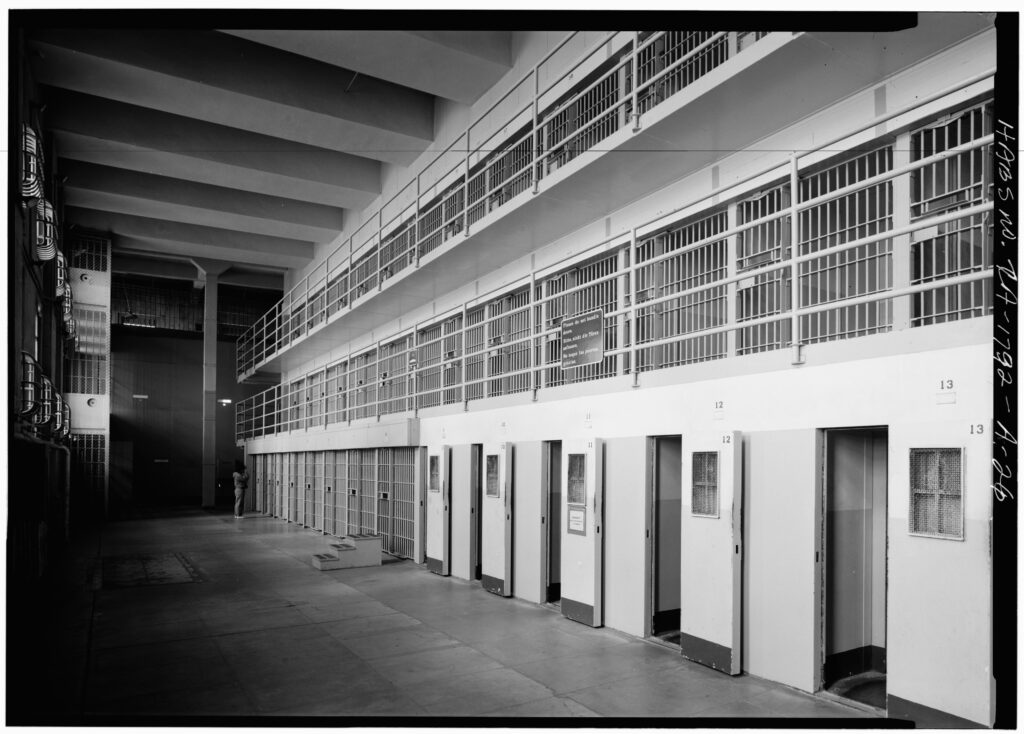
The stories gather in D Block, where the punishment cells were. Legends of America, a history and travel site, says “cells 12 and 14 D are the most active.” Cell 14-D, it says, “is often reported to be almost 20 degrees colder than the rest of the cells on the block.”
Capone’s Banjo
Capone really did play the banjo on Alcatraz. And many, Legends of America says, “have reported hearing a phantom banjo strumming in his cell.”
The Door in C Block
In 1984, ranger Rex Norman was spending a lonely night on the island. He “was awakened by the sound of a heavy door swinging back and forth in cell block C,” the San Francisco Chronicle wrote in 2004. He found nothing that could explain it. The sounds came back on the nights that followed, and the Park Service brought in the psychic Sylvia Browne.
The Corridor
The corridor where Coy, Cretzer, and Hubbard made their last stand is in C Block too. Some National Park employees believe it is haunted, says FoundSF, a San Francisco history site: “strange clanging noises break out at night from the empty corridor, but stop as soon as the watchman opens the door.”
Visit
Visiting Alcatraz Island
- Official visitor info: Alcatraz Island — National Park Service
- How to visit: Open to the public: explore on your own. All access is by the ferry that runs under contract with the National Park Service, and evening tours run on a set schedule.
- Finding the story sites: The cell house: D Block’s cells, Broadway between B and C blocks, and C Block, where the 1946 convicts made their last stand in the utility corridor behind the cells.
Location
San Francisco, CA 94133
Been here?
Tell us what happened.
Contributors

Sources (12)

National Park Service

Federal Bureau of Prisons

Legends of America · Kathy Alexander


Library of Congress
The Evening Star (Washington, D.C.), May 3, 1946; The Washington Daily News, May 4, 1946.

Is there a spirit here tonight?
San Francisco Chronicle · Antoinette May, 2004

Alcatraz: Island of Evil Spirits
FoundSF


National Park Service, Golden Gate
nps.gov
"Centuries of Defense: National Park Service Era" and the 50th-anniversary release for Alcatraz's opening.

en.wikipedia.org
"Battle of Alcatraz" and "Bernard Coy," and the episode lists for Ghost Hunters, The Dead Files and Ghost Adventures.