
History
San Francisco has a habit of burying things and building on top of them. It did it with ships, with a burned-out city, and with its own dead.
A Fort and a Mission
The city began in 1776 as a Spanish fort and a mission. The land belonged to the Yelamu, a tribe of the Ramaytush Ohlone, who are still here. The National Park Service says colonization brought new diseases and mission communities meant to replace tribal life. Mission Dolores shows the cost. About 200 headstones stand in its cemetery, but the local history archive FoundSF counts some 10,000 burials there, about 5,000 of them Native people.
Gold, Ships, and Landfill
In January 1847, the settlement on Yerba Buena Cove took the name San Francisco. It had a few hundred people. Then gold turned up on the American River, and KQED puts the population near 25,000 in 1849 and 36,000 by 1852.
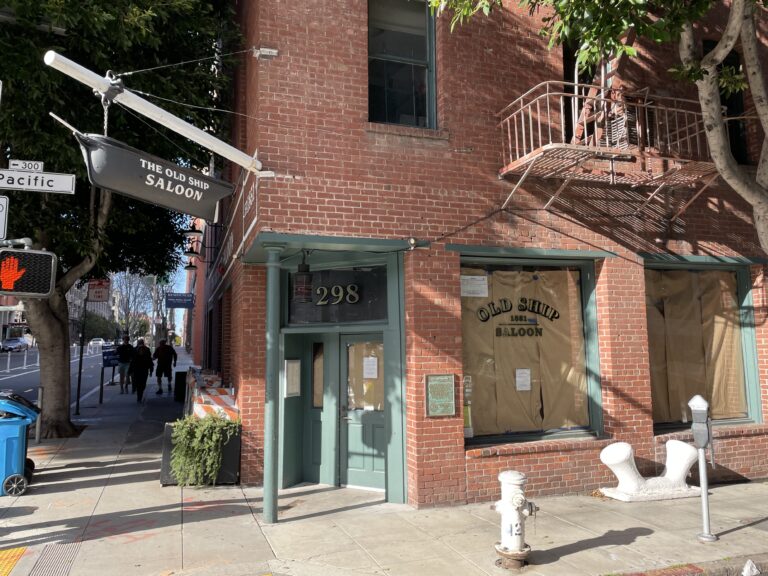
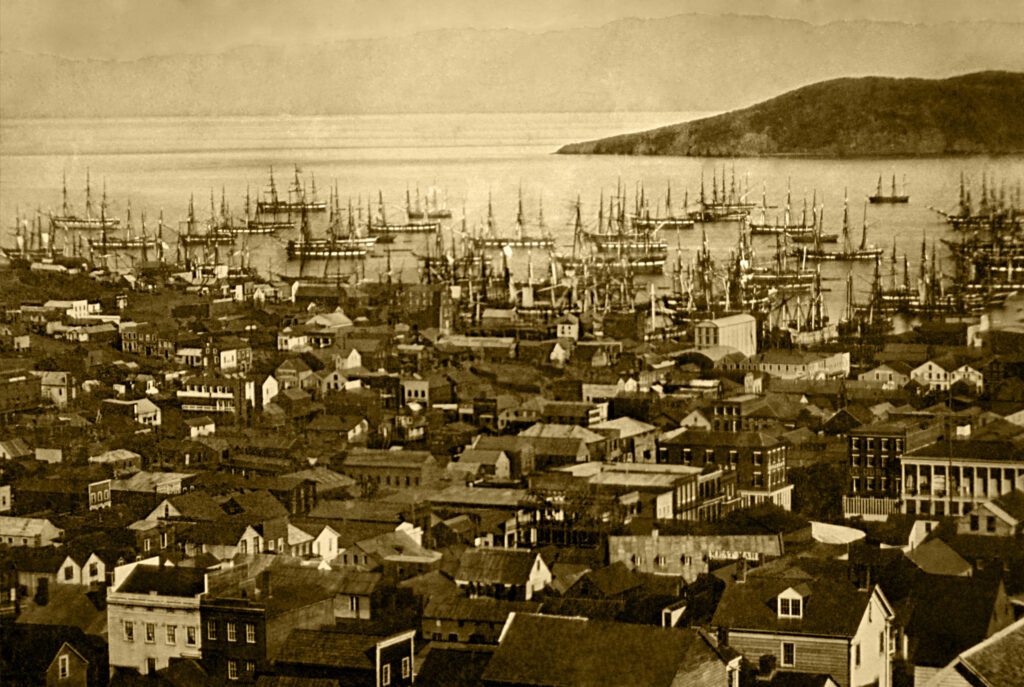
They came by sea, and many of the ships never left. Passengers and crews deserted for the gold fields. By 1850, more than a thousand vessels crowded the cove, a sight the National Park Service says was described as a “forest of masts.” The city filled in the shallows around them to make more land. The hulls were buried where they sat, and downtown San Francisco stands on top of them. One of those ships, the Arkansas, became a saloon, and a bar called the Old Ship Saloon still stands on the spot.
Fires, Vigilantes, and the Barbary Coast
The boomtown kept burning. SFGate counts six disastrous fires by 1851, and FoundSF says the one on May 3 of that year took almost 2,000 buildings. Crime kept pace. One historian counted 1,200 homicides between 1849 and the mid-1850s, SFGate reports. Businessmen formed a Committee of Vigilance that hanged four men in 1851. A second committee hanged four more in 1856, a city supervisor among them.
The vice district along Pacific Street got a name in the 1860s: the Barbary Coast. A writer in 1876 called it “the haunt of the low and the vile of every kind.” On its waterfront blocks, a sailor could be shanghaied, which meant being forced aboard an outbound ship as crew while the men who delivered him collected a fee.
Chinatown
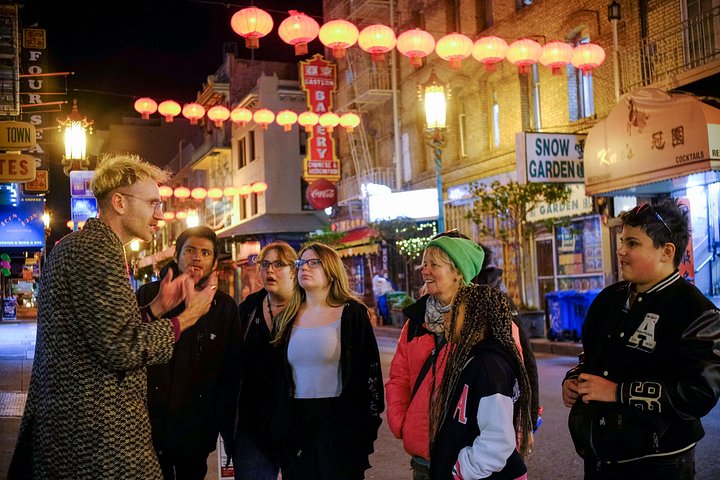
Chinatown had about 21,000 residents by 1890, and a trade in trafficked girls ran through it. Rescued girls told an investigating commission they had been sold for $2,000 to $3,000 apiece, according to FoundSF. In March 1900, bubonic plague was identified in the neighborhood. The city quarantined Chinatown the next day, and the governor spent two years denying there was an outbreak. By 1905, SFGate reports, 113 people had died, almost all of them in Chinatown.
April 18, 1906
At 5:12 a.m. on April 18, 1906, the ground shook for more than 40 seconds. Gas mains broke and started fires, the pipeline that carried water into the city was cut, and San Francisco burned for three days. The US Geological Survey counts 225,000 people left homeless.
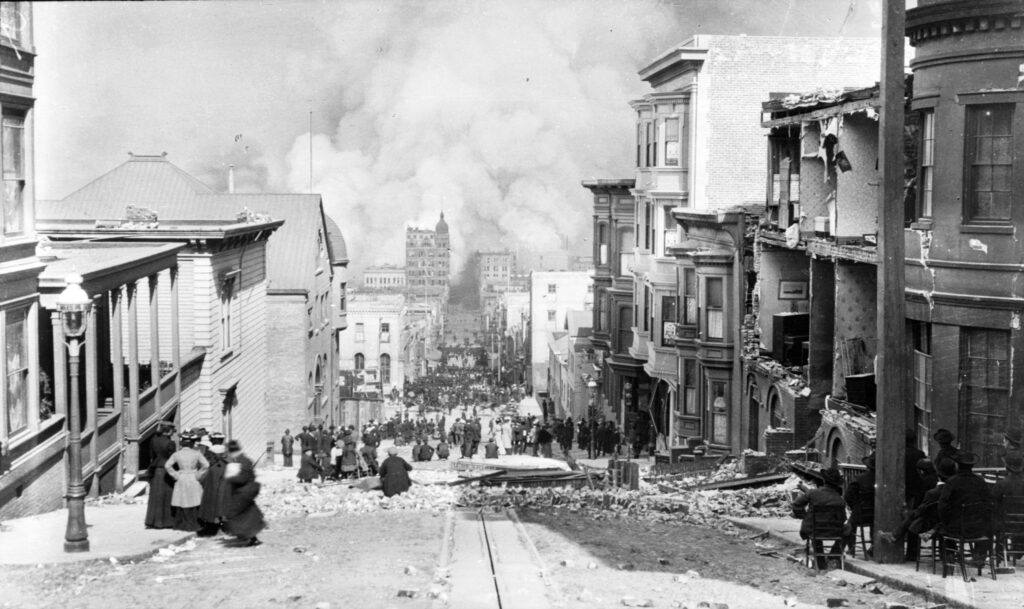
The official death list stopped at 478. City archivist Gladys Hansen’s research put the toll between 3,000 and 4,000. She argued that city leaders had hidden the real number because it was bad for business. The Geological Survey now says at least 3,000.
Why Is San Francisco Haunted?
SFGate once wrote that it’s “no surprise that San Francisco, with its wild and tawdry history, has long been a hotbed of ghostly activity.” The history is wild enough. The stranger part is what the city did with its dead.
The City That Evicted Its Dead
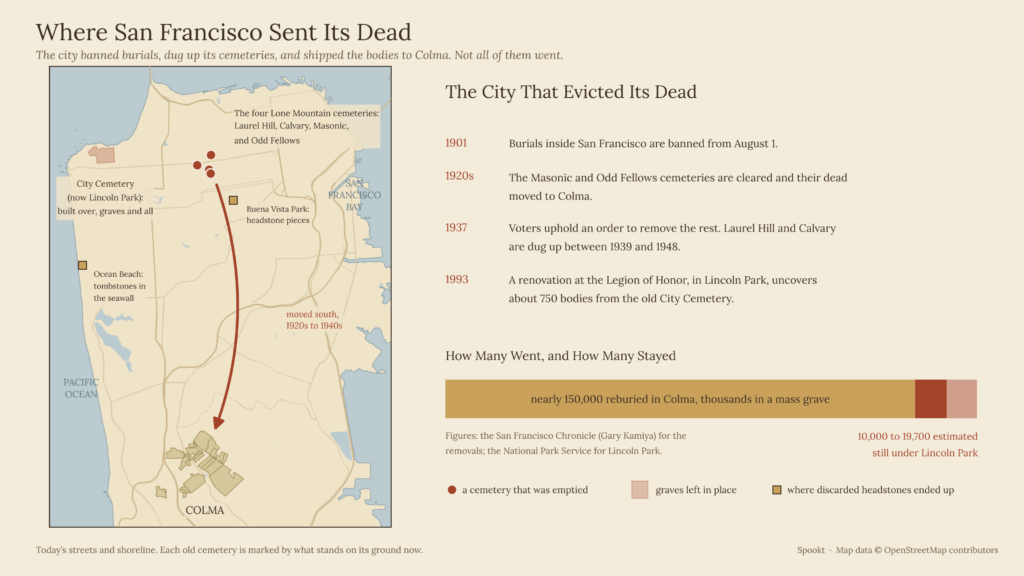
Burials inside San Francisco were banned from August 1, 1901. Voters threw out a first order to dig up the cemeteries. In 1937, the supervisors ordered the bodies removed again, and this time the voters agreed. Nearly 150,000 people were dug up and reburied in Colma, Gary Kamiya wrote in the San Francisco Chronicle, thousands of them in a mass grave. Colma had been incorporated in 1924 by its cemetery associations. Its historical association told KQED it is the only city founded to protect the dead.
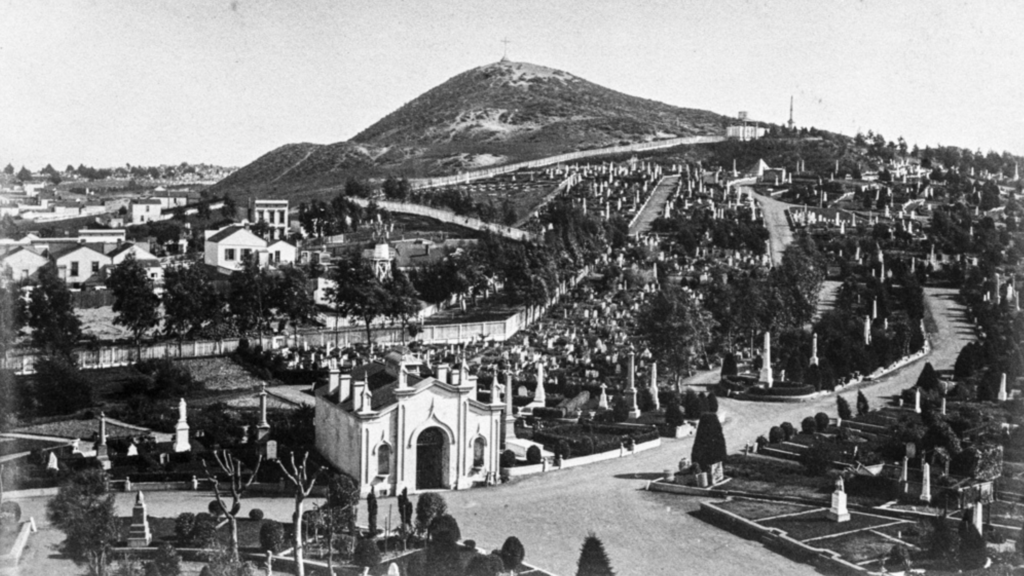
The headstones mostly stayed behind. The bodies moved for free, KQED reports, but families had to pay to keep a tombstone, and most stones never made the trip. The city put them to work. Discarded tombstones went into a seawall along the Great Highway, and crypts were dumped in the bay as breakwaters. In 2012, wind and shifting sand uncovered gravestones at Ocean Beach. Pieces of headstones line a sidewalk in Buena Vista Park.
The Ones Left Behind
“They missed a lot of the bodies,” University of San Francisco historian Alan Ziajka told KQED. His campus stands on former cemetery land, and remains have turned up with every major excavation there.
Lincoln Park was laid out over the old City Cemetery without the bodies being removed. In 1993, a renovation at the Legion of Honor, the art museum in the park, uncovered about 750 of them. The National Park Service estimates that between 10,000 and 19,700 burials remain under Lincoln Park.
What the Earthquake Left
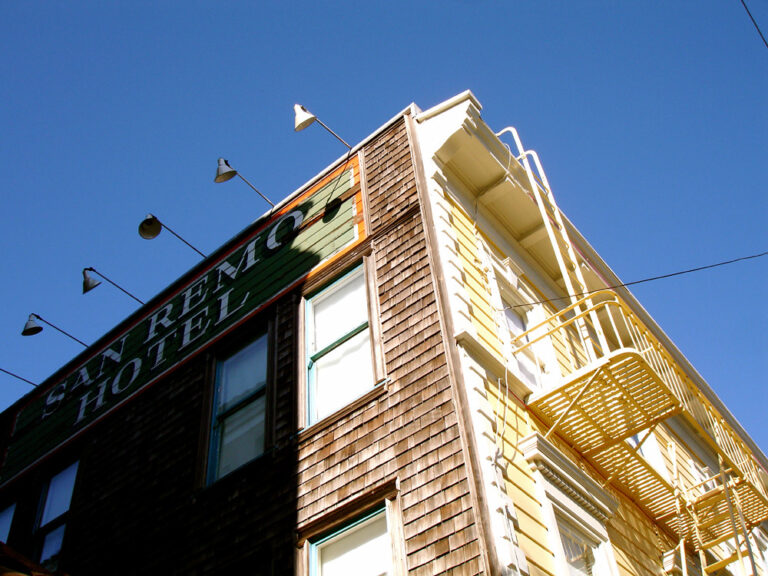
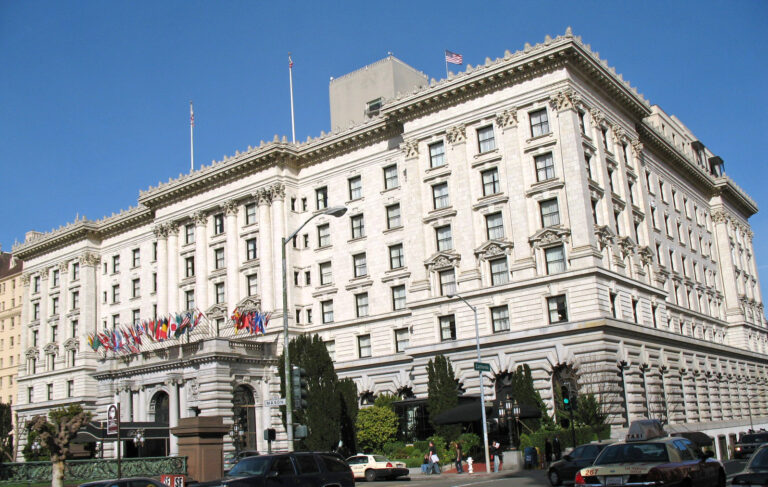
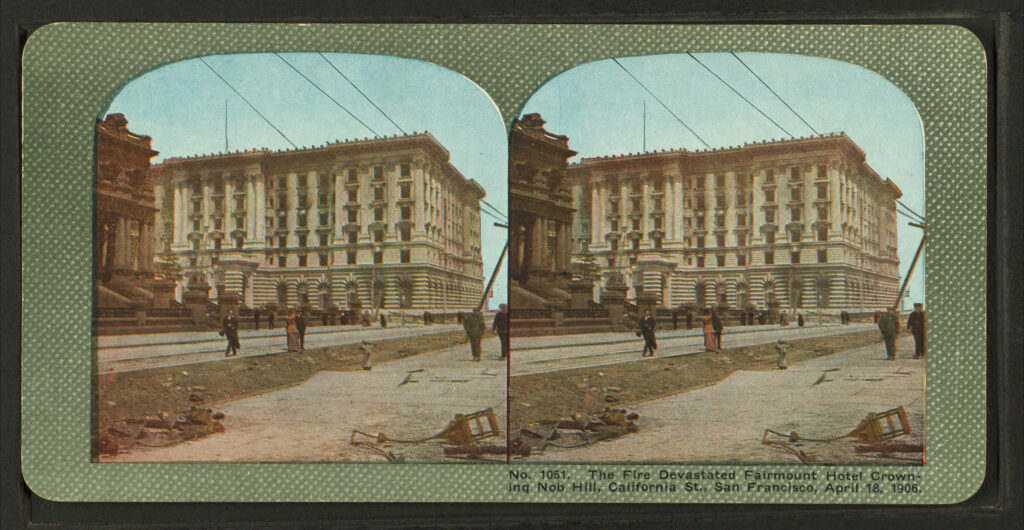
The 1906 earthquake runs through the ghost stories, too. The Fairmont was due to open the morning it struck, the hotel’s own history says. The San Remo Hotel went up that year to shelter people the fire had burned out. The mission home on Sacramento Street was dynamited as a firebreak and rebuilt as what is now Cameron House.
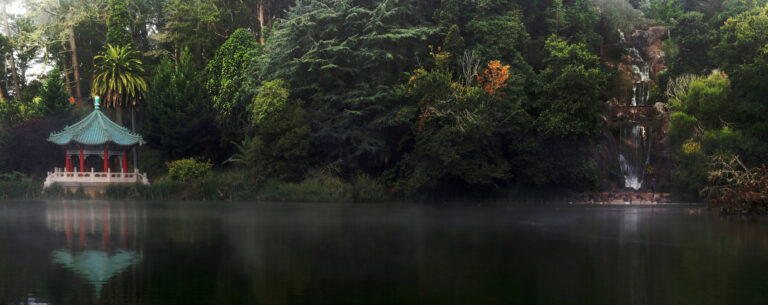
The fire also took the paper trail. It destroyed the city’s police and coroner’s reports, SFGate’s Katie Dowd wrote, and that is one reason the city’s best-known ghost can’t be checked. The White Lady of Stow Lake is said to be a mother whose baby drowned in the years before the earthquake. If there ever was a police report on the drowning, Dowd concluded, “it’s likely long gone.”
The Rock
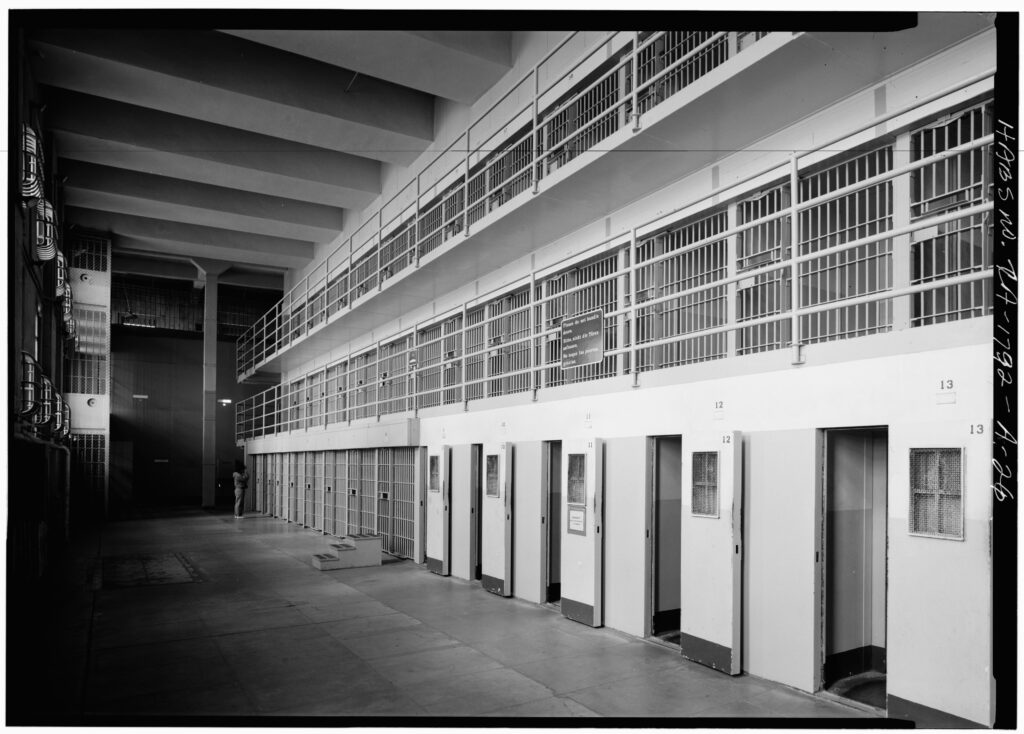
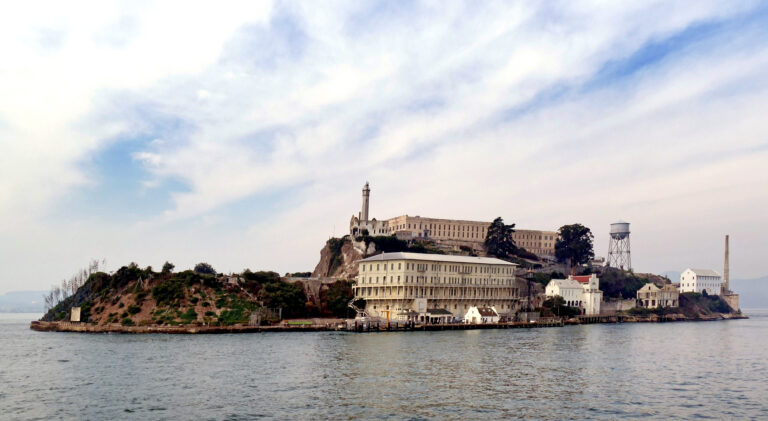
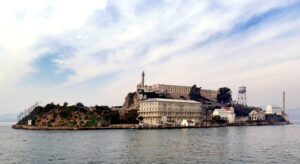
Out in the bay, Alcatraz adds a prison to the list. It held more than 1,500 federal inmates between 1934 and 1963, and at least four ghost-hunting television shows have filmed there since.