
History
Little Crossing-Over Place
People have been crossing the ground under Pioneer Square for thousands of years. The Duwamish call it Dzidzilalich, Little Crossing-Over Place, and kept a winter village of about eight longhouses on the shore here. Suquamish and Muckleshoot people lived here too.
A Clothesline Over the Side
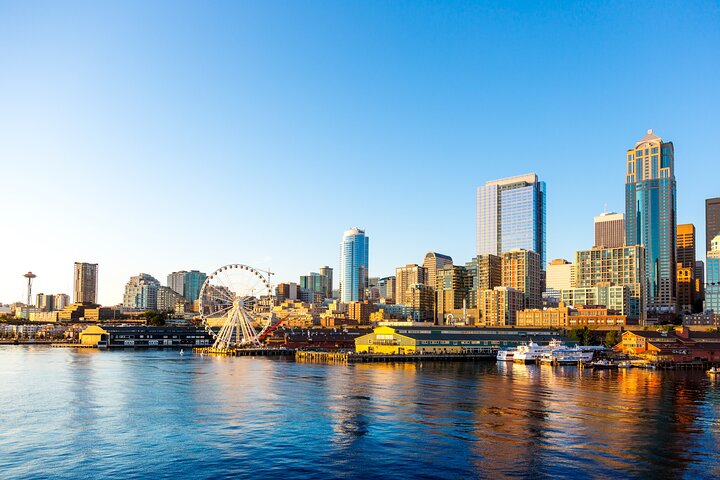
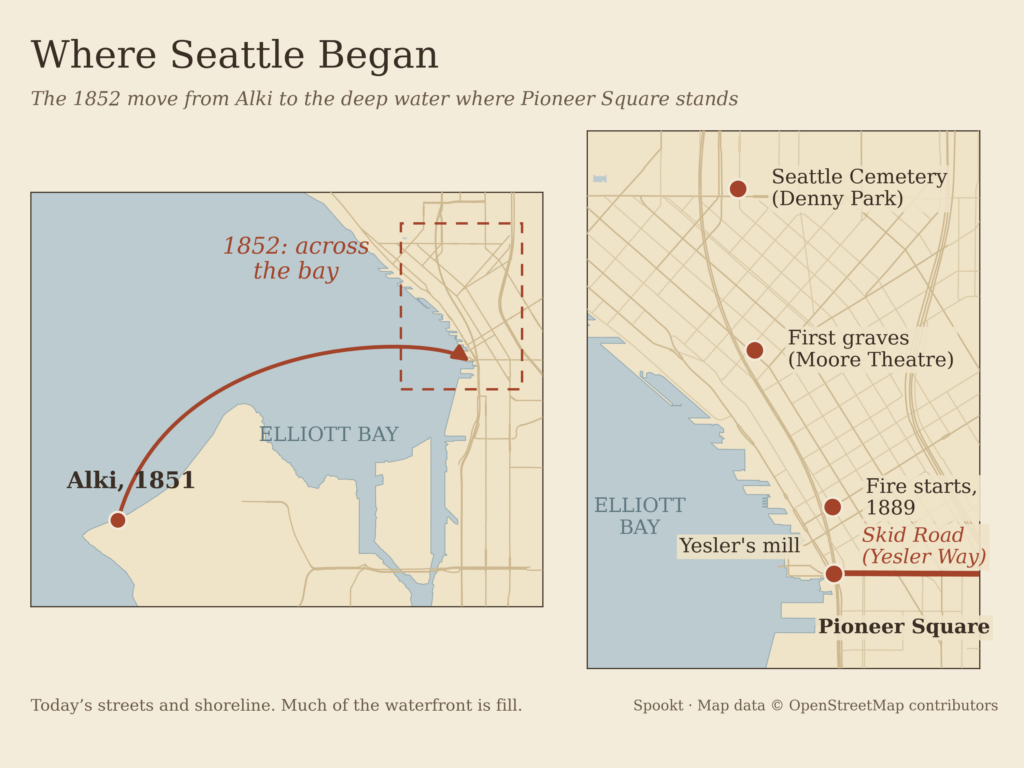
Seattle’s founders picked their second site because the first one was wrong. The Denny Party landed at Alki Point on November 13, 1851, 24 men, women, and children, on an exposed spit with no harbor worth the name. Arthur Denny borrowed his wife’s clothesline, tied a weight to it, and used it to measure the depth of Elliott Bay. Off the eastern shore, deep water came in close to land, deep enough for ships. In the spring of 1852, most of the party crossed the bay and started over there. That shoreline is Pioneer Square.
A Town on Sawdust
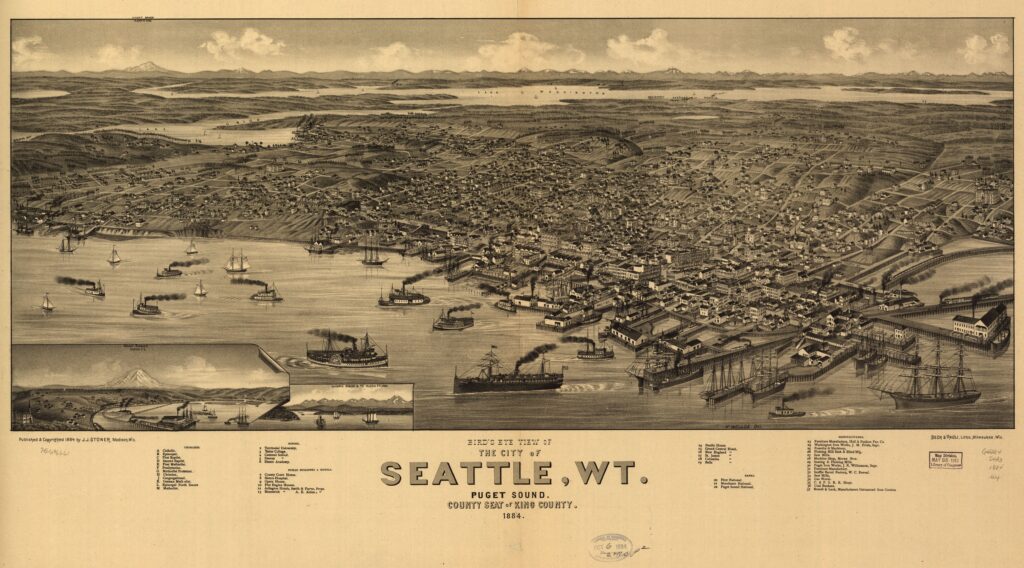
The deep water came with mud. At high tide, 15 feet of water covered the flats, and at low tide the whole thing drained. The city built out over it on trestles, driving logs 65 feet down to find something solid. It filled the lagoon by Maynard’s Point with sawdust, junk, and horse carcasses until it was land. Lower Pioneer Square stands on that. The ground here was made, and it has been remade ever since.
Doc Maynard talked his neighbors into renaming the place, then called Duwamps, for Chief Seattle. In 1852, Henry Yesler built Puget Sound’s first steam-powered sawmill on a pier at the foot of what is now Yesler Way. Maynard and Carson Boren gave him a strip of land running up the hill behind it. It became known as Skid Road, supposedly for the logs skidded down it to the mill on greased timbers. (Most of Yesler’s logs, HistoryLink points out, actually came in by raft.) Skid Road turned into a border. North of it was the respectable town. South of it were the saloons, brothels, and gambling halls the city tolerated for decades. Long after the logs stopped, the name stuck to the district, later softening into “skid row.”
The Expulsion
The work was done by people the city then turned on. “Without the labor of Indians, Seattle would have been stillborn,” the historian Coll Thrush wrote. Chinese workers built the railroads, graded the streets, and worked the mines and logging camps, and by 1885, about one Seattleite in 10 was Chinese. Then the work dried up. On a Sunday morning, February 7, 1886, men went house to house through Chinatown, some with police beside them, loaded belongings into wagons, and put 196 people aboard a steamer at the Ocean Dock. A man died the next day attacking the guardsmen protecting those still in the city. Martial law ran two weeks. It took the Chinese community here 20 years to recover.
The Fire
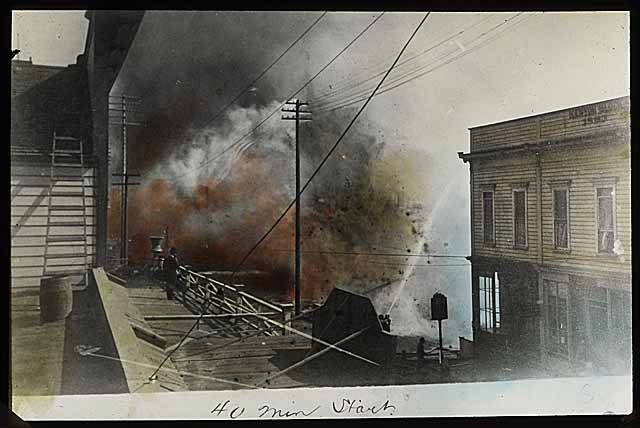
Three years later, the city burned. HistoryLink puts the start in a cabinet shop at Front and Madison on June 6, 1889, where a worker threw water on an overheated glue pot. By sunset, 64 acres of the commercial core and waterfront were ash. Seattle rebuilt in brick and stone and raised the streets while it was at it, which is how the old shopfronts ended up underground.
The Gold Rush
Then the gold. On July 17, 1897, the steamship Portland tied up from Alaska carrying what the papers called more than a ton of solid gold. Seattle sold itself as the “Gateway to the Gold Fields,” and the money the rush brought through town paid for the blocks this page is set in. It also flooded the brothels and gambling halls south of Yesler Way. Both were illegal, and the laws were enforced only now and then. Lou Graham, who had arrived in 1888, ran a parlor house at Third Avenue and Washington Street that HistoryLink says was frequented by the city’s most elite business leaders. Wyatt Earp came up in 1899 and opened a gambling hall, the Union Club. John Considine ran box houses, theaters with gambling and liquor where the waitresses sold more than drinks, and made regular payoffs to the police.
It ended in gunfire. William Meredith had been forced out as acting police chief after Considine accused him of taking bribes. On June 25, 1901, he came looking for Considine outside a Pioneer Square drugstore with a sawed-off shotgun, two revolvers, and a knife. Meredith fired first and missed. Considine’s brother wrestled a gun away from him, and Considine shot him three times, killing him. A jury found Considine not guilty.
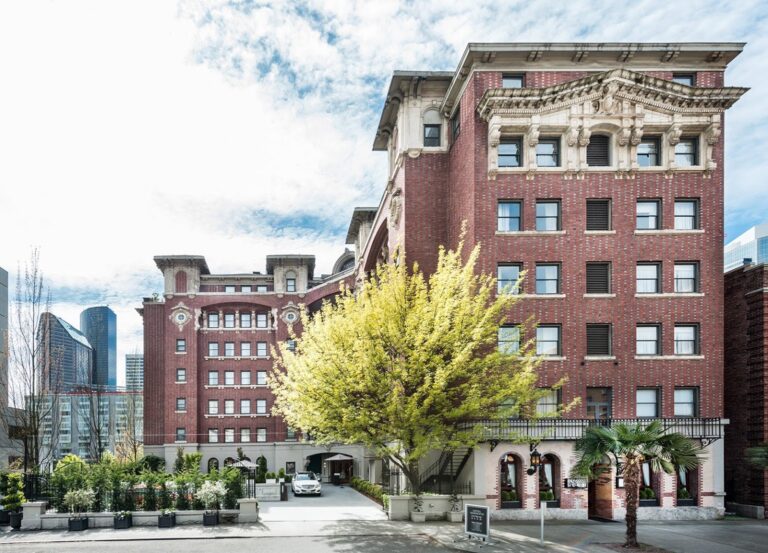
Butterworth’s mortuary went up on First Avenue in 1903, the Sorrento in 1909.
Why Is Seattle Haunted?
Seattle has never been good at leaving its dead where it put them.
Graves That Wouldn’t Stay Put
The settlers’ first burying ground sat on what became the grounds of the Denny Hotel, at Second Avenue and Stewart Street. It took bodies from 1853 until about 1860, roughly 20 of them. Then the growing town wanted the land for buildings, and the graves were dug up and carried north to a new city cemetery. Most made it. In 1898, Arthur Denny, who had buried people there himself, told the Post-Intelligencer that some were never found during the removals. He expected they were still there. The Moore Theatre stands on part of that ground now.
The dead who did make the trip went to the Seattle Cemetery, on land David Denny had originally meant for a park. They didn’t rest there either. In 1884, the city took the land back for the park it was supposed to be, and 223 burials were dug up and moved again. A fire had swept the cemetery a few years before and burned the wooden markers, so a good number of those graves had nothing on them to read. Denny Park got its lawn. In 1930, the regrade took 60 feet off the hill beneath it. HistoryLink records what the shovels are said to have turned up: more bodies, probably Indian graves, carried off at night so nobody would make a scandal of it. Local legend calls that the origin of the graveyard shift.
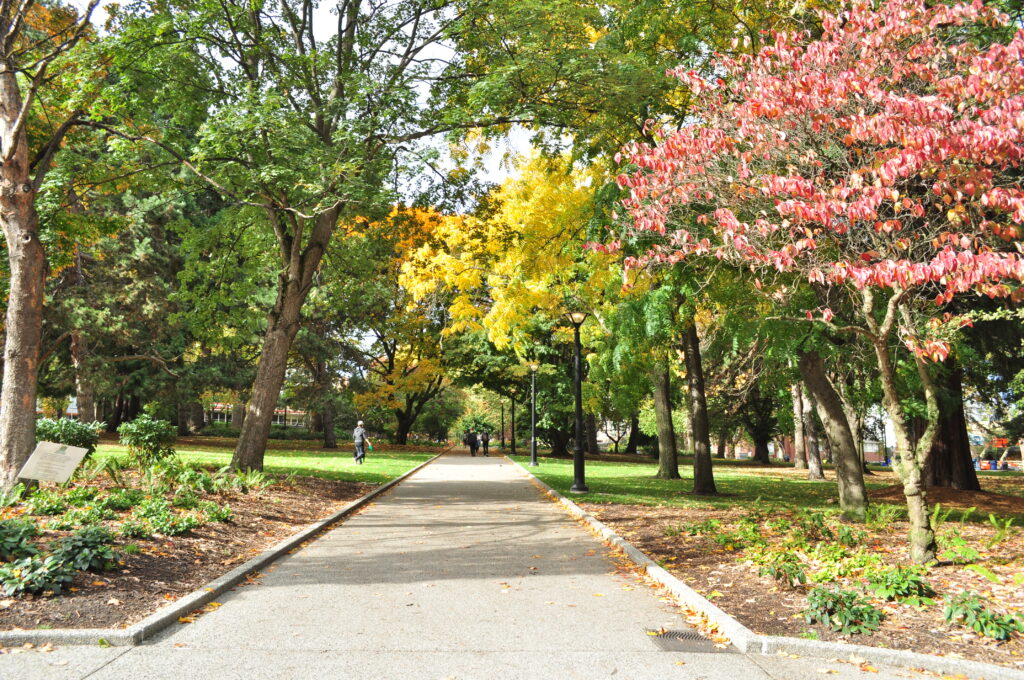
Some graves in this county have been moved four times.
The City Underneath
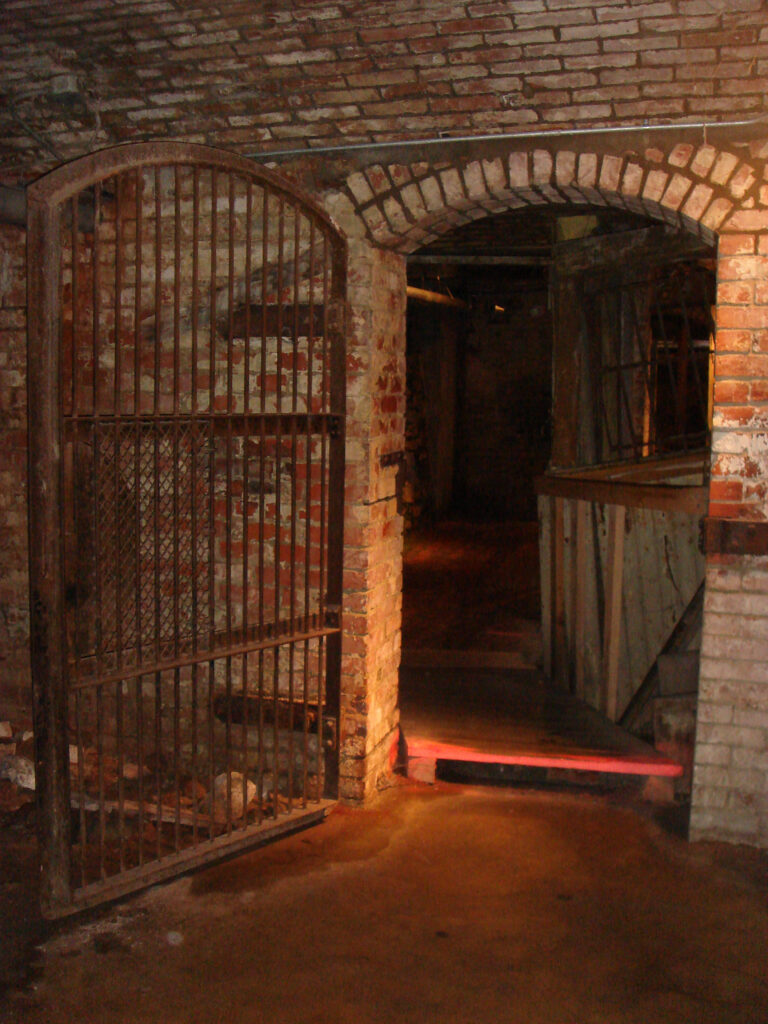
The Great Fire killed no one. Not one person died in it. What it did was bury the city’s ground floor. When Pioneer Square went back up, the streets went up with it, six and a half feet in places and 32 in others, partly to fix a sewer system that ran backwards at high tide. Owners built faster than the city could raise the roads, so shopfronts that opened at street level went a storey underground by the time the work finished. The doors were sealed. Nobody thought about them again until 1964, when the newspaperman Bill Speidel started walking visitors through, and people have been paying to go down ever since.
The Wreck Off Alki
Then there is the water. On the evening of November 18, 1906, the steamer Dix left Seattle for Port Blakely with 77 people aboard and crossed the path of the steam schooner Jeanie off Alki Point. She went down in five minutes. At least 39 died, which HistoryLink calls the worst maritime disaster ever recorded on Puget Sound, and not one body was recovered. The water was too deep for divers. Port Blakely petitioned the government to blast the wreck open and free the bodies. The Navy said it wasn’t their jurisdiction.
The Flu and the Undertakers
The influenza reached Seattle on October 3, 1918, and killed some 1,600 people in six months. The theaters went dark, the schools closed, gatherings were banned, and the city wore gauze masks.
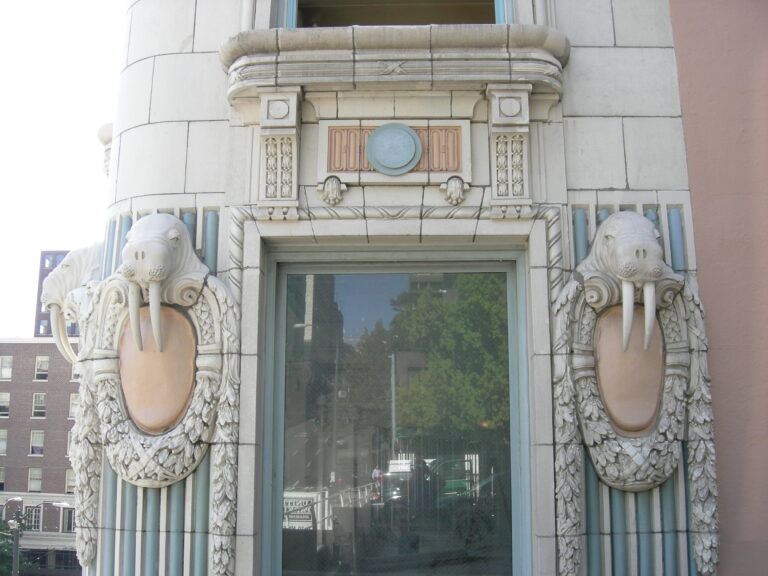
A boomtown needs undertakers. In October 1903, E. R. Butterworth & Sons moved into a building on First Avenue built for nothing but their trade. The Seattle Mail and Herald reported the following year that the vaults held from two to six or eight bodies at a time. You can get a pint there now.
Still in Living Memory
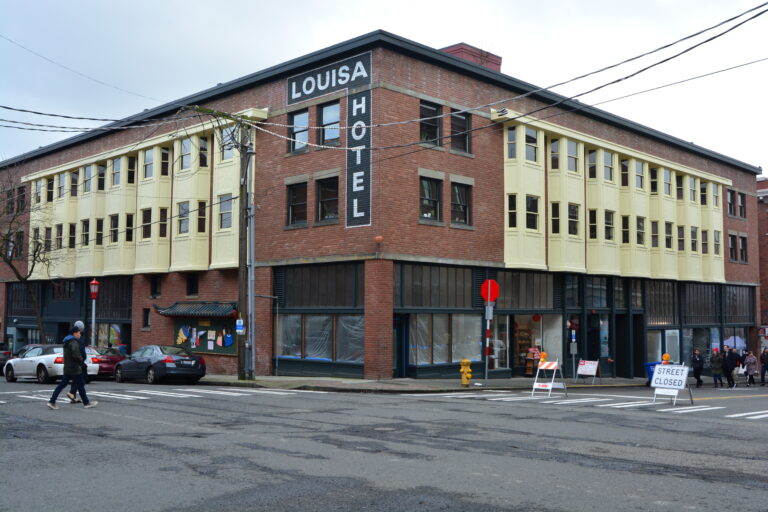
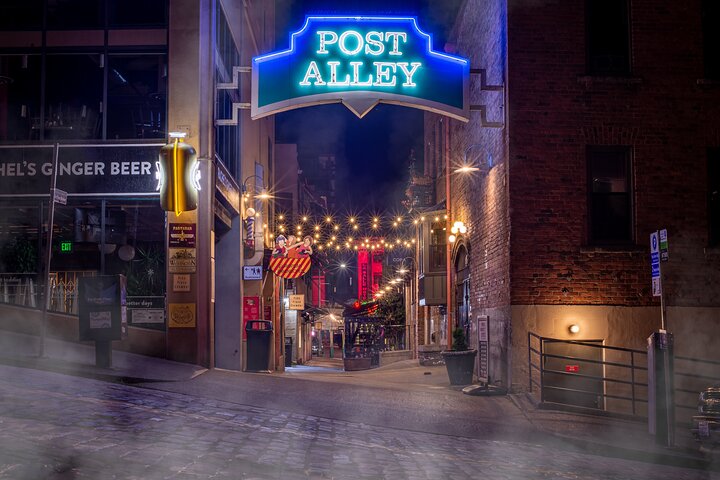
The most recent of it is still inside living memory. In February 1983, 13 people were shot dead in the Wah Mee Club, in the basement of the Louisa Hotel in the Chinatown-International District. One man survived. Axios reported in 2024 that Maynard Alley, outside the building, stays on the city’s haunted-spot maps, and Seattle Terrors tells its customers the victims haunt the place. The people who own the building would rather you knew something else about it. “The building shouldn’t be remembered for one night in 1983,” Teri Woo, whose family bought it around 50 years ago, told the Seattle Times. “It should be remembered for how it served the Chinese community.”