
On This Page
History
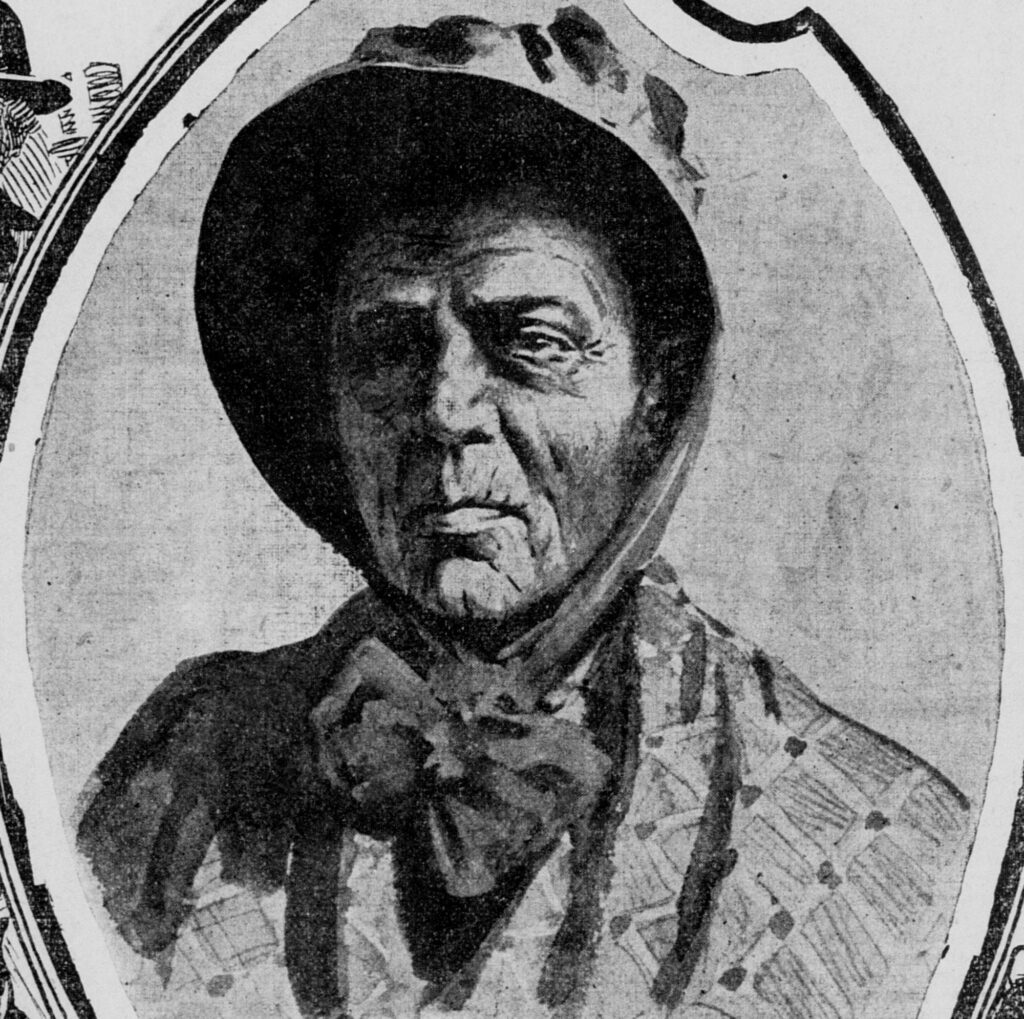
Mary Ellen Pleasant was “perhaps the most powerful Black woman in Gold Rush-era San Francisco,” the National Park Service says. Accounts differ on where she was born and whether she was enslaved, and her own three memoirs contradict one another. She arrived in 1852, still passing as white, and put the inheritance her first husband had left her into laundries and boardinghouses. The city’s Black residents knew who she was. They called her “Black City Hall,” and she helped them find jobs on steamers, in white homes, and in her own businesses. After she was refused a ride on a San Francisco streetcar, she sued the company that ran it. The case went to the California Supreme Court, which declared segregation on streetcars unconstitutional, though it also took away the damages a lower court had awarded her. Near the end of her life, she told a reporter that she had helped fund the abolitionist John Brown’s raid on Harpers Ferry, an attempt to start a slave revolt across the South.
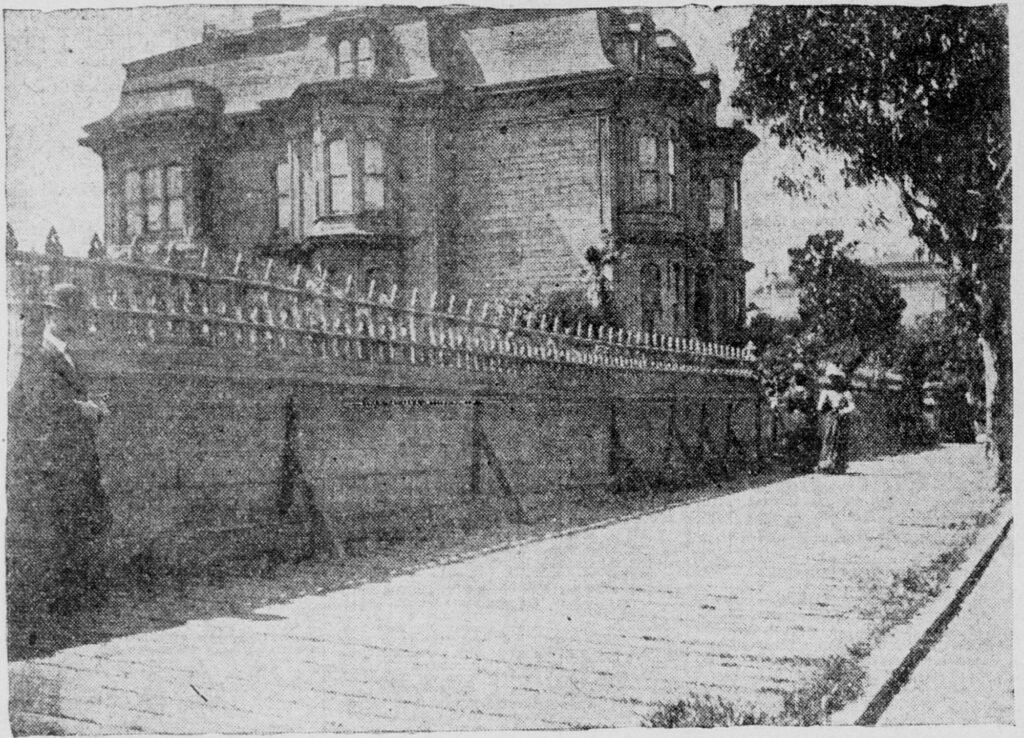
With her business partner, the banker Thomas Bell, Pleasant built a mansion on Octavia Street at the corner of Bush. She shared it with Bell and his wife, Teresa. In October 1892, Bell fell over a stair rail in the house at night and died. He had been ill for weeks, the San Francisco Call reported, and the paper supposed that he had taken the door to the stairs for his bedroom door in the dark. The coroner ruled his death an accident.
Suspicion of foul play was “rife” all the same, the Call wrote four years later. That was in May 1896, when Bell’s son Fred was found “unconscious, broken-limbed and bleeding” after a fall at a boarding house the Bell estate owned on Bush Street. The paper called the likeness between the two falls “positively startling.” Fred lived, but the gossip did not stop. In May 1899, the Call wrote that all of the Bell household’s money had passed through Pleasant’s hands. Bell had once been “reputed to be worth $10,000,000,” yet his estate was appraised at $2.5 million. “Where was the money going?” the paper asked. It was “even whispered,” the Call added, that she could tell something “of a hand that had helped Thomas Bell” in his fall. That same week, the paper reported, she was ordered out of the house after more than 20 years. Pleasant said much of that money had been hers. In 1901, her lawyer claimed for her the property that stood in Teresa Bell’s name. He showed old checks that, he said, proved she “was very wealthy long before” she kept house for the Bells.
Pleasant spent her last years in controversy over her relationship with Bell. She was declared insolvent and died in 1904. At her request, her tombstone calls her “a friend of John Brown.” A note on the back of a San Francisco Public Library photograph says the mansion was torn down in 1927. SFGate, a Bay Area news site, says 1928. In 1928, Green Brothers’ Eye Hospital was built on the corner. The building, at 1801 Bush Street, is now the Healing Arts Center. The eucalyptus trees she planted still stand. With a plaque, they now make up Mary Ellen Pleasant Memorial Park, the smallest park in San Francisco.
Hauntings & Lore
Bush and Octavia Streets meet in Pacific Heights at what has been described as the most haunted corner in San Francisco. The ghost said to haunt it is Pleasant’s. She lived on that corner for more than 20 years, and she planted its trees.
The Ghost Under the Eucalyptus Trees
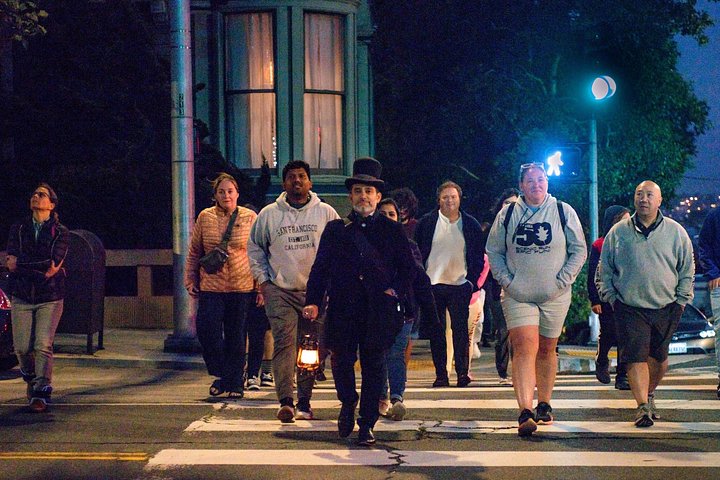
The San Francisco Ghost Hunt, a walking tour, begins under Pleasant’s trees. When the San Francisco public radio station KQED joined it in 2018, the guide was Christian Cagigal. Cagigal, a performer, led the tour most nights in 19th-century dress, with a top hat and a clacking cane. Pleasant’s spirit, he told the group, is said to summon chills, frighten dogs, and even throw nuts from the eucalyptus at passersby. The tour’s organizers have warned of worse. People who say bad things about her in the park “have had objects dropped on their head, or fallen suddenly as if pushed,” they told The New Fillmore, a neighborhood paper, in 2010. A crow, they said, seems to herald her. Anyone who makes her a respectful request on her corner, and finds favor with her, may have it come true.
Then he told her story: how a Black woman defied white society to make a fortune in San Francisco and used it to advance civil rights. She was also described as a witch, a “voodoo queen,” and even a murderer, he said.
Where the Names Came From
In 1883, Pleasant was drawn into the trial of William Sharon, a Nevada senator. Her friend Sarah Althea Hill claimed to be Sharon’s wife. The San Francisco Standard, a local news site, says Pleasant was the key witness “because she was the only one to see the marriage certificate.” Her part in the trial led to rumors that trailed her for the rest of her life. “That’s when she becomes a voodoo queen,” Lynn M. Hudson, the author of a book on Pleasant, told the Standard. “It’s all these stereotypes, many rooted in slavery.”
After Bell’s death, KQED reports, his widow, Teresa, worked with the San Francisco Chronicle on a full-page smear of Pleasant headlined “The Queen of the Voodoos.” The press accused Pleasant of witchcraft and hinted that she had murdered Bell, though the coroner had ruled his fall an accident.
Why She Stays on the Tour
SFGate’s Andrew Chamings sat under the trees one October day in 2020. The tours present the spooky tales as myth, he noted, but the older stories still go around: that she was a voodoo sorcerer and a killer. “Those horror stories still aren’t true, and I don’t believe in ghosts,” he wrote. Sitting on that corner, though, he felt that her spirit was “out there somewhere.”
“When there’s three versions of your life story, we don’t know what to do with your life story… and we forget your story,” Cagigal told his group under the trees. He keeps her on the ghost hunt, he said, “so we might start to remember.”
Visit
Visiting Mary Ellen Pleasant Memorial Park
- How to visit: Open to the public: six eucalyptus trees and a plaque beside the sidewalk at Octavia and Bush Streets. A ghost tour starts under the trees (see Tours That Stop Here).
- Rules worth knowing: The building behind the trees, the Healing Arts Center, has nothing to do with the park or the ghost tour. Please don’t go inside.
- Worth knowing: The mansion is gone. It was pulled down in the 1920s, and the trees and the plaque are what remain.
Location
1501-1699 Octavia St, San Francisco, CA 94109
Dig Deeper
Tours That Stop Here
San Francisco Ghost Hunt Walking Tour
by San Francisco Ghost Hunt
1.5–2 hrFrom $28.99★ 5.0 · 193 reviews
Investigation WalkingA lantern-lit walk past Victorian mansions with magician and storyteller Christian Cagigal, including Mary Ellen Pleasant’s eucalyptus trees. see tour
Book on Viator
Contributors

Sources (7)

The ghost who haunts the smallest park in San Francisco changed America
SFGate · Andrew Chamings, 2020

How a Heroine Became a Demon in Victorian San Francisco
KQED · Carly Severn, 2018

National Park Service

SF's first Black businesswoman deserves more than a ghost tour
The San Francisco Standard · Julie Zigoris, 2023


Library of Congress, Chronicling America
The San Francisco Call's reports of May 8, 1896, May 7, 1899, and December 13, 1901: the suspicion after Bell's death, Fred Bell's fall, the money, the eviction and her claim.

Marian Halley's "Mary Ellen Pleasant's legendary life" (2010), for the tour's warnings, and Bridget Maley's "Ever a house of healing" (2016), for the building on the corner.