
On This Page
History
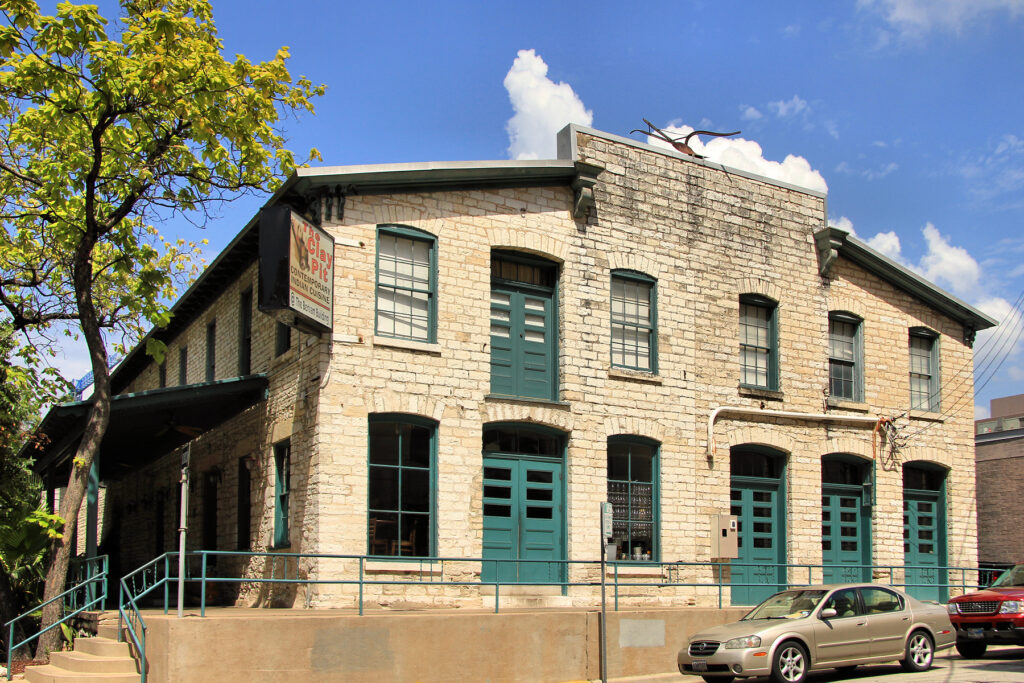
The Clay Pit has served Indian food since 1998 in the Bertram Building, a two-story limestone store a few blocks north of the Texas Capitol. Rudolph Bertram, a German immigrant who came to Texas in 1853, bought the block at Guadalupe and 16th Streets between 1860 and 1862. At the time, it lay outside the city’s original plan. In 1866, Bertram advertised a provisions store in a “new rock building” there. The building’s nomination to the National Register of Historic Places, the federal list of historic sites, says that rock building is most likely the southern part of the store standing today.
By 1872, Bertram had added a wagon yard. His advertisement that year offered country customers “a constant supply of fresh water and a comfortable rock lodging house.” The store sold groceries, furniture, farm tools, and liquor, and a saloon was part of the business. In 1879, Bertram and his son-in-law bought a wholesale grocery business downtown near Sixth Street and Congress Avenue and put the Guadalupe Street store up for sale. Another merchant, John Doehler, ran it from 1881 to 1898. A fire at Bertram’s wholesale business in 1883 left him in debt for years, and in 1885, the store building was sold in a foreclosure. A grocery ran there until 1914. After that, the building stood empty for more than a quarter century. It has been a restaurant since the 1940s.
Hauntings & Lore
In 2021, the review site Yelp put Clay Pit fifth on its list of the 20 most haunted places in Texas. Yelp built the list from reviews that used words like “haunted,” “spooky,” and “ghosts.” The restaurant’s own site calls the Bertram Building “a storied stop on Austin’s haunted tours” and points readers to the ghost stories told about it.
The Boy Upstairs
Each year before Halloween, the Legislative Reference Library, the Texas Legislature’s own research library, gathers stories of strange happenings around the state. In 2018, it told this one. In its telling, Bertram ran a grocery, saloon, and general store here in the 1880s, with business downstairs and “living quarters up above.” The library says diners “may share the space with previous inhabitants.” It asks whether “the apparition of a small child” is “Bertram’s young son who died of typhoid fever.”
The ghost tour company, Austin Ghosts, tells the story in more detail. It says the boy caught typhoid and was quarantined alone upstairs in a private-party room it calls the Bombay Room. He died on the second floor, the company says, and that is where he is seen most often. In one of its stories, an employee closing up the Bombay Room for the night saw a little boy peek around the corner and wave. When the employee looked again, the boy was gone. Other staff, it says, have felt him take hold of their hand.
The building’s National Register nomination tells the family’s story differently. It puts the Bertrams’ first home at the other end of the same block, on the corner of 16th and Lavaca Streets. In 1875, Bertram bought land in east Austin and had a 10-room stone house built there. He and his wife, Bertha, had eight children, and in 1880, four of them died in a diphtheria outbreak. By 1881, the store was John Doehler’s business, not Bertram’s. The nomination doesn’t say where the four children died.
The Basement
The library also asks whether party noises heard upstairs are “an echo of wild times at the brothel that was joined to the saloon through a basement tunnel.” Austin Ghosts goes further. It tells of tunnels under the building that ran to other bars and brothels. It says a secret one was dug to the Capitol so the state’s gold could be moved to and from Bertram’s wine cellar. The company also passes on a rumor that a prostitute known as the “Scarlet Lady” was strangled in the basement by a client who was never caught. It says employees who fall asleep down there on their breaks wake to her whispering in their ears.
The basement the nomination describes lies only under the building’s southwest corner. Its walls are large cut limestone blocks, and its low brick ceiling rests on shallow brick arches. The nomination also repeats an anecdote: while the Capitol was being built in the 1880s, the state’s gold was stored down there because the basement was so sturdily built. Then it adds that “no other documentation of this occurrence has been found that corroborates this story.”
Visit
Visiting Clay Pit
- How to visit: Book a table for a closer look. Join a guided tour for the deeper history (see Tours That Stop Here).
Location
1601 Guadalupe St, Austin, TX 78701
Dig Deeper
Tours That Stop Here
Haunted ATX Hearse Limo Tour in Austin
by Haunted ATX
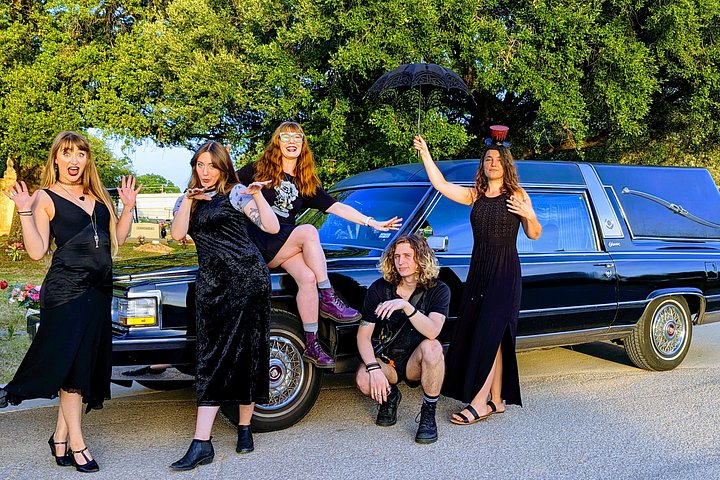
Night Vehicle Ages 13+A BYOB ghost tour in a converted Cadillac hearse for ages 13 and up, with stops at Clay Pit, Littlefield House, and the Driskill. see tour
Book on Viator
Contributors
Sources (5)
Bertram Building, National Register of Historic Places nomination
Texas Historical Commission
Legislative Reference Library of Texas, 2018
Want to see a ghost in Austin? Check out one of these 'haunted' spots
KUT · Marisa Charpentier, 2021
The Clay Pit | Hauntings of the Bertram Building
Austin Ghosts (US Ghost Adventures), 2021
when the restaurant opened, and how its own site presents the building's ghost stories