
On This Page
History
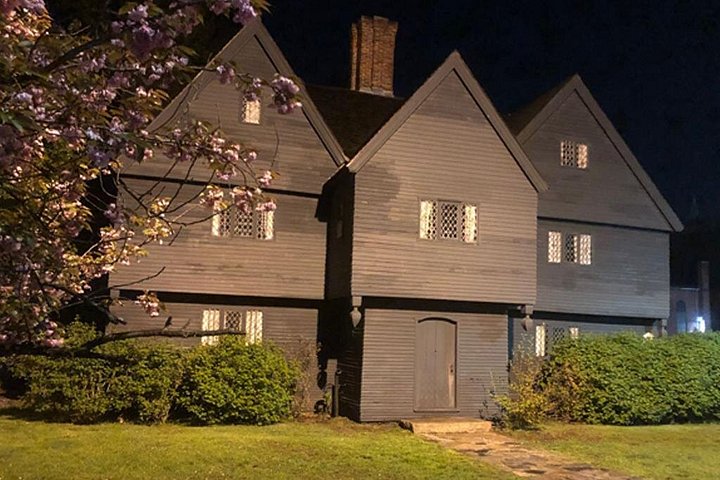
The Witch House stands at the corner of Essex and North Streets, on ground thought to have been home in the early 1630s to Roger Williams, the dissenting minister who went on to found Rhode Island. Who built the house after him is less clear. The records name two different Davenports, one of them a fort commander killed by lightning in 1665, and date its frame anywhere from 1642 to 1675. It was still unfinished in 1675, when Jonathan Corwin bought it and hired a bricklayer, Daniel Andrews, to complete it.
In 1692, Corwin found himself at the center of the Salem witch trials. That February, two young girls in Salem Village showed signs of what was believed to be demonic possession, and neighbors began accusing one another of witchcraft. Corwin and his brother-in-law, John Hathorne, questioned many of the accused in the first hearings. Later that year Corwin sat on the special court that tried the cases, the Court of Oyer and Terminer, which sent 19 people to the gallows.
The panic reached his own household. One of Corwin’s children was thought to be bewitched, and a servant accused his mother-in-law, Margaret Thacher, though she was never arrested. Daniel Andrews, the bricklayer who had finished the house, was accused in May 1692 and fled before he could be arrested. Corwin never showed remorse, the Salem Witch Museum notes. He died in 1718, “very rich and respected,” and is buried in the Broad Street Cemetery.
The house stayed in the family for almost two hundred years. Salem Heritage Trail, a preservation nonprofit’s guide to the city’s historic sites, says it was home to generations of Corwins “and the people they enslaved.” Corwin’s grandson George lived here until he died in 1746, and George’s widow, Sarah, replaced the front gables with a gambrel roof. In 1856, the last descendant to live here, Sarah Cushing, sold the house to an apothecary, George Farrington, who built a shop onto the front. By then, it was already “popularly referred to as ‘The Old Witch House.’” By 1900, a drugstore and an antiques parlor filled the building, and in 1924, a fire from an attached laundry spread into the attic.
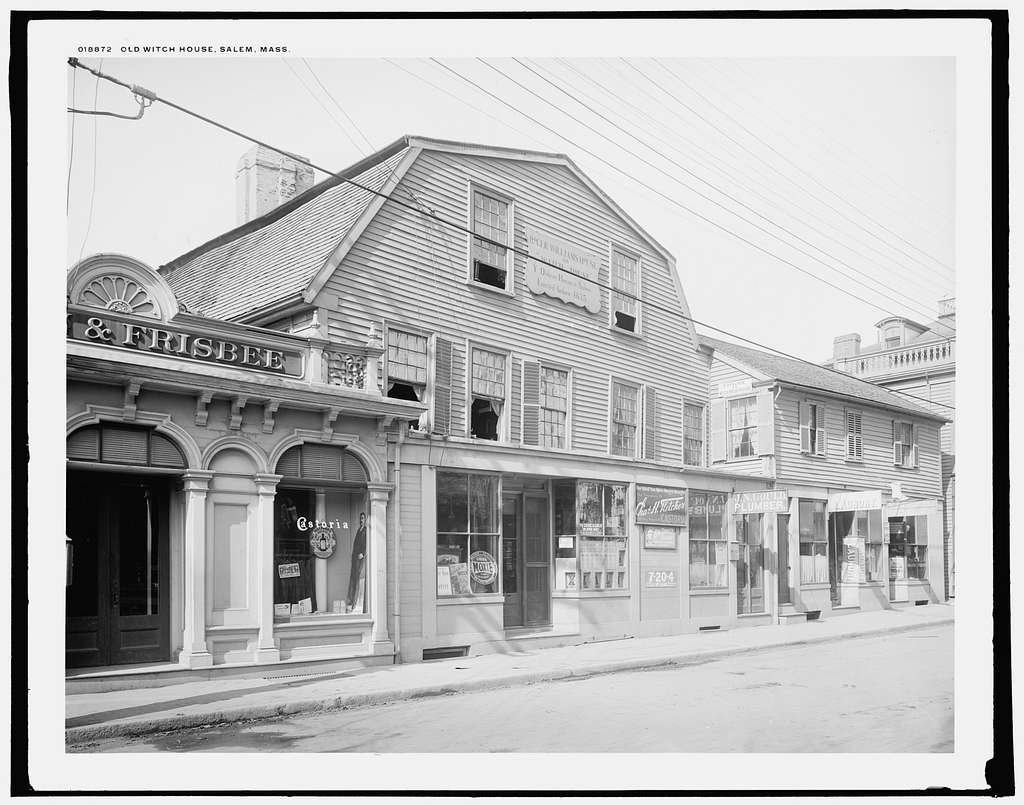
In 1944, the city planned to tear the house down to widen North Street. Preservationists raised the money to save it, moved it back about 35 feet, stripped off the later additions and restored what they presumed was its 17th-century look. The campaign founded Historic Salem, Inc., which gave the house to the City of Salem in 1948, and it has been a museum ever since. The state’s inventory is candid about how much of it is original: rebuilt from “documentary research, building archaeology and presumption,” the house “consists of much twentieth-century material.”
Hauntings & Lore
The Witch House is one of the busiest stops on Salem’s ghost tours. The stories told outside it start with the judge who lived here, and with something the record says never happened here.
The Examinations That Weren’t
For more than a century, the house was sold as the place where people accused of witchcraft were questioned before trial. Even the state’s survey sheets repeat it, saying preliminary hearings “were held here before Judge Corwin.” The Salem Witch Museum disagrees. The hearings it can place were held in the meetinghouses of Salem Village and Salem Town and in local taverns. “For years, many believed examinations also took place in this home on Essex Street,” the museum says, “but there is no evidence to support that theory.”
The museum at the house traces how the legend grew. For much of the 19th century the building was also called the “Roger Williams House.” George Farrington, the apothecary who bought it in 1856, sold medicines in bottles with a flying-witch insignia and published pictures of the “old witch house.” Salem Heritage Trail credits him with popularizing “the house’s past.” By 1908 A. Grace Atkinson, who ran an antiques shop upstairs, was telling visitors the trials had taken place in that very room.
The Corwin Curse
Guides call it the Corwin Curse, and tell it as eight of the judge’s children dying in the house. The record is grim enough. Salem’s vital records list 10 children born to Jonathan and Elizabeth Corwin between 1678 and 1690. Seven of them died young, among them a nine-year-old daughter, Sarah, and a three-month-old son, Jonathan, who died six days apart in December 1689. The records don’t say where they died.
One tour company carries the curse into the next generation. Fever, it says, took the Corwins’ son, the Reverend George Corwin (not the grandson of the same name who later lived here), in 1717, then his widow, and then Jonathan and Elizabeth themselves. All four deaths are in the record between November 1717 and 1718. The fever is the tour’s addition.
Voices in the House
Salem Ghosts, a Salem ghost tour company, calls the house “the most haunted place in Salem.” It says visitors report a disembodied voice, being touched by something unseen, cold spots, and electronic trouble. A few, it says, have heard a little girl, and it suggests she could be the youngest person accused in 1692, a four-year-old. Salem Ghosts also puts the spirits of the hanged in the house, though no one accused of witchcraft ever lived here.
Ghost Hunters at the Door
The city has turned ghost hunters away before. In December 2008, the local paper, the Salem News, reported that the city’s Park and Recreation Commission had refused a group called Spirit Finders, which wanted to investigate the house. Two years later, Ghost Adventures, the Travel Channel series, got in. In October 2010, its crew was locked down in the house for a ritual “in hopes of contacting souls involved in the witch trials.” The episode aired the following February.
Visit
Visiting The Witch House
- Official visitor info: The Witch House — Plan Your Visit
- How to visit: Open to the public: explore the house museum on your own.
- How to visit: Hear its stories on a ghost tour that stops outside (see Tours That Stop Here).
- Finding the story sites: The house stands about 35 feet back from where Corwin knew it, on the corner of Essex and North Streets. Corwin is buried nearby in the Broad Street Cemetery. The 1692 examinations the record can place were held elsewhere, in the Salem Village and Salem Town meetinghouses and local taverns.
- Rules worth knowing: The museum’s October rules ban photos and video inside and ask visitors not to touch the furnishings. In 2008, the city turned down a ghost-hunting group’s request to investigate inside.
- Worth knowing: No accused witch lived here, and no examination is documented here. Much of what you see is the 1940s restoration of the house’s presumed 17th-century look.
Location
310 Essex Street
Dig Deeper
Tours That Stop Here
Haunted Footsteps Best Ghost & Paranormal Salem Tour
by Salem Historical Tours, LLC
1.5 hrFrom $30★ 4.0 · 484 reviews
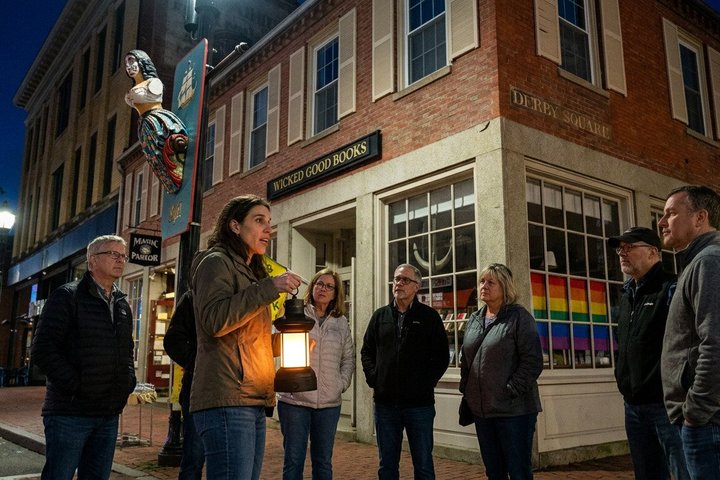
WalkingA lantern-led ghost and paranormal tour built on documented hauntings and investigator research, and billed as skipping the witch-trial history. see tour
Book on ViatorThe Ghosts of Salem Walking Tour
by Ghost City Tours Salem
1.5 hrFrom $29.99★ 4.4 · 274 reviews
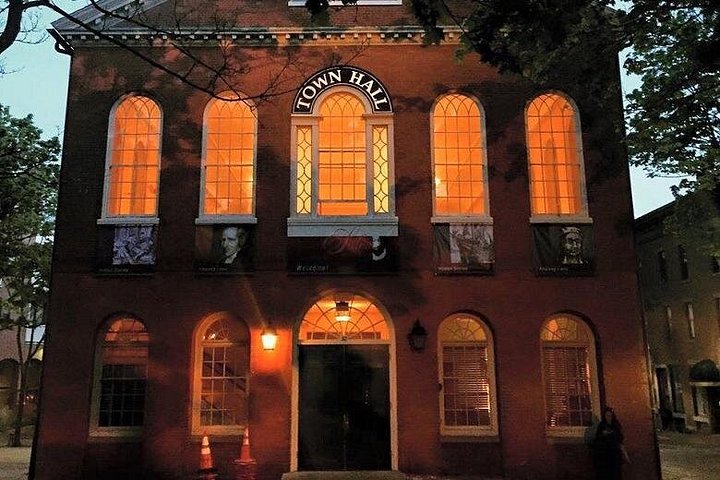
Family Friendly WalkingA family-oriented walking ghost tour that the operator describes as spooky but not too scary, with stops at the Witch House, Old Town Hall, and the House of the Seven Gables. see tour
Book on ViatorSeasonal
Spirits and Superstitions A Friday the 13th Tour
by Witch City Walking Tours
1.5 hrFrom $48
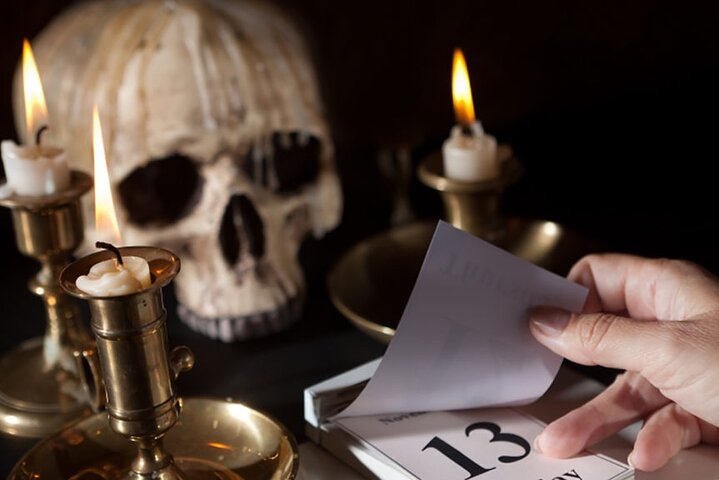
WalkingA walking tour built around superstitions and local ghost stories, offered only on Friday the 13th. see tour
Book on ViatorHistory and Hauntings of Salem Guided Walking Tour
by Witch City Walking Tours
120–135 minFrom $36★ 4.9 · 16,390 reviews
WalkingA history-led walking tour of Salem that covers the 1692 witch trials, the seaport years, and local architecture, with a few ghost stories along the way. see tour
Book on ViatorSalem Ghosts: Witches & Wicked Whispers Guided Walking Tour
by Salem Ghosts (operated by US Ghost Adventures)
1 hrFrom $29.99★ 4.5 · 687 reviews
WalkingSalem Ghosts’ walk past the city’s best-known haunted addresses, from the Witch House and Ropes Mansion to Turner’s and the Joshua Ward House. see tour
Book on Salem Ghosts
Contributors

Sources (12)

the museum's house history timeline and visitor pages

Corwin, Judge Jonathan House, SAL.1510
Massachusetts Historical Commission, MACRIS inventory form

Vital Records of Salem, Massachusetts, to the End of the Year 1849
Essex Institute
births (vol. I) and deaths (vol. V) of the Corwin family

its pages on the Jonathan Corwin House and on Daniel Andrews

Salem Heritage Trail

City of Salem

Salem Links and Lore, Salem Public Library

Travel Channel gets OK to come ghost hunting in Salem
The Salem News, 2010
the 2010 permission; also The Telegraph (Nashua, N.H.), October 17, 2010, with a reporter at the house as the Ghost Adventures crew arrived (both via Access World News)

Streets of Salem, 2012

The Haunted Witch House of Salem
Ghost City Tours

Salem Ghosts (US Ghost Adventures)

List of Ghost Adventures episodes
Wikipedia