
Spookt’s Guide to

Haunted Savannah, Georgia

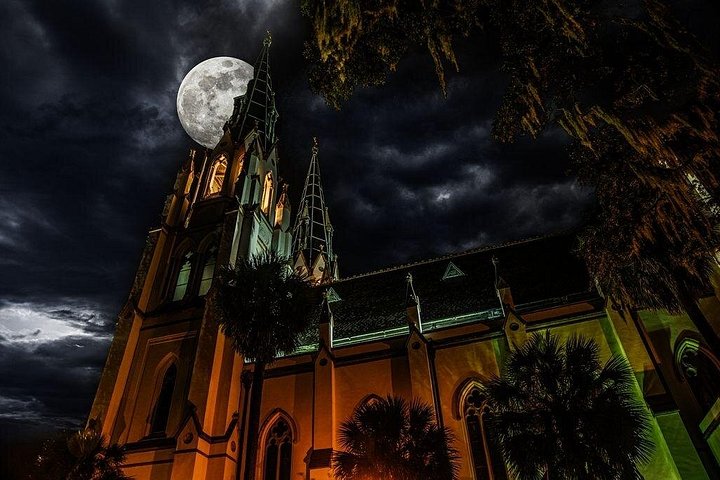
Savannah still keeps the squares of its 1733 plan. Under at least one of them, it still keeps some of its dead.

In October 2002, the American Institute of Parapsychology held a conference in Savannah to declare it “America’s Most Haunted City.” Its founder, Andrew Nichols, put it a little more carefully: “If I had to name the most haunted city, Savannah would be right up there.”

All 27 ghost tours in Savannah

Book through our links and Spookt gets a small cut, at no extra cost to you. It keeps the research going. How that works

Famous Hauntings

The Hanging Square

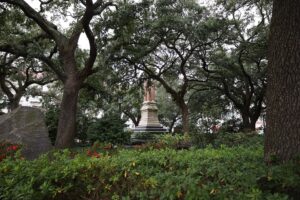
On March 1, 1734, two indentured servants, Alice Riley and Richard White, killed their master, William Wise. A letter to the Trustees who ran the colony says that while White twisted Wise’s neckerchief, Riley “plunged his Face into the Pail of Water.” She was pregnant, so her hanging waited until her child was born. Around January 19, 1735, she went to the gallows still denying the murder, and the child later died. Tradition puts the gallows in Wright Square, though none of the surviving letters says where she died. Guide Enocha Edenfield told WSAV, a Savannah TV station, that people “believe that she still wanders this square.” The visitor guide Savannah.com tells of a pale, red-haired woman in the square who begs for help finding her baby.

Place: Wright Square

Little Gracie

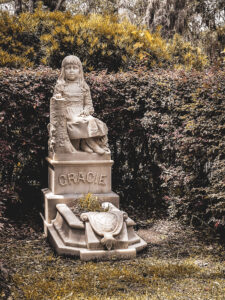
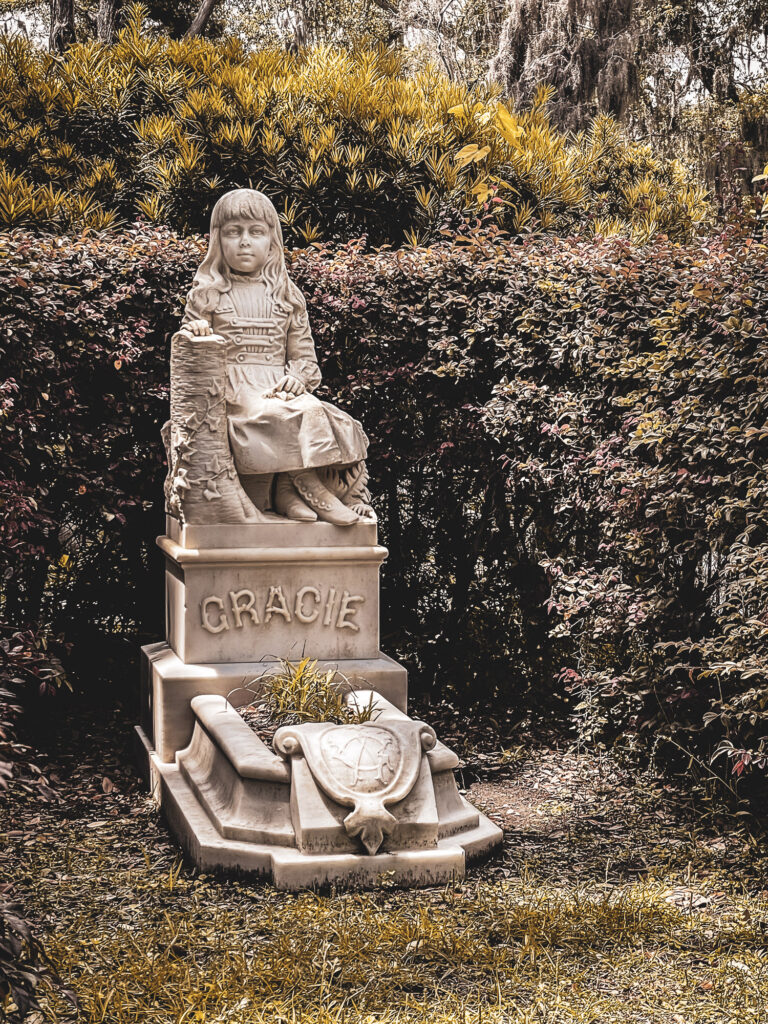
Gracie Watson grew up in the Pulaski House, one of Savannah’s leading hotels, which her father managed, and the cemetery’s marker for her says she was a favorite with the guests. She died of pneumonia in April 1889, at six. The next year, the young sculptor John Walz carved her likeness in marble from a photograph, and the statue stands over her grave in Bonaventure Cemetery. Ghost tour guides tell of a little girl in a white dress, just like her, seen playing in Johnson Square, where her father’s hotel once stood. She looks like any living child, the legend goes, until someone gets too close, and then she vanishes.

Place: Bonaventure Cemetery

The Hospital on Broughton Street

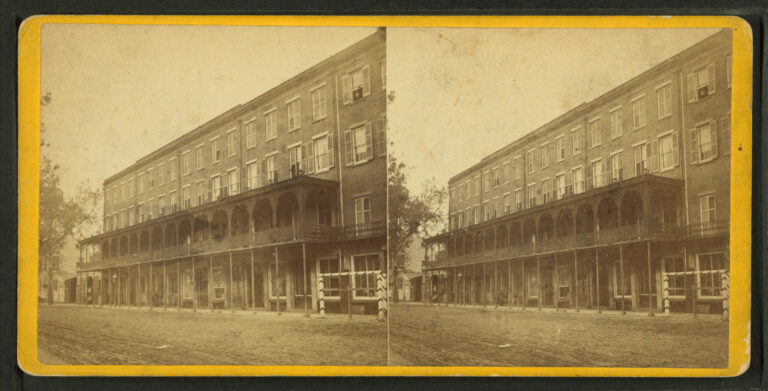
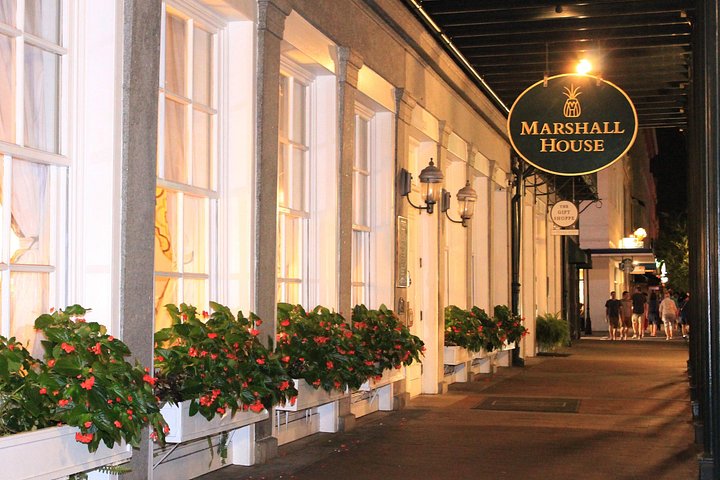
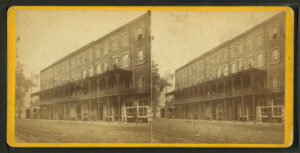
In the last months of the Civil War, Sherman’s Union army used the Marshall House as a hospital, and the hotel says it served as one twice more, in yellow fever epidemics. It closed in 1957, and when it reopened in 1999, its upper floors had been sealed off for more than 40 years. A story grew up around the restoration: workers replacing floorboards downstairs found human bones, and since the room had been the hospital’s surgery, the bones were said to be amputated limbs of Civil War soldiers. A Savannah ghost tour company tells it that way, and USA Today has repeated a version of it. James Caskey, author of Haunted Savannah, says guests report “a hand on their forehead, like someone checking their temperature,” and Union soldiers on every floor.

Place: The Marshall House

Matilda and Molly

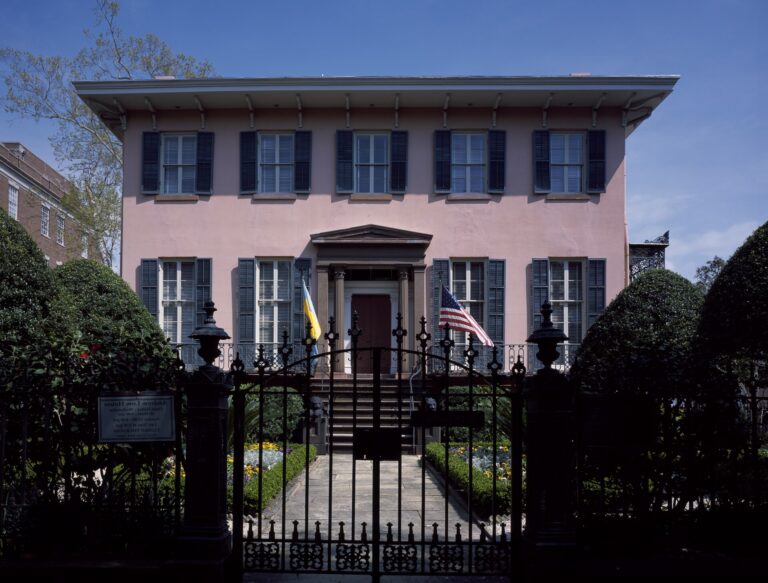
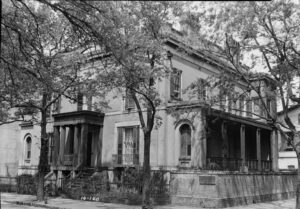
The Sorrel-Weed House’s best-known story comes from the Sorrel family’s own oral tradition. Francis Sorrel’s wife, Matilda, learned he was having an affair with an enslaved woman, and in her grief she leapt to her death from the house’s third-floor balcony. Soon after, the woman was found hanged in the carriage house, “and as it is rumored, not by her own hand.” A 2014 episode of the TV series Ghost Adventures calls her Molly. The house builds its ghost tours on “the deaths and stories of those believed to still haunt” it. The record is thinner. The 1850 slave schedule lists the 13 people Sorrel enslaved by age and sex only, so no record can name Molly. When Georgia Southern University archaeologists dug in the carriage house basement, they found no human remains.

Place: Sorrel-Weed House

The Man in Colonial Dress

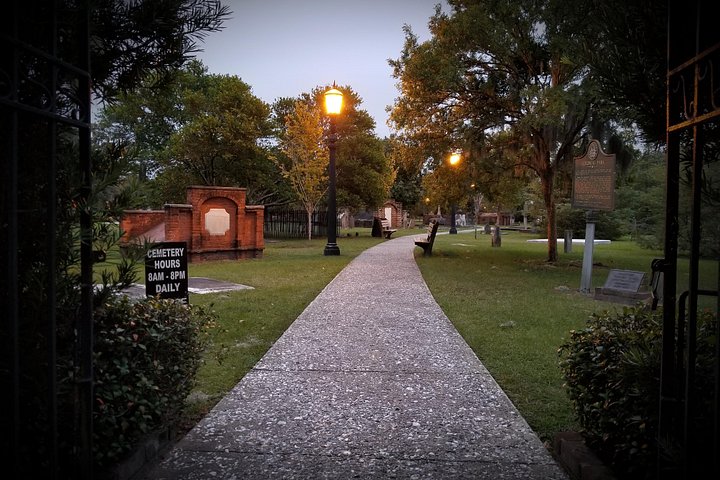
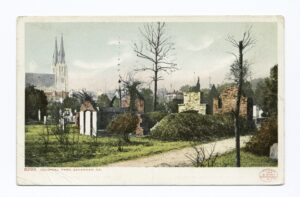
In 2002, guide Carlo Cagna took his passengers past Colonial Park Cemetery in a retired hearse. Cagna told the Associated Press what people had reported: “a man in colonial attire walking the cemetery at night, as if looking for something.” One passenger, Cagna said, saw the man salute a headstone. “Then, he disappeared.” The City now bars any tour marketed as haunted from its cemeteries and allows no one in Colonial Park after hours, so ghost tours tell the story from outside the gates.

Place: Colonial Park Cemetery

History

Savannah was drawn on paper before it was built. On February 12, 1733, James Oglethorpe landed at Yamacraw Bluff, on the Savannah River about 15 miles from the ocean, with the first colonists of Georgia. It was the last of England’s 13 American colonies, and Savannah was its first city. The bluff was already home to the Yamacraw, a small band of Native Americans. Their leader, Tomochichi, had brought his people there in 1728, partly because his ancestors were buried there. He and Oglethorpe were on good terms from the start.

Oglethorpe and his co-planner, William Bull, laid the town out in wards. Each ward was a neighborhood of houses and public buildings around its own square, and Savannah kept to the plan as it grew. Oglethorpe laid out the first four squares himself, among them Wright Square, where Tomochichi was buried in 1739. The city eventually had 24 squares. Of those, 22 are still there, and many are shady, with monuments and fountains.

Georgia started out banning slavery, but the ban was lifted in 1750. From then until the Civil War, Savannah was built on slavery and on the cotton and rice it shipped, and it became one of the world’s leading cotton ports. By 1860, it was Georgia’s largest city, and 7,712 of its people were enslaved.

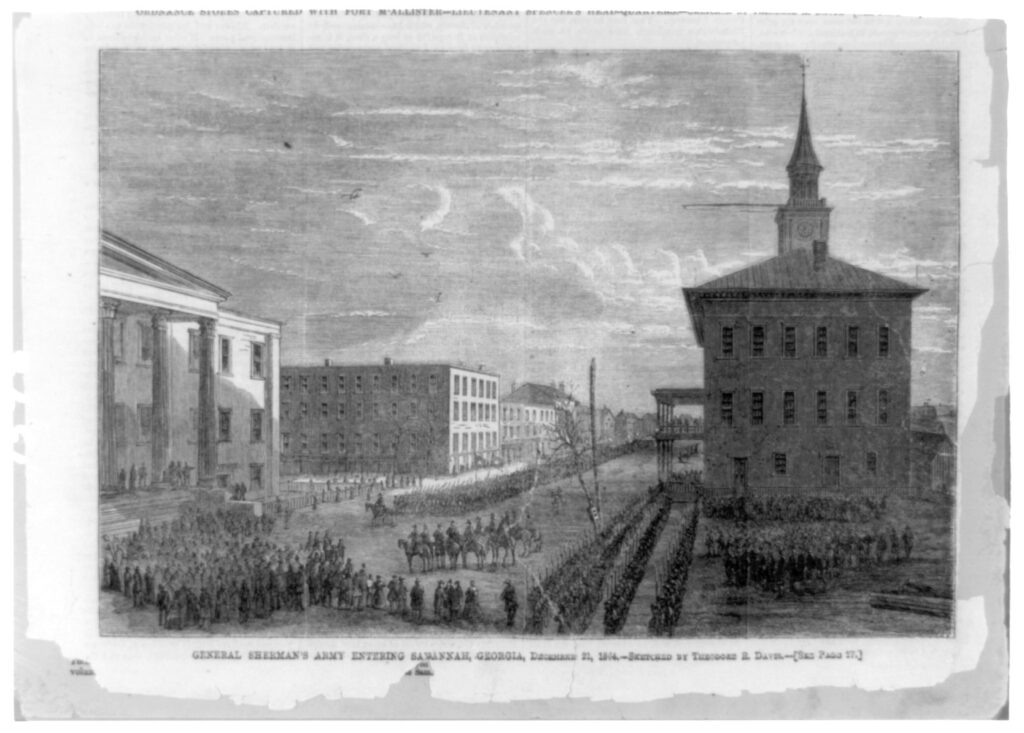
Armies came for it twice. In 1779, French and American forces tried and failed to take the city back from the British. It was the second deadliest battle of the Revolutionary War. In December 1864, the Union general William T. Sherman marched his army across Georgia to Savannah, the end of his March to the Sea. The story Savannah tells visitors is that Sherman was “so impressed by its beauty that he could not destroy it.” The record is plainer. The Confederate general holding the city didn’t want it leveled by artillery, as Atlanta had been, so he pulled his troops out, and the mayor surrendered. Sherman telegraphed President Lincoln to present Savannah to him “as a Christmas gift.”
Savannah came through the war standing, but over the next century it nearly lost its old town to neglect. In the 1930s and 1940s, many of its old buildings were torn down for parking lots. By 1955, the old City Market was gone, and the 1820 Davenport House was about to be demolished too. A group of women stopped it, bought the house, and founded the Historic Savannah Foundation, which has since saved many of the city’s old buildings.

Then, in 1994, John Berendt published Midnight in the Garden of Good and Evil, his account of a killing at the Mercer Williams House and the trials that followed. Locally, it quickly became known simply as “The Book.” It has sold more than three million copies and brought hundreds of thousands of tourists to Savannah. Clint Eastwood shot the movie version there in 1997, with scenes at the Mercer Williams House itself.

Why Is Savannah Haunted?

Andrew Nichols, whose institute named Savannah America’s most haunted city, gave two reasons: “There are old structures that are relatively unchanged and haven’t been moved from their original locations. You’ve had a lot of people living and dying in Savannah.” War, yellow fever, and slavery account for much of the dying. The city buried its dead in the middle of town, and it didn’t always keep track of them. And the old buildings are still standing.

War

In October 1779, French and American troops stormed the British lines around Savannah and were beaten back. They lost about 1,094 men killed, some 650 of them French, against about 40 British dead. The Savannah Daily Republican reported in 1846 that some of the French wounded who died before their fleet sailed were buried on the Bonaventure plantation, part of which is now Bonaventure Cemetery.
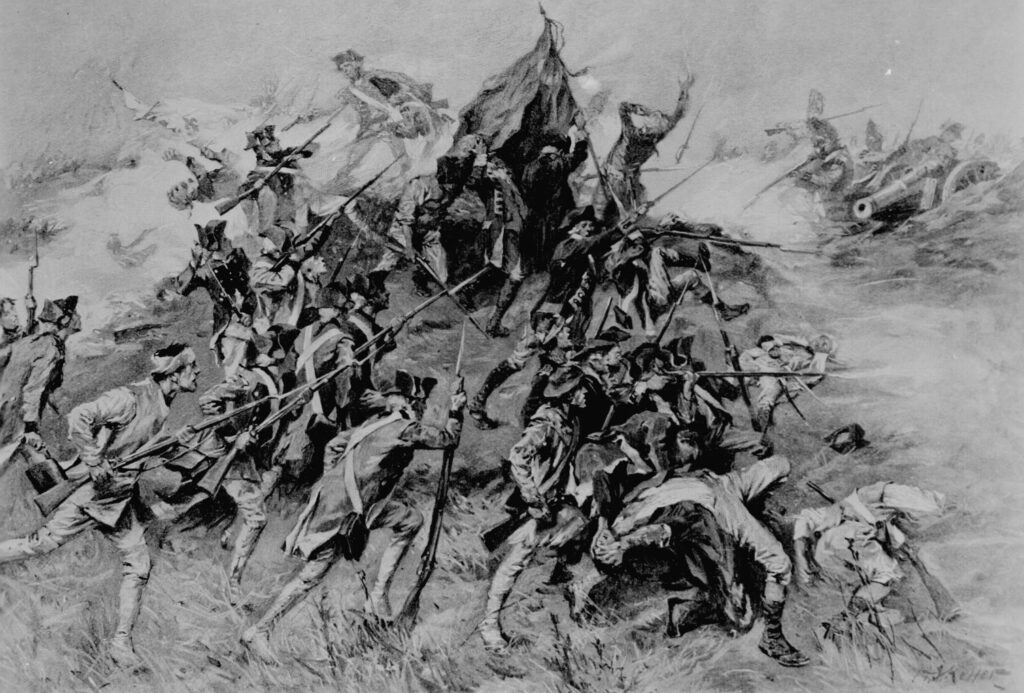
When Sherman’s army occupied the city in December 1864, “they had to camp in all the squares and cemeteries,” the news producer and tour guide Orlando Montoya told Savannah Magazine. “When they stayed in Colonial Park, they knocked over a bunch of graves, many were vandalized, and some of the names and dates were changed.” The magazine passes on a story it calls apocryphal: that cold winter, the soldiers opened the crypts, slept in them, and burned the bones inside to keep warm. The army also used the Marshall House on Broughton Street as a hospital until the war ended, and many of the hotel’s ghost stories are about soldiers.

Yellow Fever

Yellow fever came back to Savannah again and again. Mosquitoes carried the disease, and it was named for the jaundice it caused, which turned the skin and eyes yellow. In the autumn of 1820, the mayor printed the city’s deaths in the paper every few days: 230 in September and 323 in October. Both counts left out the city’s Black residents. Many of the 1820 dead were buried in Colonial Park Cemetery. The fever killed Isaiah Davenport, the builder of the Davenport House, in 1827, and it returned in 1854 and again in 1876.

The fever left ghost stories behind. According to WJCL, a Savannah TV station, the buildings pressed into service as fever hospitals or morgues “accrued reputations for apparitions linked to suffering within their walls.” The old Candler Hospital on Drayton Street is one of them. The museum in Davenport’s house won’t tell ghost stories at all. Instead, almost every October since 2003, it has staged the epidemic itself. Its director, Jamie Credle, told the local weekly Connect Savannah that “we couldn’t think of anything quite as frightful as Yellow Fever.”

Slavery

On March 2 and 3, 1859, Pierce M. Butler sold 436 men, women, and children to pay his creditors. They came from his plantations near Darien, Georgia, and the sale, at the Ten Broeck Race Course outside the city, was one of the largest sales of enslaved people in U.S. history. The Daily Morning News reported that it brought in $300,205. It rained “violently” through both days, Kwesi DeGraft-Hanson writes in the journal Southern Spaces, and let up only after the last person had been sold. The breakup of families is remembered as “the weeping time.”
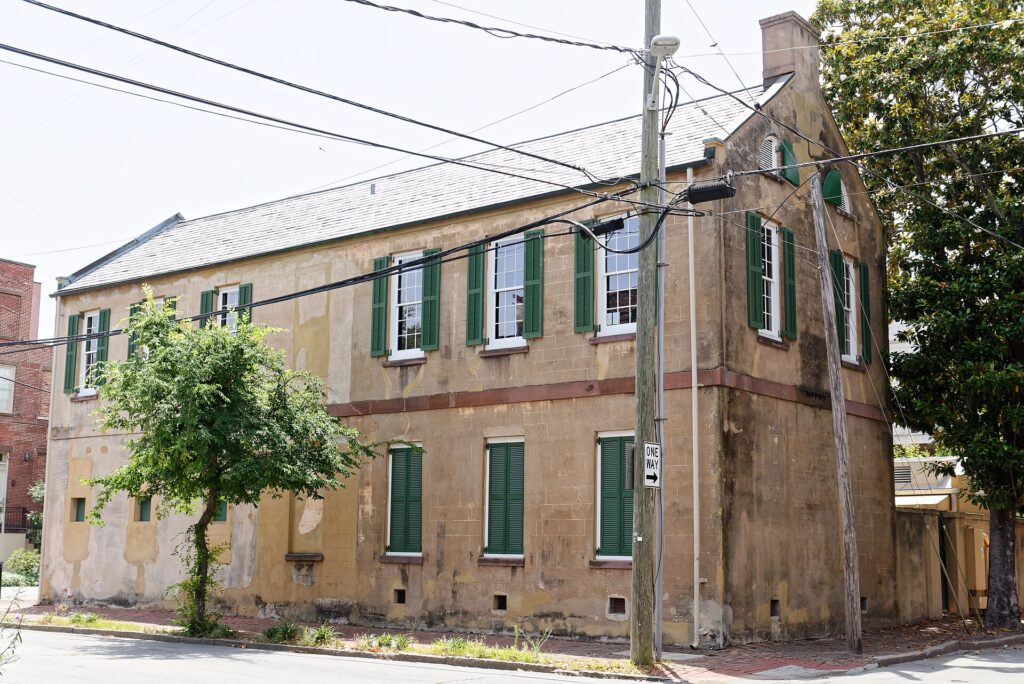
The slave quarters behind the Owens-Thomas House still stand, and so does the carriage house at the Sorrel-Weed House, where that house’s best-known ghost story ends.

Cemeteries and Unmarked Graves

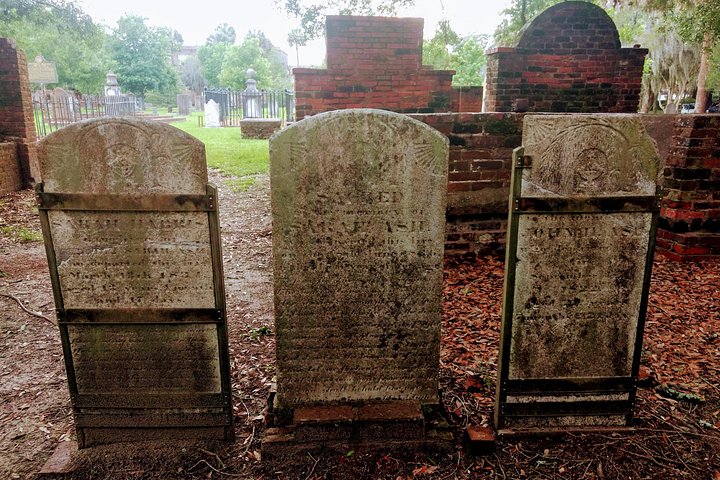
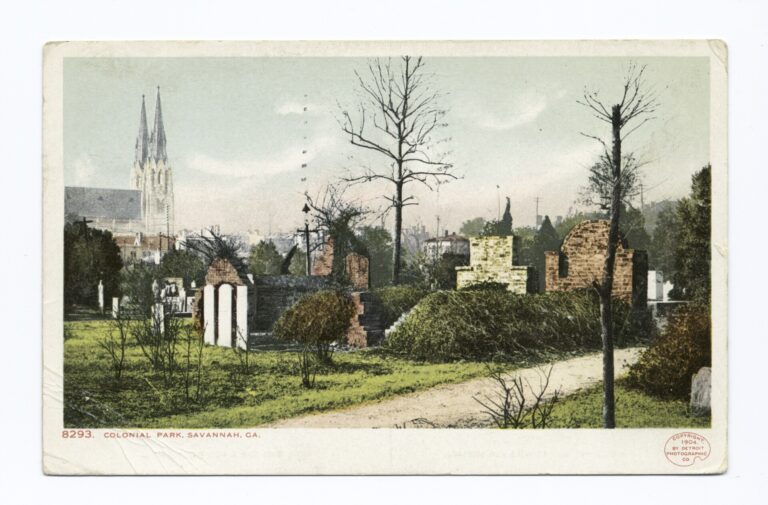
Colonial Park Cemetery took Savannah’s dead from 1750 to 1853, and it once spanned several blocks. The City counts more than 9,000 graves there, but fewer than 600 headstones are left.

From about 1763 to 1844, the city’s enslaved and free Black residents were buried in a public burial ground, part of which lay where Whitefield Square is now. In January 2026, a radar survey done for the City concluded that it’s unlikely all of the remains were moved before the square was built in the 1850s.
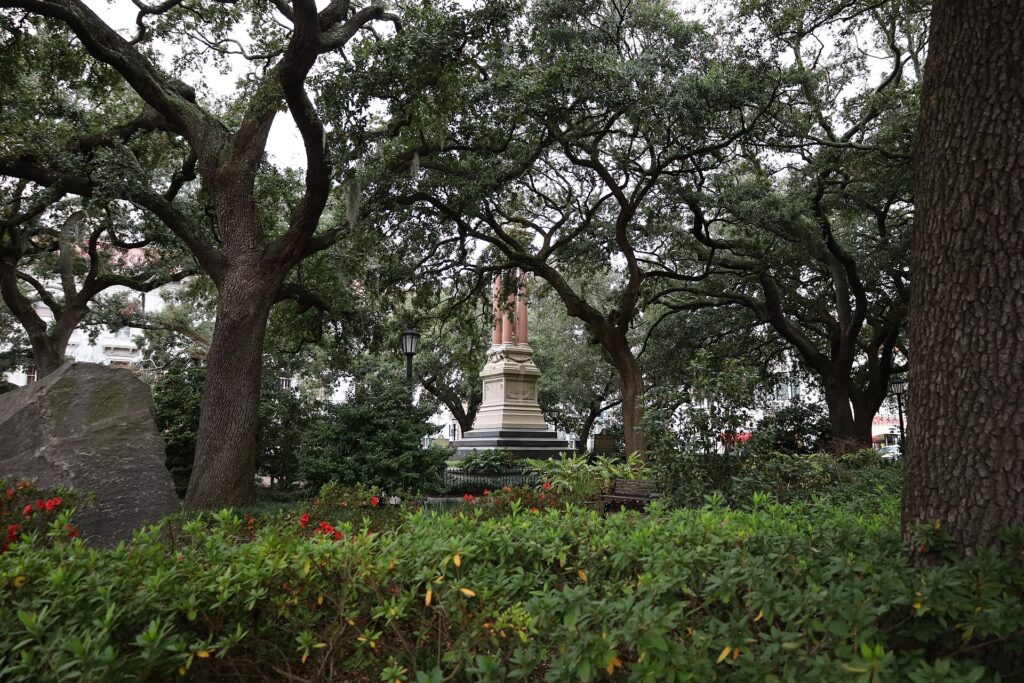
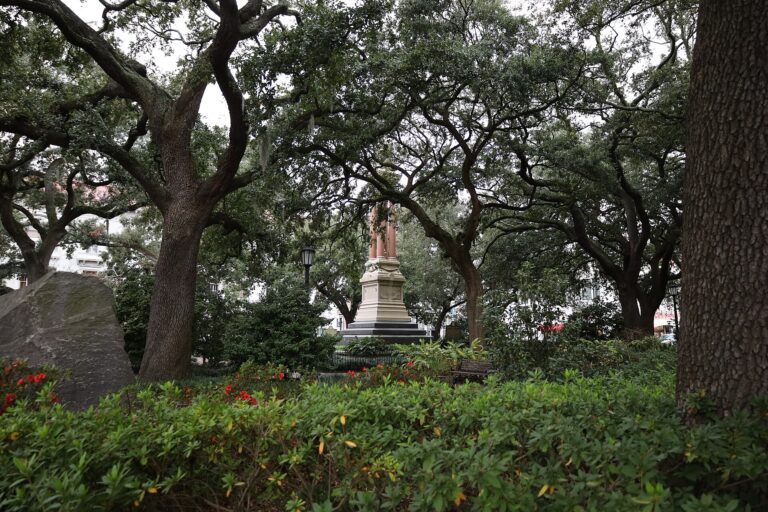
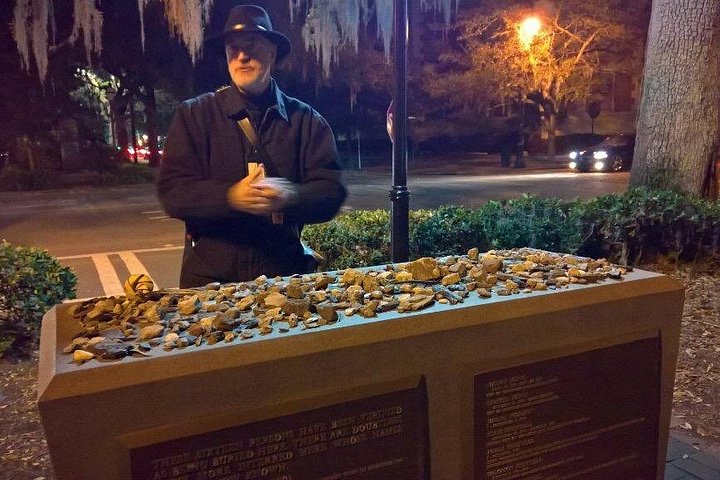
Even Tomochichi’s grave lost its marker. After he died in 1739, his grave in Wright Square was marked with “a Pyramid of Stone,” gathered nearby. Those stones were removed in the early 1880s, and a granite boulder has stood near the spot since 1899. Guides say the same square is haunted by Alice Riley, whose story is below.

Old Buildings

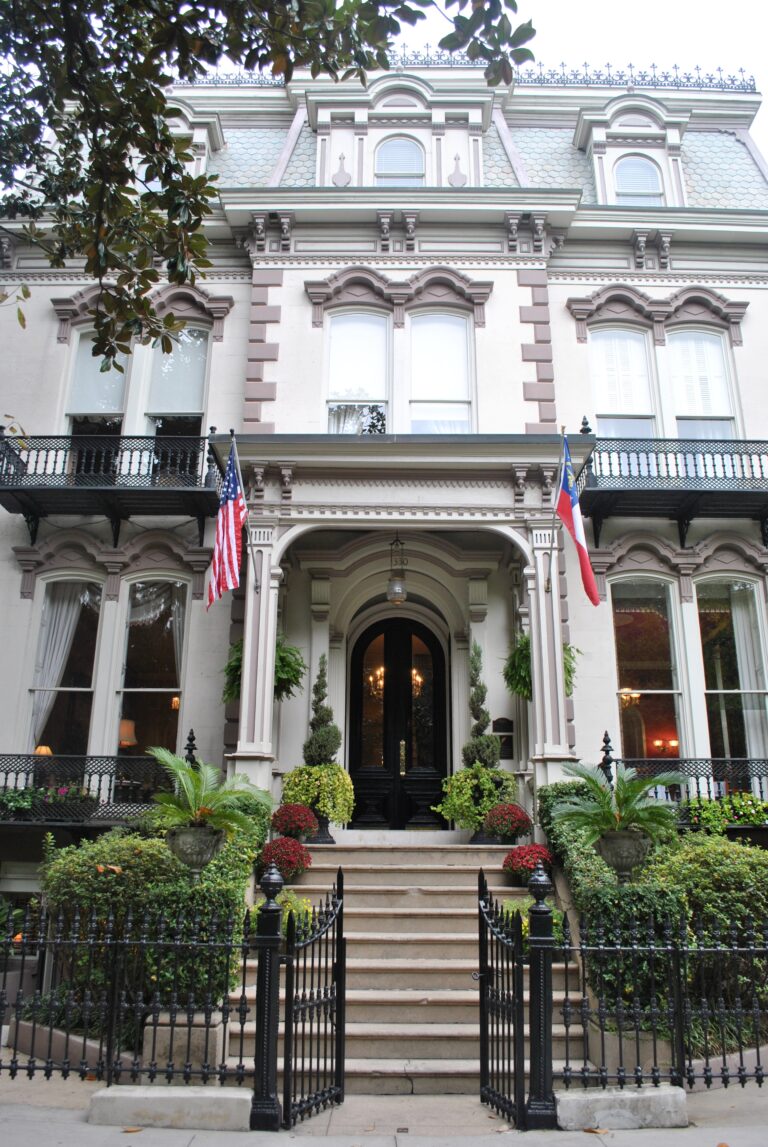
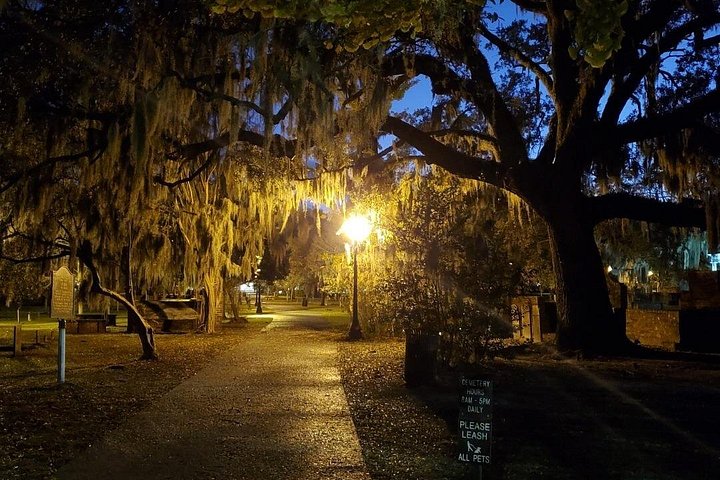
Nichols’s other reason is the one a visitor sees first. Savannah saved its old houses, inns, and taverns, so most of the buildings in its ghost stories still stand where they were built. Many line streets shaded by live oaks hung with Spanish moss. You can sleep in several of them, from the Kehoe House, a funeral home for much of the 20th century, to the Hamilton-Turner Inn on Lafayette Square. The exception is the Hampton-Lillibridge House, which was moved from East Bryan Street to East Julian Street in the early 1960s. In 1984, the writer Margaret Wayt DeBolt called it the only house in Savannah “known to have had an exorcism.”

Telling those stories is a local trade. By July 2002, 21 companies were running tours of haunted Savannah, the Associated Press reported, three months before the parapsychologists gave the city its title.
Places

Haunted Places in Savannah

18 places, including 5 you can stay in

Cemetery

Colonial Park Cemetery

Many of the people yellow fever killed in Savannah in 1820 were buried in Colonial Park. Local historian Ryan Dunn told WJCL, a Savannah TV station, that a recording made there at about 2 a.m. caught "a very clear response from a little girl" giving her name: "Kate."

Cemetery

Bonaventure Cemetery

People still leave presents at the grave of Gracie Watson, who died at six in 1889, especially at Christmas. Legend has it her statue cries tears of blood if the toys are taken.

House

Sorrel-Weed House

Shipping merchant Francis Sorrel finished this house in 1840. Visit Savannah, the city's tourism bureau, says guests report cold spots, shadowy figures, and voices, especially in the basement and the old slave quarters.

House

Mercer Williams House

Jim Williams shot Danny Hansford in this house's study in 1981, the killing at the heart of Midnight in the Garden of Good and Evil. Williams died in the same study eight months after his acquittal, and Savannah Magazine writes that "some claim he was cursed."

Park

Wright Square

When Tomochichi, the Yamacraw leader who helped Savannah's first colonists, died in 1739, he was given a British military funeral and buried in what is now Wright Square. Guide Enocha Edenfield told WSAV, a Savannah TV station, that the square "just has a heaviness to it that you don't feel in some of the other squares."

Bar

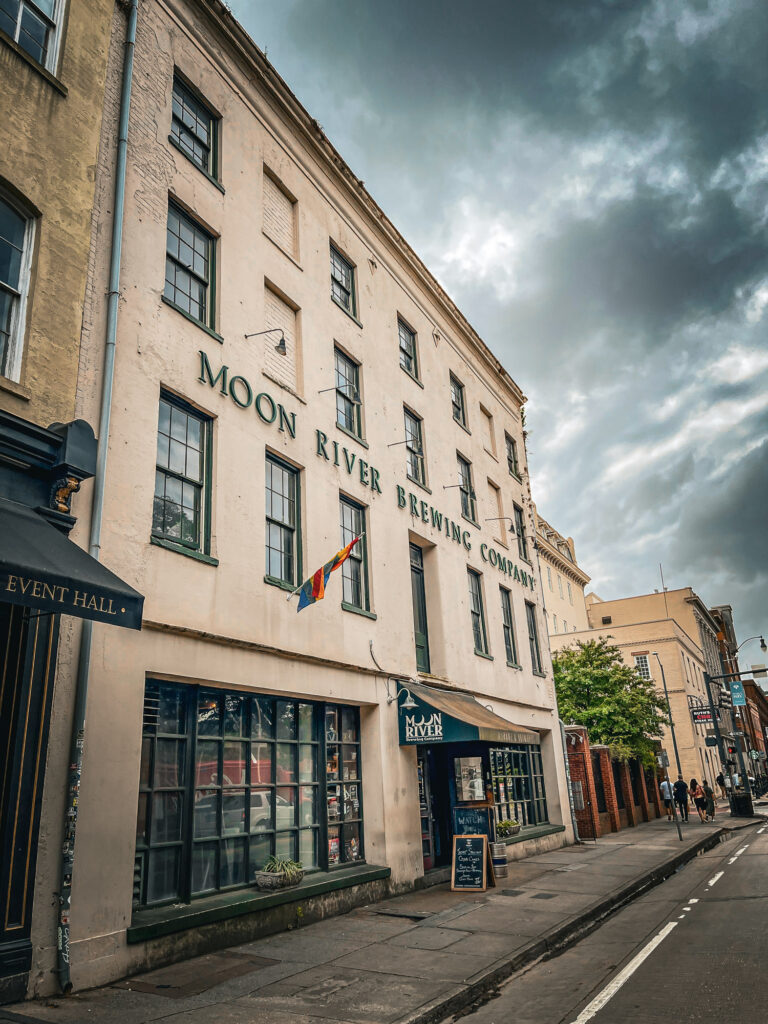
Moon River Brewing Company

Built in 1821 as the City Hotel, this Bay Street building housed Moon River Brewing until the brew pub closed in June 2024. Workers told the Associated Press in 2005 that a folded chair upstairs would set itself upright on all four legs.

Bar

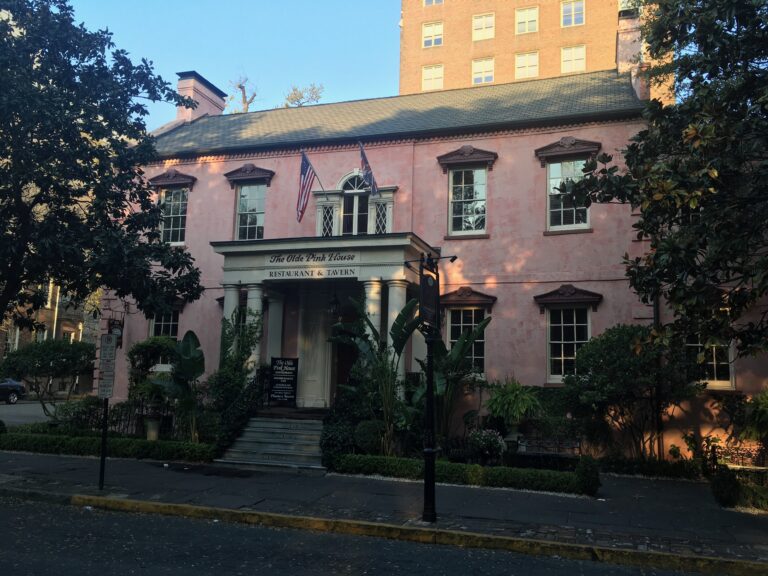
The Olde Pink House

James Habersham Jr., son of a colonial official, built this house in 1789. Guide Enocha Edenfield told WTOC, a Savannah TV station, that people have seen him having a drink in its tavern, and that staff come back to find their messy stations "cleaned up and folded."

Restaurant

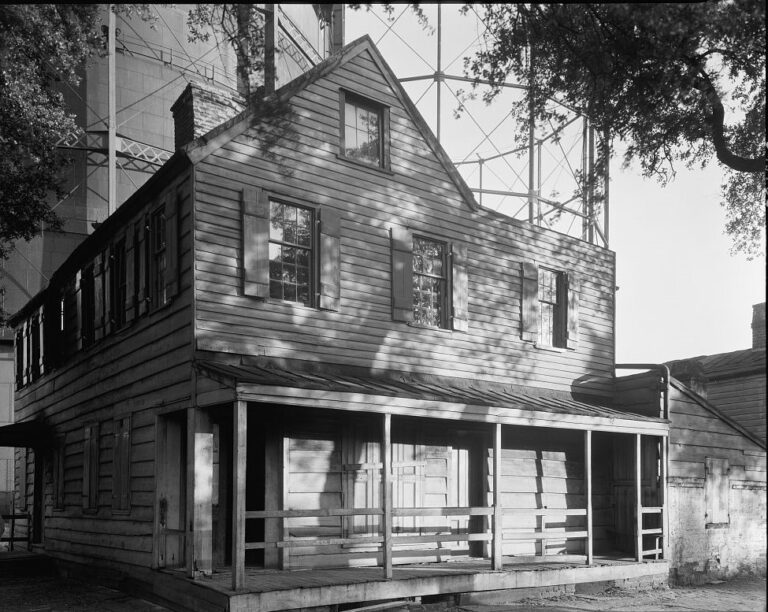
The Pirates’ House

The Pirates' House began as an inn and tavern for visiting sailors, the restaurant says, one of the first buildings on the old Trustees' Garden. Caroline Drwiega, its costumed pirate for 14 years, says a little boy with blond hair and a white shirt "shows up on the staircase."

House

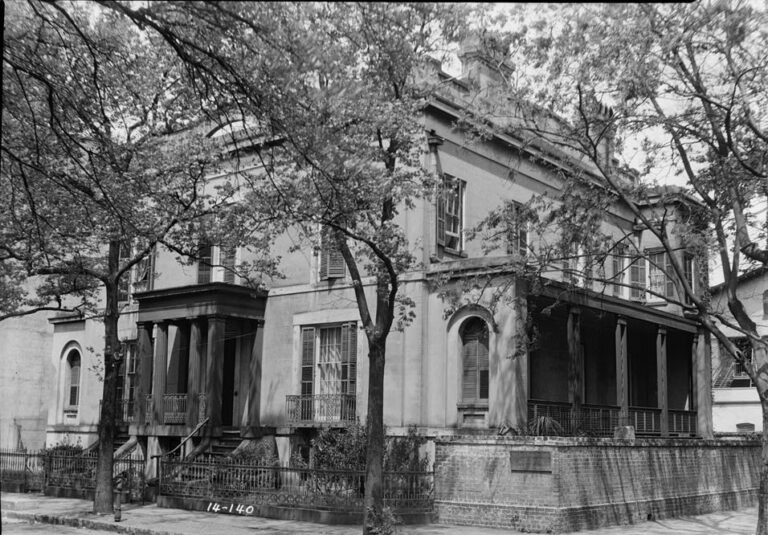
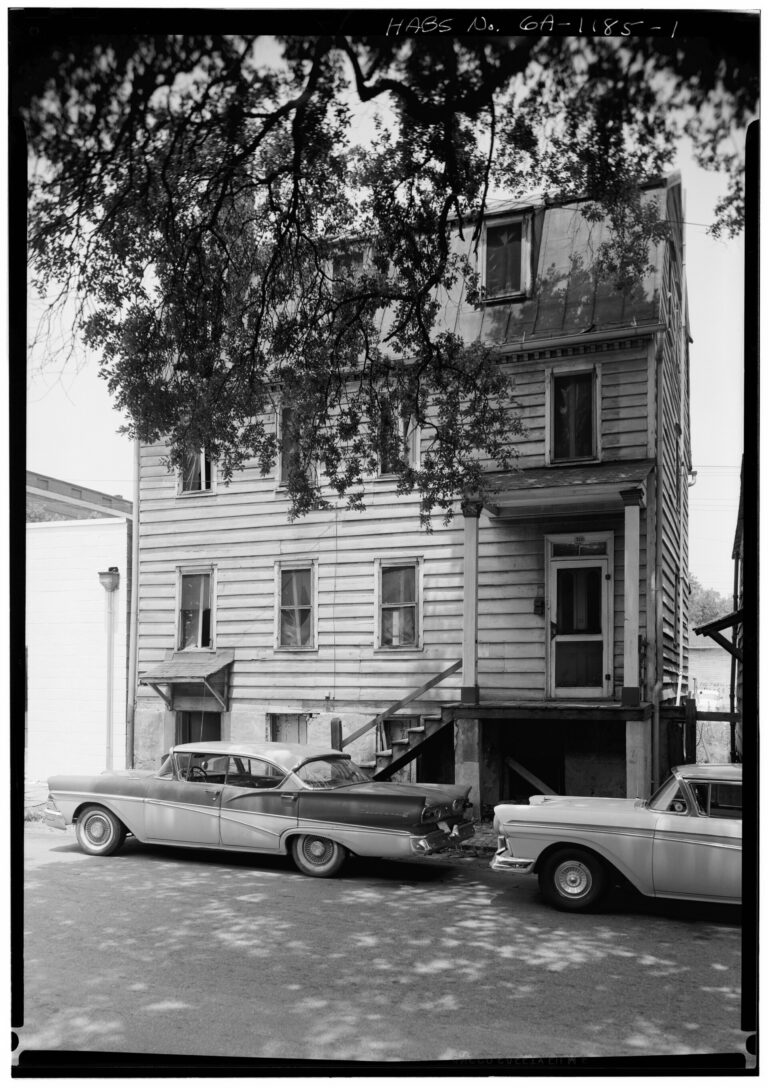
Hampton-Lillibridge House

Wildsam, a travel publisher, says the Episcopal bishop of Georgia exorcised this house on December 7, 1963, and that the strange noises in it stopped for 12 days, then came back. The bishop was later recalled as saying, "That ghost isn't a good Episcopalian because I gave it my best shot."

House

Davenport House

Margaret Wayt DeBolt's 1984 book of Savannah ghost stories tells of a spectral cat at Isaiah Davenport's 1820 house, a large yellow one that ran in front of a boarding-house tenant on the steps. The museum there now tells no ghost stories itself: its director says it sticks to "the story that we know."

House

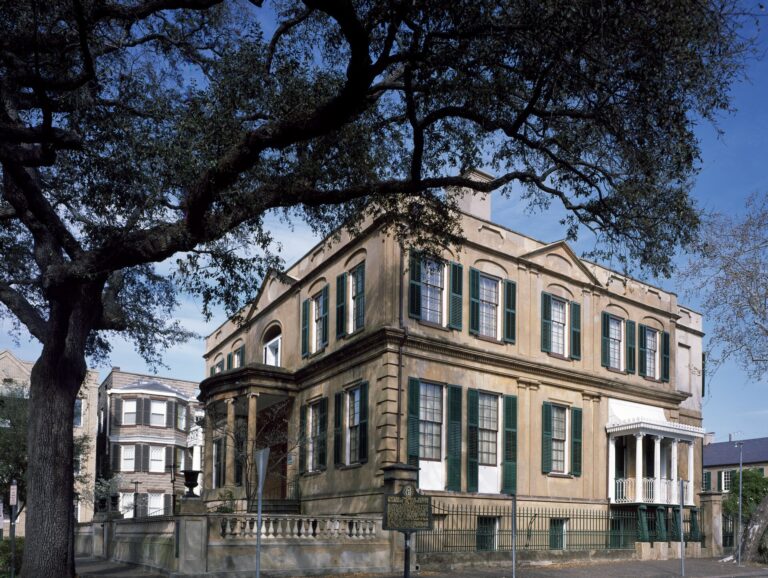
Owens-Thomas House & Slave Quarters

Genteel & Bard, a Savannah ghost tour company, says many guests have seen a man in early Victorian clothes standing in the front parlor of this 1819 house. The company takes him to be George Welshman Owens, the attorney who bought the house in 1830.

House

Andrew Low House

Juliette Gordon Low, the founder of the Girl Scouts, lived in this house during the Scouts' early years, the museum says. Travel writer Alexandra Nicole Nolan passes on the Savannah lore of an older woman seen resting on a bed inside, whom some believe to be Juliette.

Theater

Savannah Theatre

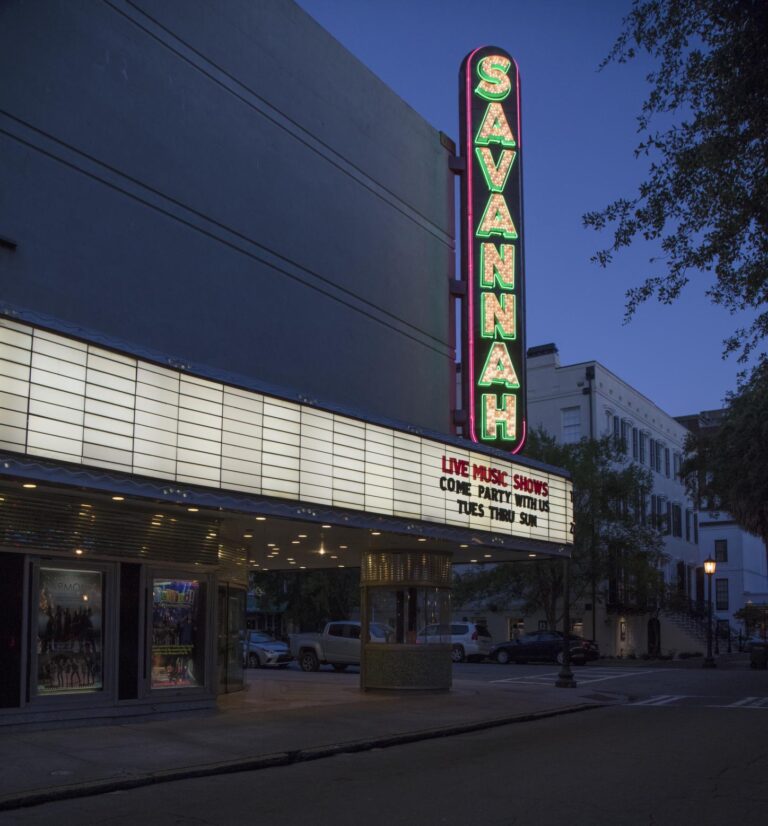
The Savannah Theatre opened in 1818 and has burned more than once. A boy ghost named Benjamin is said to tug at audience members' hair and clothes, and former house manager Dru Jones told Savannah Magazine, "I think he just wanted my attention."

Inn

Kehoe House

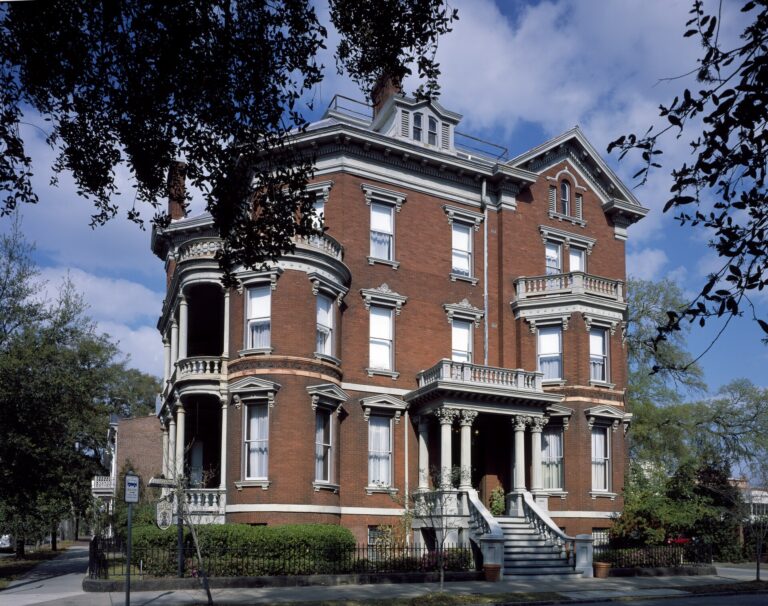
For most of the 20th century, the Kehoe House was a funeral home. It's an inn now, and Visit Savannah, the city's tourism bureau, says many guests report meeting ghost children during their stays.

Inn

Hamilton-Turner Inn

Samuel Pugh Hamilton, a businessman and city alderman, built this house on Lafayette Square in 1873. Innkeeper Susie Ridder told South Magazine of a guest who heard children knocking at a door in the night, saying "Daddy let us in," when no children were staying.

Inn

Foley House Inn

Owen and Honoria Foley built this house where the Great Savannah Fire of 1889 had destroyed another, and she ran it as an inn herself. Lodging Magazine reported in 2015 that when things break in empty rooms, the staff often credit Mrs. Foley.

Dig deeper

Ghost Tours in Savannah

27 tours

Most of Savannah’s ghost tours walk the historic district’s squares after dark, and many stop for drinks along the way. Others ride a trolley, bring ghost-hunting equipment, or keep it gentle for families. City rules bar tours marketed as haunted from the cemeteries. Ratings combine Viator and Tripadvisor reviews.

See all 27 ghost tours in Savannah

Quick Answers

6 questions
Why is Savannah called America's most haunted city?

In October 2002, the American Institute of Parapsychology held a conference in Savannah to give it the title “America’s Most Haunted City.” Its founder, Andrew Nichols, pointed to Savannah’s unchanged old buildings and the many people who had lived and died there.

Can you go into Colonial Park Cemetery at night?

No. The City of Savannah allows no one in Colonial Park after hours and bars any tour marketed as haunted from its cemeteries, so visit by day and hear the ghost stories outside the gates.

Is there a haunted hotel in Savannah?

Several. At 17Hundred90, owner Patrick Godley calls Room 204 “famously haunted,” and guests tell of a presence tugging at the sheets.

Can you go inside the Mercer Williams House?

Yes, on the museum’s guided tours, with tickets sold at the carriage house behind it on Whitaker Street. Jim Williams shot Danny Hansford in its study in 1981, the killing at the heart of Midnight in the Garden of Good and Evil.

Where is Little Gracie's statue?

In Bonaventure Cemetery, about three miles from downtown, behind an iron fence at plot E-98.

Can you go inside the Sorrel-Weed House?

Yes. The house sells its own history tours, nightly ghost tours, and late-night paranormal investigations.

Visit

Visiting Savannah

  • Worth knowing: The City of Savannah bars tours and events marketed as haunted from its cemeteries, Colonial Park and Bonaventure included, and allows no one in Colonial Park after hours. Ghost tours that stop there tell their stories from outside the gates.

Contributors

Spookt Logo
Sources (32) including 4 records of the time · 4 records of the time

Records of the Time 4

Newspapers, records, surveys, and photographs made when it happened.

  1. Georgia Historic Newspapers

    the Savannah Daily Republican, September and October 1820 (the mayor's returns of deaths) and December 19, 1846 (the French dead at Bonaventure), the Daily Morning News, March 2 and 4, 1859 (the Butler sale), and the Morning News, January 10, 1899 (Samuel P. Hamilton on Lafayette Square)

  2. Internet Archive

    The Colonial Records of the State of Georgia, vol. 20 (the 1734–35 letters on Alice Riley)

  3. Hampton Lillibridge House, No. 1

    Library of Congress · Historic American Buildings Survey

Histories and References 11

What historians, museums, historical societies, and official bodies have written since.

  1. New Georgia Encyclopedia

    Savannah; Yamacraw Indians; Tomochichi; Siege of Savannah; Sherman's March to the Sea; Historic Savannah Foundation; Midnight in the Garden of Good and Evil; Atlantic Slave Trade to Savannah

  2. Savannah Squares

    The Cultural Landscape Foundation

  3. Largest Slave Sale in Georgia History

    Georgia Historical Society · marker, 2008

  4. Unearthing the Weeping Time

    Southern Spaces · Kwesi DeGraft-Hanson, 2010

  5. City of Savannah

    the Whitefield Square survey (February 2026), the Colonial Park Cemetery page and the cemetery rules

  6. The Historical Marker Database

    the Little Gracie marker and the Great Yellow Fever Epidemic of 1820 marker

  7. Little Gracie Watson

    Bonaventure Historical Society · Lee Maltenfort, 2016

  8. Digging Savannah: the Sorrel-Weed House

    Georgia Southern University · Kelly Westfield

  9. The Yellow Fever Epidemic in Savannah, Georgia of 1876

    James R. Gruenberg, master's thesis, Wright State University, 2012

News, Lore, and Guides 17

Later reporting, ghost lore, and the places and guides that tell the stories.

  1. History of Savannah

    Visit Savannah

  2. Savannah named most haunted city

    Associated Press, 2002 (Lawrence Journal-World)

  3. Savannah's cemeteries have an otherworldly appeal

    Savannah Magazine · Jessica Lynn Curtis

  4. WJCL

    "Fever, fear, and folklore: How yellow fever shaped Savannah's haunted reputation" (Graham Cawthon, 2025) and "Yellow fever, Civil War …and restless spirits? The stories of Savannah's Colonial Park Cemetery" (2025)

  5. Connect Savannah

    Jessica Leigh Lebos on the Davenport House's October programs (2015), and the museum's 2022 yellow fever experience

  6. Midnight in the Garden of Good and Evil turns 30

    Georgia Public Broadcasting, 2024

  7. Internet Archive

    Margaret Wayt DeBolt, *Savannah Spectres and Other Strange Tales* (1984)

  8. History

    The Marshall House

  9. Access World News

    infoweb.newsbank.com

    The Atlanta Journal-Constitution, November 24, 1999 (a Union hospital; the sealed upper floors), and the Savannah Morning News, August 1999 (the reopening after 42 years) and May 23, 2021 (the Kehoe House's funeral home years)

  10. Spirited Savannah

    Atlanta Magazine (James Caskey)

  11. Ghost Tours

    Sorrel-Weed House

  12. Spooky Savannah: Hauntings in This Southern City

    Porthole Cruise and Travel · Richard Varr, 2022

  13. Visit

    Mercer Williams House Museum